Why Does Nail Polish Peel Off
When nail polish peels off early, it has lost its bond with the nail plate. Preparation or application problems are common causes, but water, everyday wear and the condition of the nail can also contribute. Regular polish dries in the air, while gel polish needs to cure under a compatible lamp, so the right fix depends partly on which type you use.
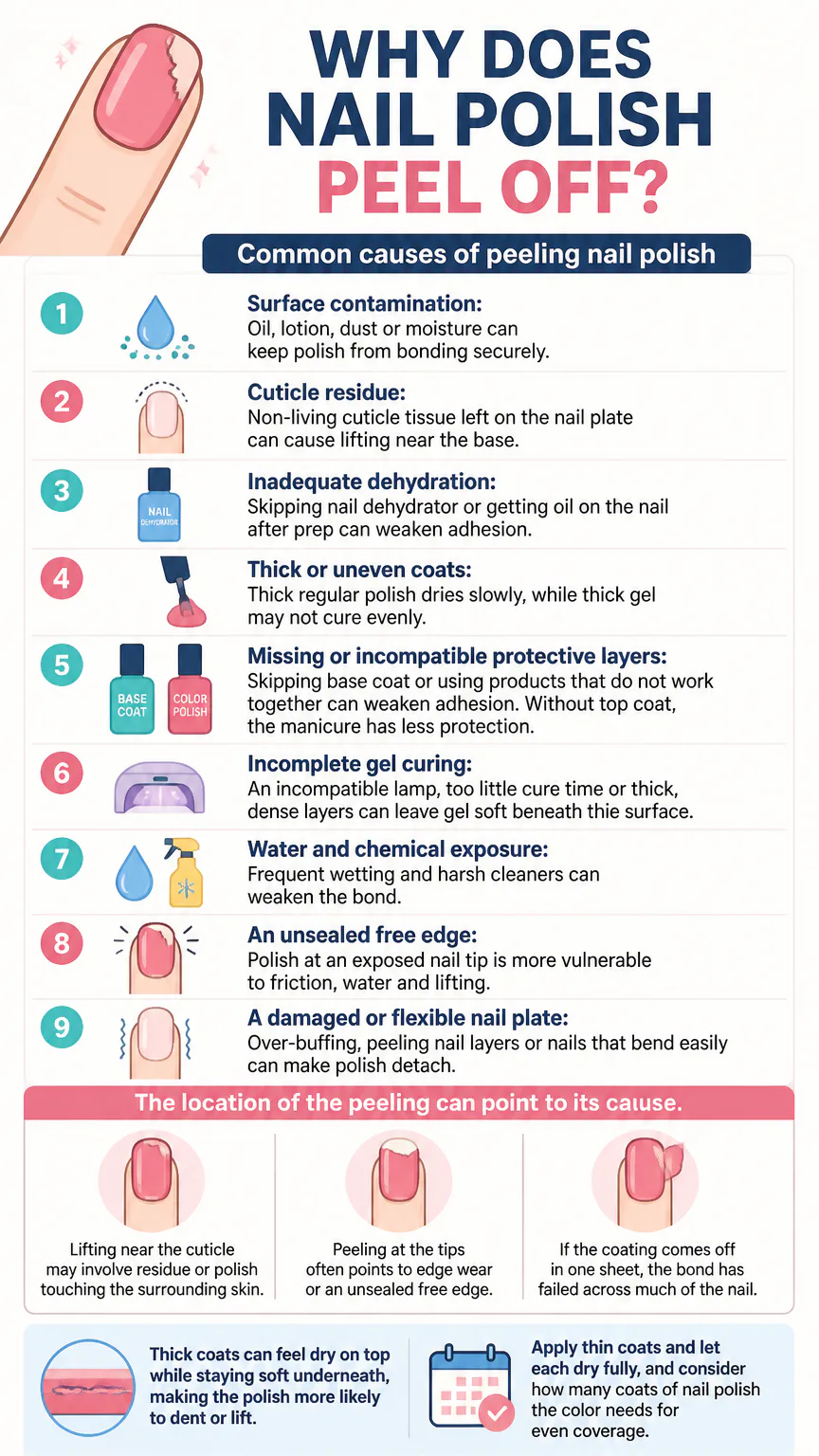
Common causes of peeling nail polish
- Surface contamination: Oil, lotion, dust or moisture can keep polish from bonding securely.
- Cuticle residue: Non-living cuticle tissue left on the nail plate can cause lifting near the base.
- Inadequate dehydration: Skipping nail dehydrator or getting oil on the nail after prep can weaken adhesion.
- Thick or uneven coats: Thick regular polish dries slowly, while thick gel may not cure evenly.
- Missing or incompatible protective layers: Skipping base coat or using products that do not work together can weaken adhesion. Without top coat, the manicure has less protection.
- Incomplete gel curing: An incompatible lamp, too little cure time or thick, dense layers can leave gel soft beneath the surface.
- Water and chemical exposure: Frequent wetting and harsh cleaners can weaken the bond.
- An unsealed free edge: Polish at an exposed nail tip is more vulnerable to friction, water and lifting.
- A damaged or flexible nail plate: Over-buffing, peeling nail layers or nails that bend easily can make polish detach.
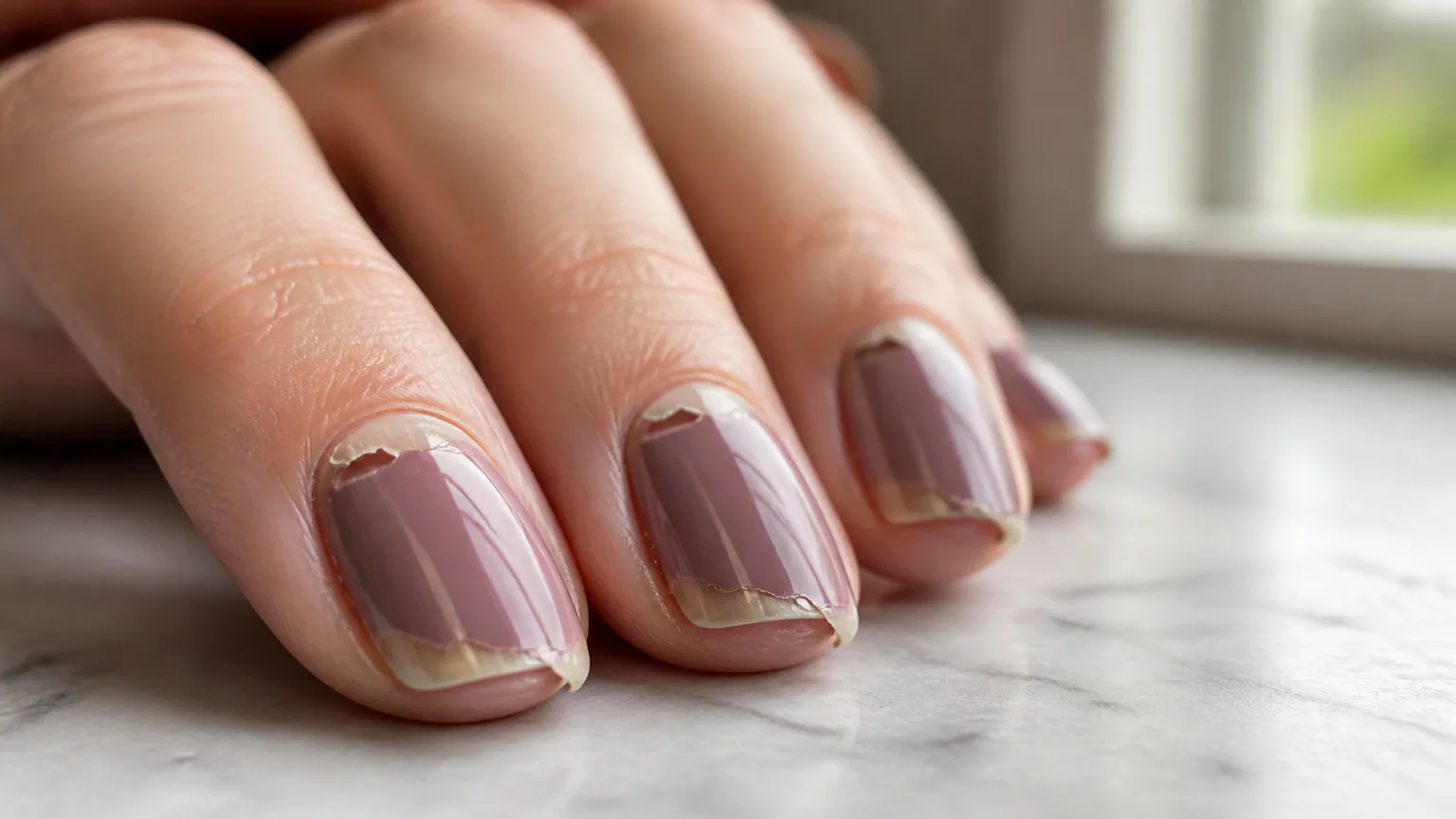
The location of the peeling can point to its cause. Lifting near the cuticle may involve residue or polish touching the surrounding skin. Peeling at the tips often points to edge wear or an unsealed free edge. If the coating comes off in one sheet, the bond has failed across much of the nail.
Thick coats can feel dry on top while staying soft underneath, making the polish more likely to dent or lift. Apply thin coats and let each dry fully, and consider how many coats of nail polish the color needs for even coverage.
How regular and gel polish differ
Regular polish dries as its solvents evaporate. Thick coats or applying the next coat too soon can leave the manicure soft and prone to peeling. Allow about 3-5 minutes between coats and roughly 30 minutes after the top coat for air-drying. Even when the surface feels dry, water and household chemicals can wear down the finish.
Gel polish hardens under a compatible UV or LED lamp. The lamp’s output and wavelength must suit the product, and the gel needs the specified cure time. A dirty reflector or layers that are too thick can interfere with curing. Keep gel off the surrounding skin; contact can cause lifting and irritate the skin.
A properly prepared and cured gel manicure commonly lasts two to three weeks. It may lift sooner if the natural nail is flexible or peeling, the coating reaches the cuticle area, or the nails get wet within 24 hours of application.
How to prevent polish from peeling
Good adhesion starts before the first coat. Prepare one hand at a time, and keep the nail surface clean and dry while you apply the polish.
- Remove old polish and wash your hands. Dry them thoroughly.
- Gently push back the cuticle and remove non-living residue from the nail plate. Do not scrape or cut live skin.
- Lightly smooth the nail only if needed. Avoid aggressive buffing, which can thin and weaken the nail plate.
- Keep lotion and cuticle oil off the nail surface before painting. If you use a nail dehydrator, apply it to clean, dry nails, then avoid touching them or adding oil.
- Apply a thin layer of base coat that is compatible with your polish system. Let regular polish dry between coats; cure gel with its matching lamp for the product-specific time.
- Apply color in thin, even coats. For gel, keep the product off your skin and cure each layer as directed.
- Apply a top coat to protect the color and carefully seal the free edge.
- Limit prolonged water exposure and wear gloves when cleaning or washing dishes.
With gel, a mismatched lamp or shortened cure time can leave the polish under-cured even when the surface looks set. Thicker layers will not fix the problem. Follow the product’s curing directions and keep the lamp clean.
Peeling and chipping often start at the same weak spots: an unsealed nail edge, friction from clothing, or frequent water exposure. Seal the tips and limit everyday wear to help prevent nail polish chipping and keep polish from lifting in larger sheets.
What to do when polish lifts
Do not pull or pick at lifted polish. Forcing it off can strip away layers of the natural nail, leaving it rough, thin and brittle. If only an edge has lifted, keep it from catching on clothing, and do not use it to pry at objects. Remove the manicure gently with a method suitable for the product; do not peel it off.
Before reapplying, check whether the nail is damaged and where the lifting began: near the cuticle, at the tip or across the whole nail. Give your nails a break from polish if they are painful, unusually thin or discolored. Seek medical advice if those changes persist or worsen. If polish keeps lifting from otherwise healthy nails, review your preparation, coat thickness and, for gel, curing.
Thickened or separated polish can drag across the nail instead of forming an even coat. If an older bottle starts peeling, check whether nail polish can expire; changes to the formula can affect how it applies and wears.
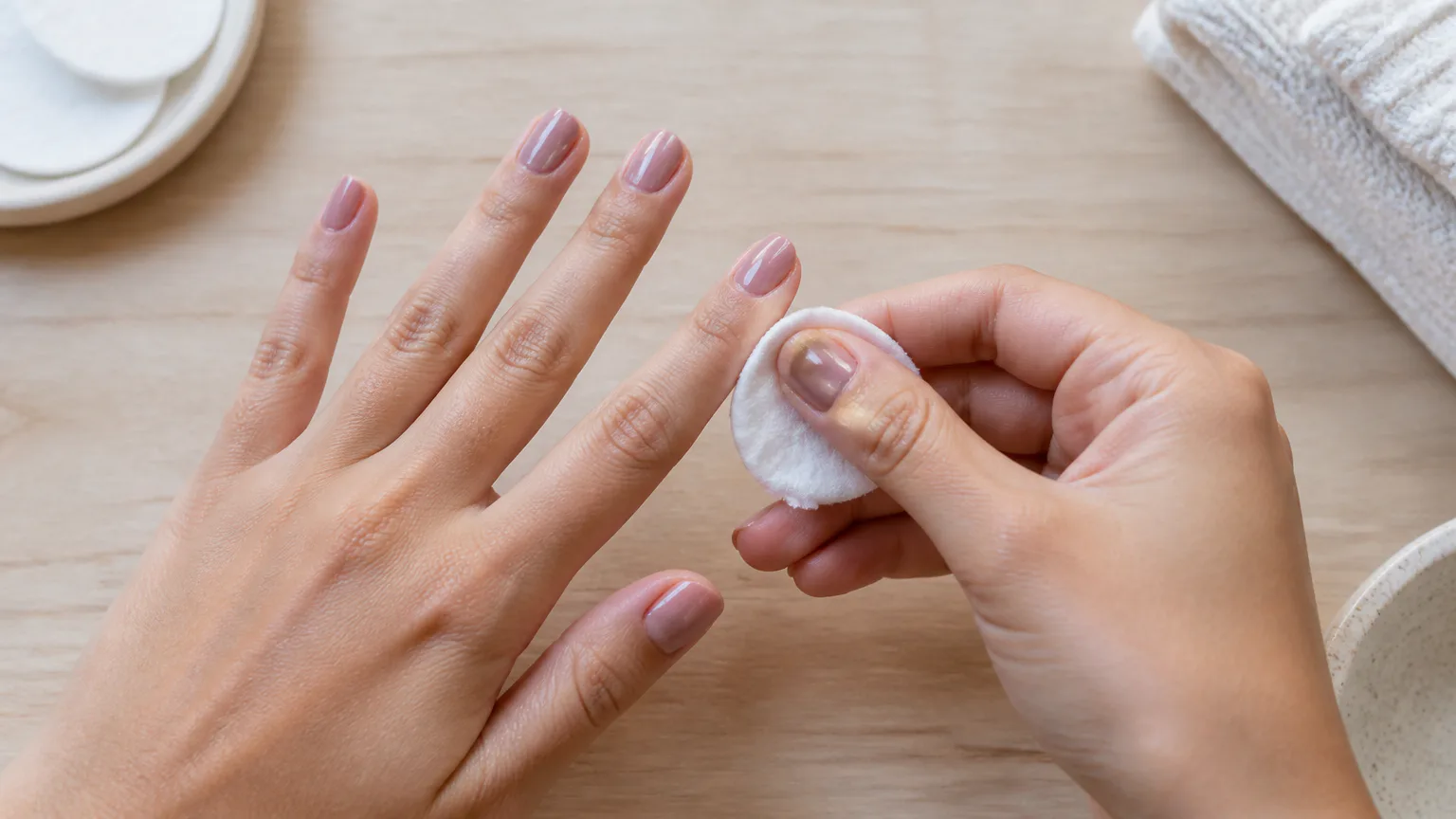
Peel-Off Polish and Base Coats
Peel-off nail polish and peel-off base coats are made to come off more easily than standard polish. That intended release is different from ordinary polish lifting unexpectedly because of poor adhesion, moisture or application problems.
The trade-off is wear time: a coating designed for easy removal may come off sooner than a manicure made to last longer. Peel-off products can still take some nail surface with them, so remove them gently and do not force off polish that resists.
FAQs
Why does nail polish peel off in one piece?
When a sheet of polish comes away, the bond between the coating and the nail plate has failed over a broad area. Oil, moisture, dust, cuticle residue or an incompatible base coat can contribute.
Can peeling polish damage your nails?
Pulling off polish can remove upper layers of the nail, making it thin, rough or brittle. Remove the polish gently instead of peeling it away.
Does any nail polish never peel?
No polish is guaranteed not to peel. Gel can last two to three weeks when properly prepared and cured, while regular polish is more affected by drying time, water and everyday wear.
Can I paint over polish that has started lifting?
Painting over a lifted edge will not restore its bond to the nail, and the loose section may keep catching and peeling. Remove the manicure gently, check the nail and start again on a clean, dry surface.
Why does polish peel off acrylic nails?
Polish can lift from acrylics if the surface is contaminated, the coats are thick or incompatible, or the free edge is not sealed. Polish separating from the acrylic surface is different from the acrylic enhancement lifting away from the natural nail.
Conclusion
Check that the nail was clean and dry, the coats were thin and the free edge was sealed. If you use gel, make sure the lamp and cure time match the product. Avoid picking at lifted polish.