How to Revive Old Nail Polish and Know When to Toss It
Old nail polish usually thickens as its liquid solvents evaporate, leaving more resin and pigment behind. Regular lacquer can often be restored when it is gloopy but still recognizable. An unusual odor, rubbery clumps, or permanent separation usually means the bottle is no longer usable. The right thinner, careful mixing, and proper storage can help preserve a smooth, durable finish.
Restore Old Nail Polish in Four Steps
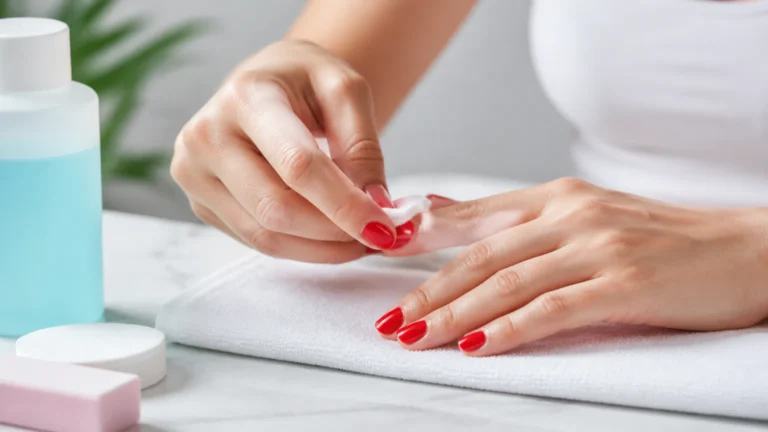
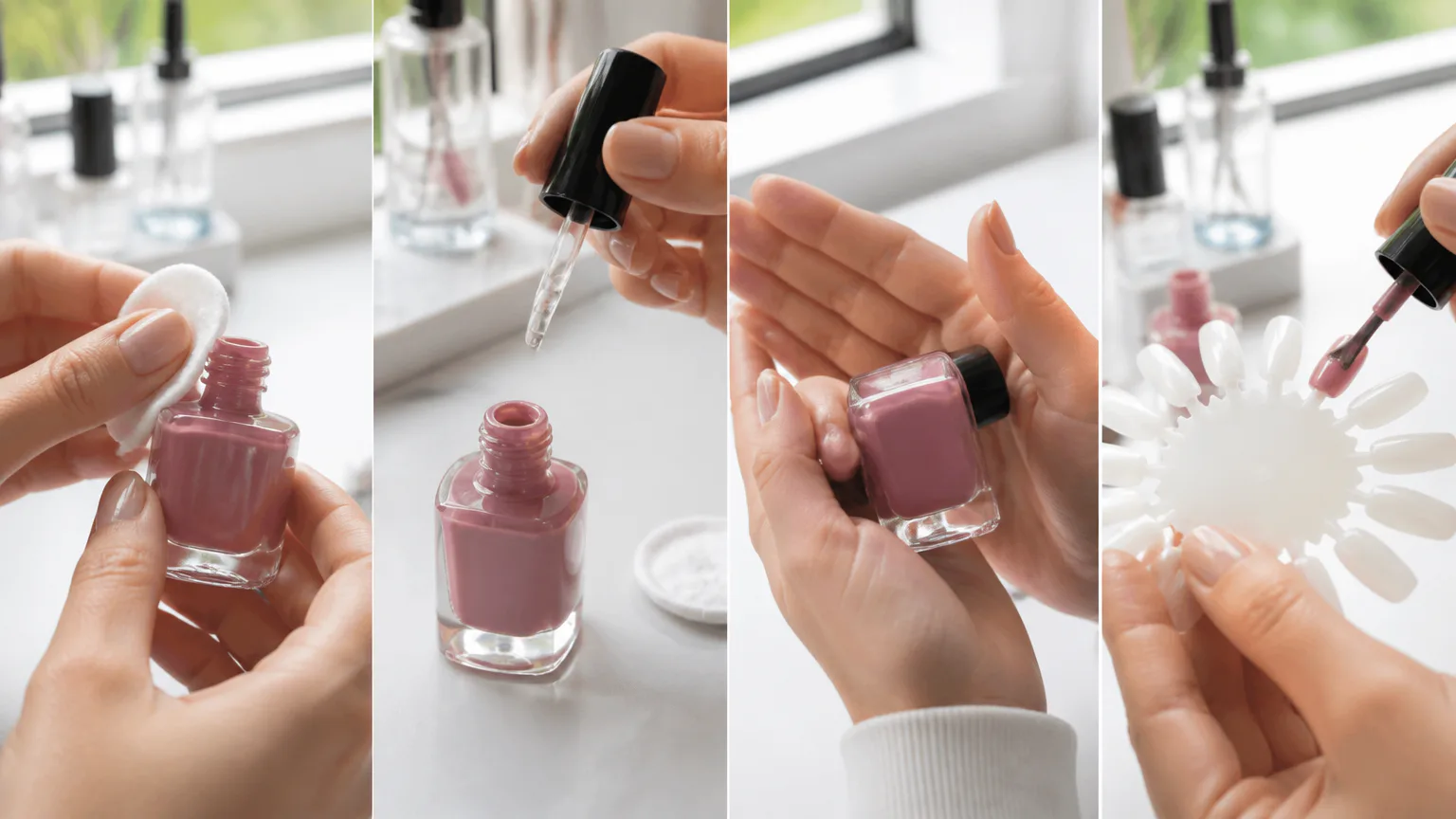
- Clean the bottle neck and threads with a small amount of acetone on a cotton pad so the cap can form an airtight seal.
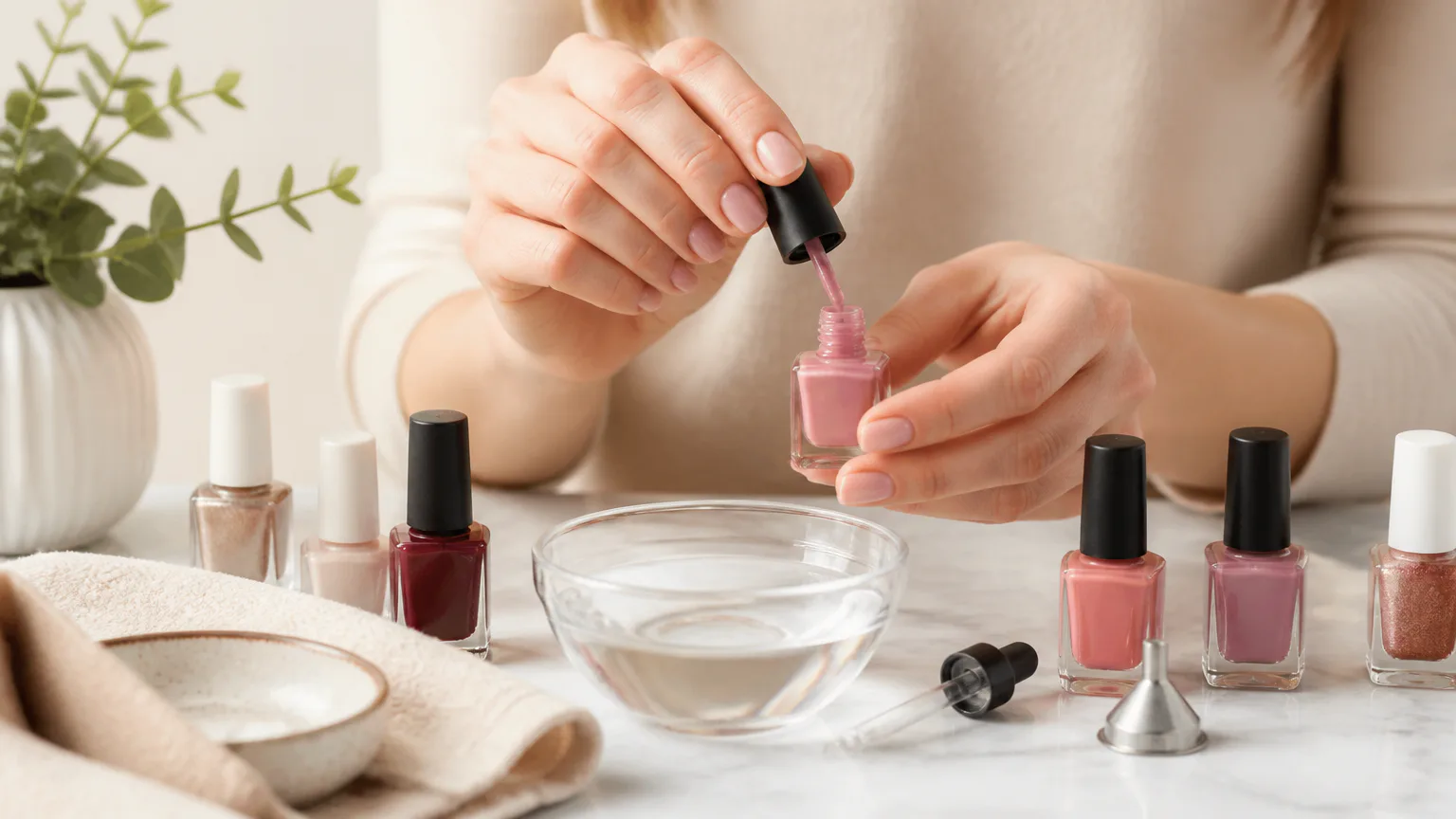
- For regular lacquer, add 2-3 drops of dedicated nail polish thinner. For UV- or LED-cured gel polish, use a gel-polish thinner and start with 1-2 drops.
- Close the bottle and roll it gently between your palms for 1-2 minutes instead of shaking it.
- Test the consistency on a nail swatch. If the polish is still too thick, add small amounts gradually according to the product’s formula-specific directions.
Check Whether the Polish Can Be Saved
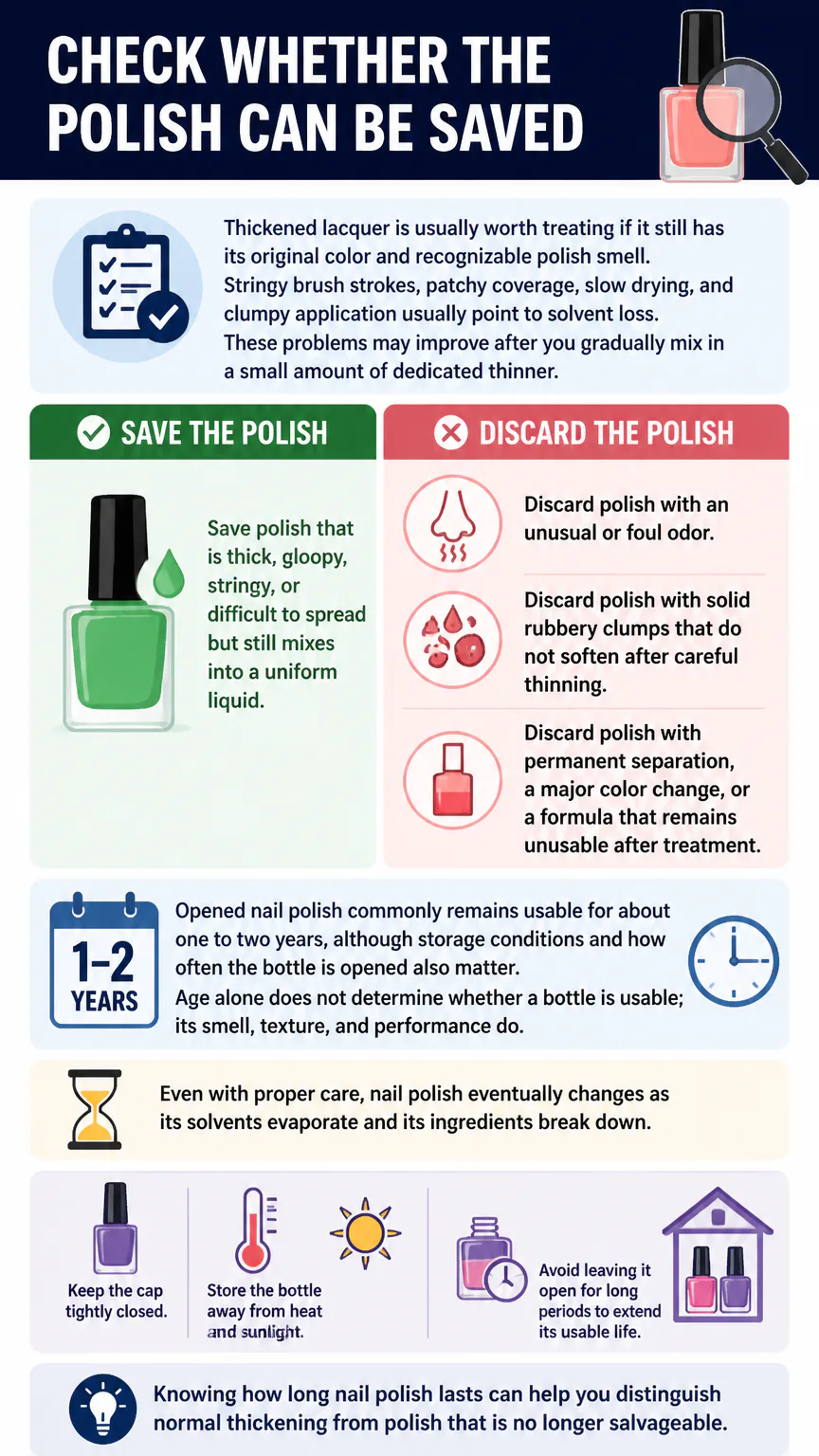
Thickened lacquer is usually worth treating if it still has its original color and recognizable polish smell. Stringy brush strokes, patchy coverage, slow drying, and clumpy application usually point to solvent loss. These problems may improve after you gradually mix in a small amount of dedicated thinner.
- Save polish that is thick, gloopy, stringy, or difficult to spread but still mixes into a uniform liquid.
- Discard polish with an unusual or foul odor.
- Discard polish with solid rubbery clumps that do not soften after careful thinning.
- Discard polish with permanent separation, a major color change, or a formula that remains unusable after treatment.
Opened nail polish commonly remains usable for about one to two years, although storage conditions and how often the bottle is opened also matter. Age alone does not determine whether a bottle is usable; its smell, texture, and performance do.
Even with proper care, nail polish eventually changes as its solvents evaporate and its ingredients break down. Keep the cap tightly closed, store the bottle away from heat and sunlight, and avoid leaving it open for long periods to extend its usable life. Knowing how long nail polish lasts can help you distinguish normal thickening from polish that is no longer salvageable.
Use Nail Polish Thinner Correctly
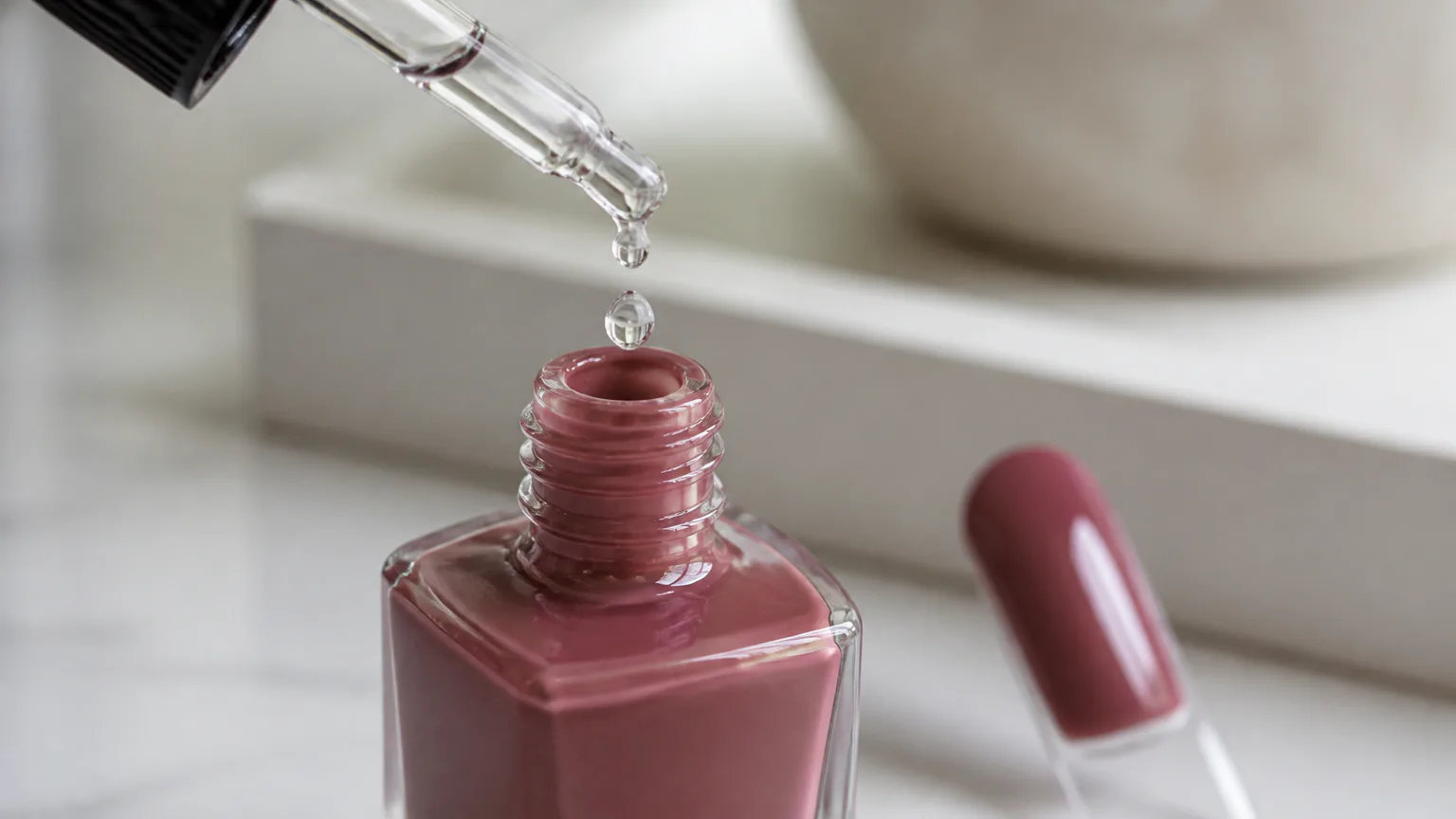
Nail polish thinner is the preferred choice for regular lacquer because it replaces some of the solvents lost through evaporation. Solvent-based thinners may contain ingredients such as butyl acetate, ethyl acetate, and heptane. These ingredients are suited to restoring the consistency of lacquer without intentionally changing its pigment or finish.
- Set the bottle upright and remove the cap without touching the brush to nearby surfaces.
- Place 2-3 drops of thinner into the bottle with its dropper.
- Close the bottle tightly and roll it between your palms for 1-2 minutes.
- Apply a small swatch to check the flow, coverage, drying time, and finish.
- If the polish is still too thick, add 1-2 more drops, one at a time.
OPI Nail Lacquer Thinner, Seche Restore, and Beauty Secrets Nail Polish Thinner are options for regular lacquer. Beauty Secrets is a budget-oriented choice, while Seche Restore comes in a dropper format commonly used for thick polish and top coats. Sally Beauty carries Seche Restore and Beauty Secrets Nail Polish Thinner.
Try Warm Water Without Thinner
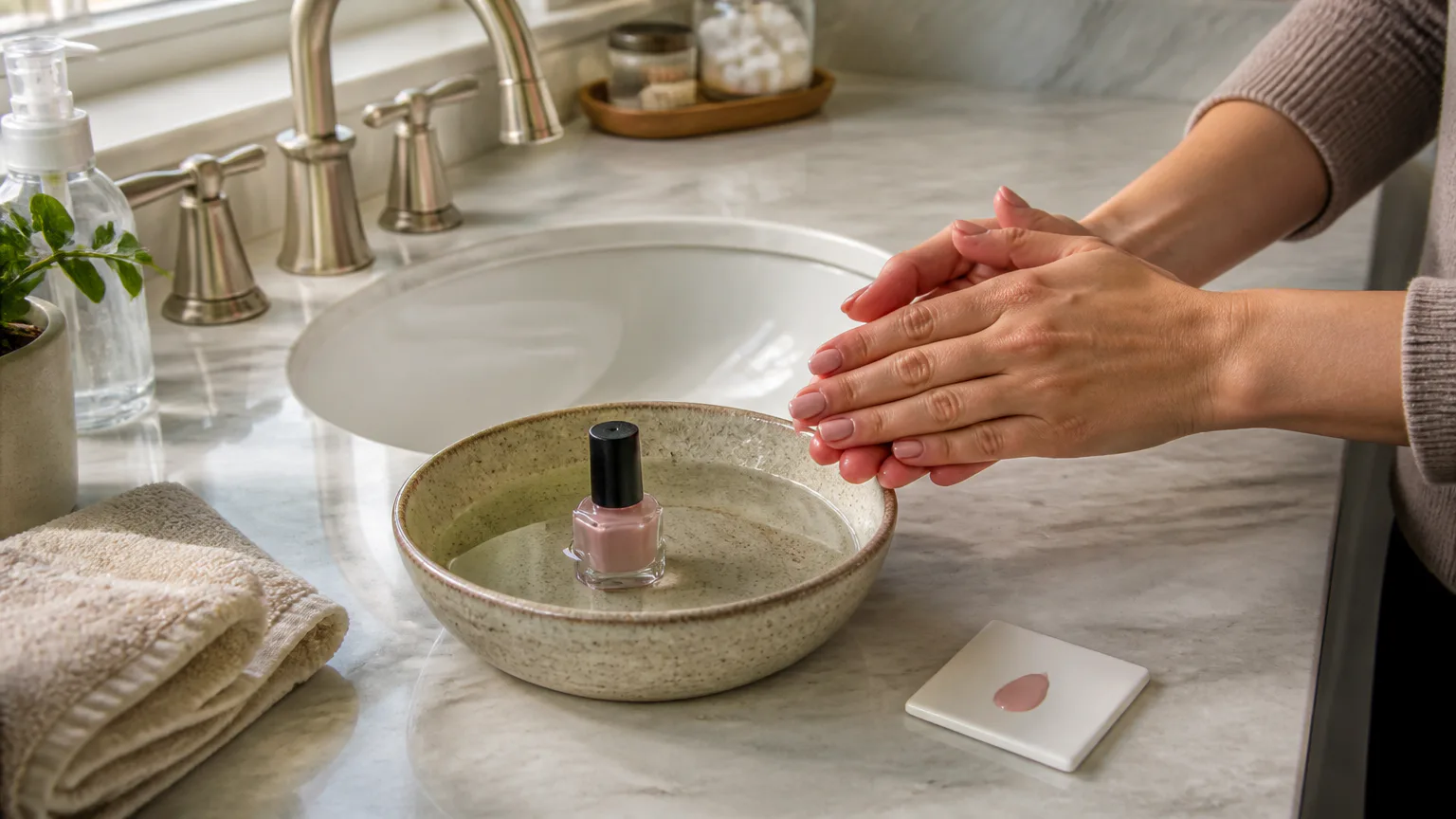
Warm water can temporarily loosen mildly thickened regular lacquer when dedicated thinner is unavailable. Keep the bottle closed and use warm or hot tap water, never boiling water. Heat makes the existing liquid flow more easily, but it does not replace evaporated solvents.
- Close the bottle firmly and check that the cap is sealed.
- Place the closed bottle in warm water for approximately two minutes.
- Remove the bottle and roll it gently between your palms.
- Test the polish immediately and repeat the short warming session only if necessary.
This method will not reliably restore polish that has become rubbery or nearly solid. Do not microwave the bottle, place it in boiling water, or heat it near an open flame because nail lacquer contains flammable solvents.
Avoid Acetone Inside the Bottle
Pure acetone and nail polish remover can make thick lacquer look liquid for a short time, but they may change its drying behavior, shine, color, finish, and wear time. Acetone can also cause shrinkage and weaken the film the polish forms on the nail.
- Use dedicated nail polish thinner as the normal treatment for regular lacquer.
- Reserve pure acetone for a last-resort experiment on a low-value bottle, using one drop only.
- Use nail polish remover only as a last resort, also limiting it to one drop.
- Expect overuse to permanently degrade the formula instead of restoring it.
Acetone is useful outside the formula. A small amount can loosen dried polish around the bottle neck or clean residue from a brush. Use glass for acetone because it can melt some plastic containers, and keep it away from heat and flames.
Prevent Nail Polish from Thickening
Most thickening happens when air enters the bottle during use or the cap no longer seals tightly. Cleaning the neck and storing the bottle correctly reduces solvent loss and helps the polish remain workable for longer.
- Wipe dried polish from the bottle neck and cap threads before closing the bottle.
- Tighten the cap immediately after applying polish.
- Store bottles upright in a cool, dark place with a consistent temperature.
- Avoid bathroom storage because heat, humidity, and temperature changes can shorten polish life.
- Roll the sealed bottle gently when mixing instead of shaking it and creating air bubbles.
- Keep the brush and cap free of dried product so the seal remains airtight.
Do not add thinner as a routine preservative. Add it only when the lacquer has thickened, and use the smallest amount that restores a smooth application.
Reviving a bottle is only a temporary fix if you keep it in a hot bathroom or leave the cap loose. Store each bottle upright in a cool, dry, dark place, and wipe the neck clean so the cap seals tightly. These habits help store nail polish properly and reduce how often you’ll need thinner or a replacement bottle.
Choose Thinner for Your Polish Type
Match the thinner to the formula before adding anything. Regular nail lacquer needs a lacquer thinner, while gel polish is cured under UV or LED light and has different chemistry. Standard thinner, pure acetone, and nail polish remover are not appropriate for gel polish.
| Thinner option | Polish type | Use | Starting amount | Key active solvents |
|---|---|---|---|---|
| OPI Nail Lacquer Thinner | Regular nail lacquer | Reviving thickened standard lacquer | 2–3 drops | Butyl acetate; ethyl acetate |
| Seche Restore | Regular lacquer and top coats | Restoring fast-dry top coats and classic lacquer | 2–3 drops | Butyl acetate; toluene; isopropyl alcohol |
| Beauty Secrets Nail Polish Thinner | Regular nail lacquer | Thinning conventional polish | 2–3 drops | Butyl acetate; ethyl acetate; heptane |
| Gel-polish thinner | UV- or LED-cured gel polish | Reviving thick or tacky soak-off gel polish | 1–2 drops | Specialized gel solvents |
Use only a product made for gel formulas when treating gel polish. If the gel polish has chemically changed, remains stringy, or no longer cures correctly under its intended lamp, replacing it is safer than using regular lacquer thinner.
Know When to Replace the Bottle
Thinning cannot rebuild a formula that has chemically broken down or dried into a solid mass. A bottle that smells wrong, contains permanent rubbery clumps, or separates again immediately after careful mixing is not a good candidate for revival.
- Replace polish that has an unusual odor.
- Replace polish that remains solid or rubbery after dedicated thinner is added gradually.
- Replace polish with irreversible separation or a major unexplained color change.
- Replace gel polish that no longer cures correctly after the proper gel product has been used.
- Replace any polish that applies unevenly, stays wet, or repeatedly smudges after treatment.
A 20-year-old bottle is unlikely to be worth restoring, especially if it has been opened repeatedly or stored in a warm environment with changing temperatures. If an older bottle has sentimental value, test only a small amount and avoid using it when the odor or texture seems abnormal.
A bottle that is thick but still has its usual color and smell may be salvageable. Foul odors, severe separation, or unusual discoloration are stronger warning signs than age alone and suggest it’s time to throw it out. Recognizing the broader nail polish warning signs can help you discard products before they become unpleasant or unsafe to use.
FAQs
Can you put new nail polish over old nail polish?
Yes, if the older layer is fully dry, smooth, and firmly attached. Remove peeling or lumpy polish first because a fresh coat will not correct an unstable base and may make uneven texture more noticeable.
Can revived nail polish be used on natural nails?
Use revived regular lacquer only when it has returned to a normal smell, smooth consistency, predictable drying, and even application. Discard it if it remains tacky, separates quickly, or behaves differently after thinning.
How many drops of thinner should you add to nail polish?
For regular nail lacquer, start with 2-3 drops of thinner, mix thoroughly, and test it. For UV- or LED-cured gel polish, start with 1-2 drops of gel-polish thinner. Add small amounts gradually if needed because too much can alter the formula and coverage.
Conclusion
Use dedicated nail polish thinner for thick regular lacquer, add it gradually, and mix by rolling the sealed bottle. Warm water is only a short-term aid, while acetone belongs outside the formula except as a one-drop last resort. Replace polish with an abnormal odor, permanent separation, or irreversible clumps.