Why Does Nail Polish Bubble
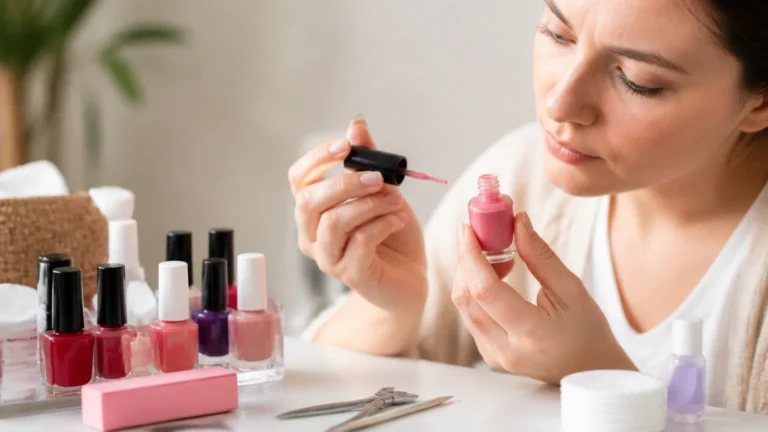
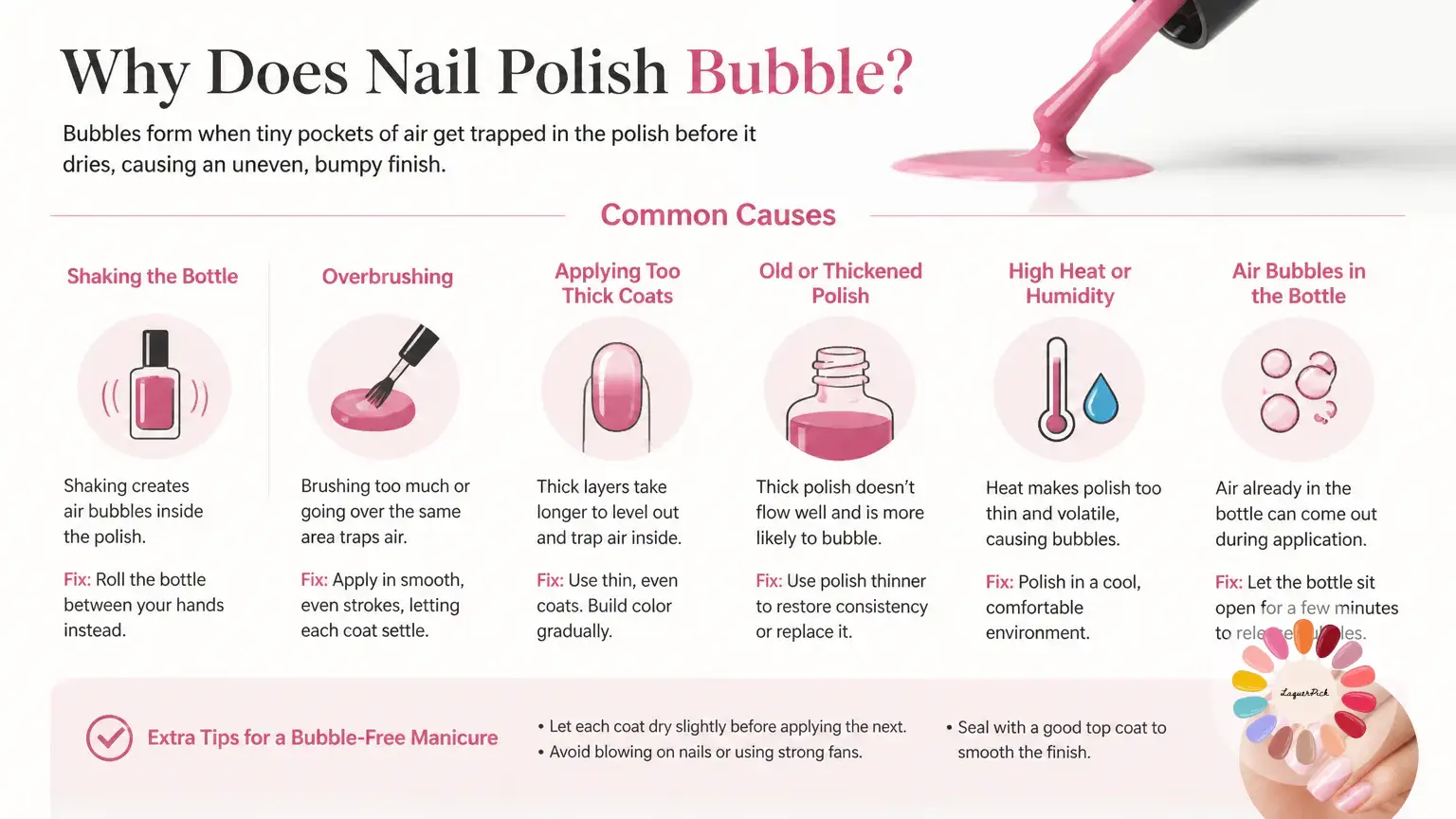
Nail polish usually bubbles when air or solvent vapor gets trapped as a coat dries. It can happen with both air-drying color and lamp-cured manicures, though the causes depend on the polish and how you apply it. Coat thickness, drying time, nail preparation and room conditions all affect whether the finish dries smoothly.
What Application Habits Cause Bubbles?
Several application habits and changes in the polish can trap air or vapor in the layers as they set:
- Thick coats: A heavy layer dries slowly underneath, trapping air or solvent vapor.
- Shaking the bottle: Vigorous shaking mixes air into the polish, which can transfer to the nail.
- Rushed layers: Applying another coat before the previous one has started to dry can trap solvent.
- Thickened polish: Polish that has lost solvent becomes gloopy and harder to spread evenly.
These issues can compound. A thick layer of older polish, for example, takes longer to dry evenly, giving air or vapor more time to form raised spots beneath the surface.
Brushing over a coat as it starts to set can trap air. Use smooth strokes and keep each coat thin. If you want to wait less between coats, quick-dry nail polish can help, but thin, even coats still matter for preventing bubbles.
Why Polish Bubbles as It Dries
As polish dries, its solvents evaporate and the coating contracts. If the surface dries faster than the layer beneath it, escaping vapor can get trapped, leaving small bumps or craters.
The nail’s surface matters, too. Ridges can release gas into the polish layers, while oil, lotion, moisture or dust can interfere with even adhesion. A smooth, clean nail gives polish a more uniform surface to settle on.
As nail polish ages, some solvents evaporate, leaving the formula thicker and more likely to spread unevenly or trap air. If its texture or smell has changed, the polish itself may be the problem rather than your application. Check whether nail polish expires before applying another coat.
How Conditions Affect Polish Drying
Heat and direct sunlight can dry the top of a coat too quickly while the layers underneath remain soft. Humidity can slow solvent evaporation, and strong airflow can dry one area faster than another. These conditions can lead to uneven drying and a bumpy finish.
Apply polish in a comfortable, shaded room with still air. Warm hands can also affect drying, so let them return to a comfortable temperature first. If the room is hot or humid, leave more time between coats. Don’t apply a quick-dry layer while the color underneath is still wet.
Warm air or a strong fan may seem like a quick way to dry polish, but they can harden the surface while the layers underneath are still soft, leaving an uneven finish. Apply thin coats and use cool, gentle airflow to make nail polish dry faster without rushing the layers and causing bubbles.
How Regular and Gel Bubbles Differ
Regular nail polish dries as its solvents evaporate. Thick coats and humid conditions can slow the process, leaving vapor trapped beneath a faster-drying surface. Thin layers and enough drying time help the solvents escape evenly.
Gel polish cures under a UV/LED nail lamp and can self-level more readily than regular polish before curing. Thick gel layers can still trap air or cure unevenly, and a lamp that doesn’t meet the product’s requirements can affect the finish. Excessive heat during curing can contribute to wrinkling or bubbles, so follow the polish’s specified cure time and lamp instructions.
How to Prevent Nail Polish Bubbles
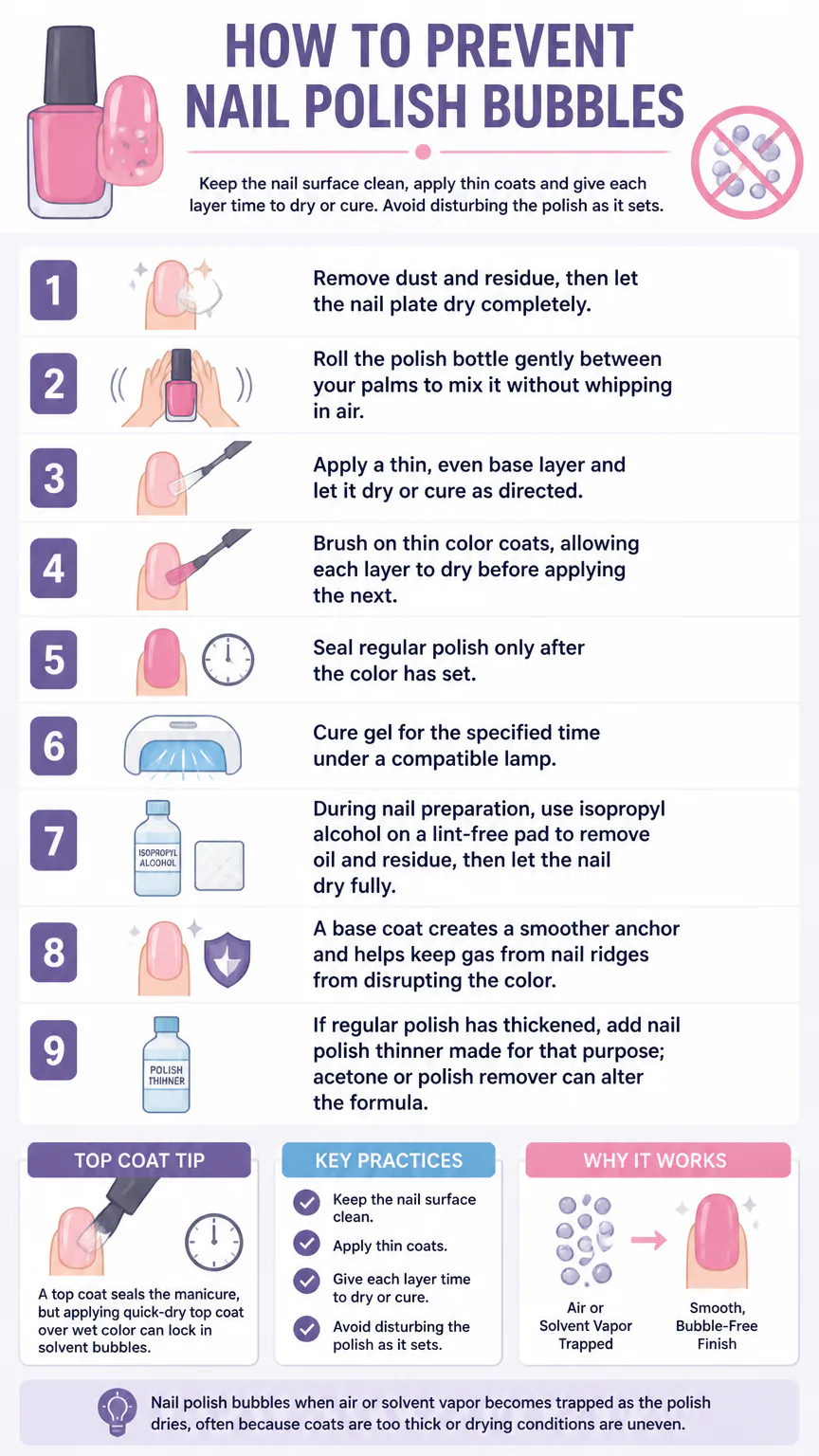
Keep the nail surface clean, apply thin coats and give each layer time to dry or cure. Avoid disturbing the polish as it sets.
- Remove dust and residue, then let the nail plate dry completely.
- Roll the polish bottle gently between your palms to mix it without whipping in air.
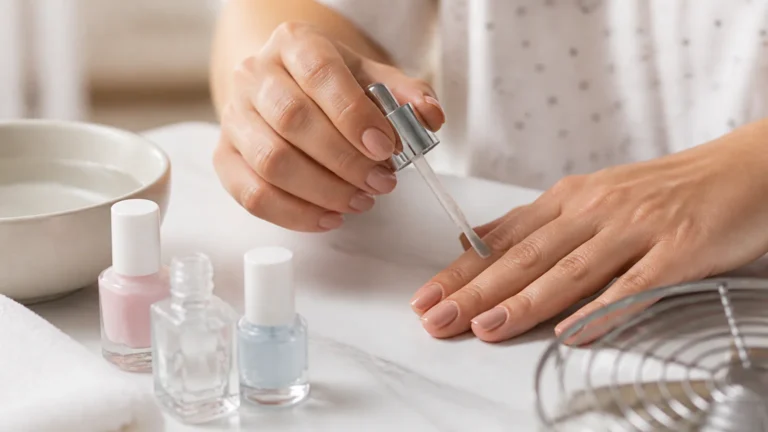
- Apply a thin, even base layer and let it dry or cure as directed.
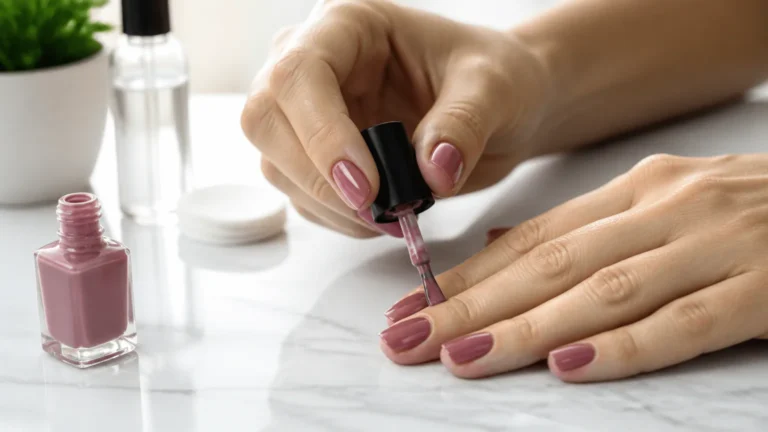
- Brush on thin color coats, allowing each layer to dry before applying the next.
- Seal regular polish only after the color has set. Cure gel for the specified time under a compatible lamp.
During nail preparation, use isopropyl alcohol on a lint-free pad to remove oil and residue, then let the nail dry fully. A base coat creates a smoother anchor and helps keep gas from nail ridges from disrupting the color. If regular polish has thickened, add nail polish thinner made for that purpose; acetone or polish remover can alter the formula. A top coat seals the manicure, but applying quick-dry top coat over wet color can lock in solvent bubbles.
How to Fix Bubbled Nail Polish
The right repair depends on whether the polish is still wet and how much of the surface is affected. Brushing a coat repeatedly after it starts to set can add texture, so let the manicure dry before deciding whether to touch it up or start over.
- If the polish is still wet, stop adding layers and let it dry undisturbed before checking the bubbles.
- If the polish is fully dry and the texture is minor, lightly buff the affected area, remove the dust, then apply a fresh, thin layer.
- If bubbles cover much of the nail or leave deep craters, remove the polish and reapply it in thin coats.
- For gel polish, don’t try to smooth uncured product by adding more gel. Follow the product’s removal and reapplication directions.
A fresh top coat may improve minor surface texture after the polish has dried, but it won’t erase deep bubbles. Bubbling is generally cosmetic. A rough finish can catch on fabric, and the manicure may chip or peel sooner.
FAQs
Why is my OPI nail polish bubbling?
The brand alone doesn’t identify the cause. Thick coats, air mixed into the bottle, rushed layers or polish that has thickened can all make OPI polish bubble.
What happens if you overcure gel polish?
Excessive heat or layers that are too thick can leave gel wrinkled or bubbled. Follow the product’s cure time and lamp instructions; extending the cure won’t remove bubbles.
Are bubbles in nail polish dangerous?
Bubbles are generally a cosmetic problem, not a safety concern. A rough manicure can snag on fabric and may chip or peel sooner.
Why is my nail polish not drying?
Thick coats, short waits between layers and humid conditions can slow solvent evaporation. Slow drying leaves polish soft for longer; bubbles form when air or solvent vapor gets trapped in the coating.
Conclusion
For a smoother manicure, start with a clean, dry nail and give thin layers time to dry or cure. If deep bubbles remain after the polish sets, removing the affected polish and starting again is the most reliable fix.