Can Nail Polish Go Bad? Shelf Life, Warning Signs & Safe Care
Nail polish can go bad, although regular lacquer usually becomes difficult to use before it becomes a serious safety hazard. Solvent evaporation, repeated exposure to air, light, heat and a damaged bottle seal can all change the formula. Gel polish needs more caution because an old or poorly cured product can leave reactive ingredients on or near the nail.
Signs Your Nail Polish Has Gone Bad
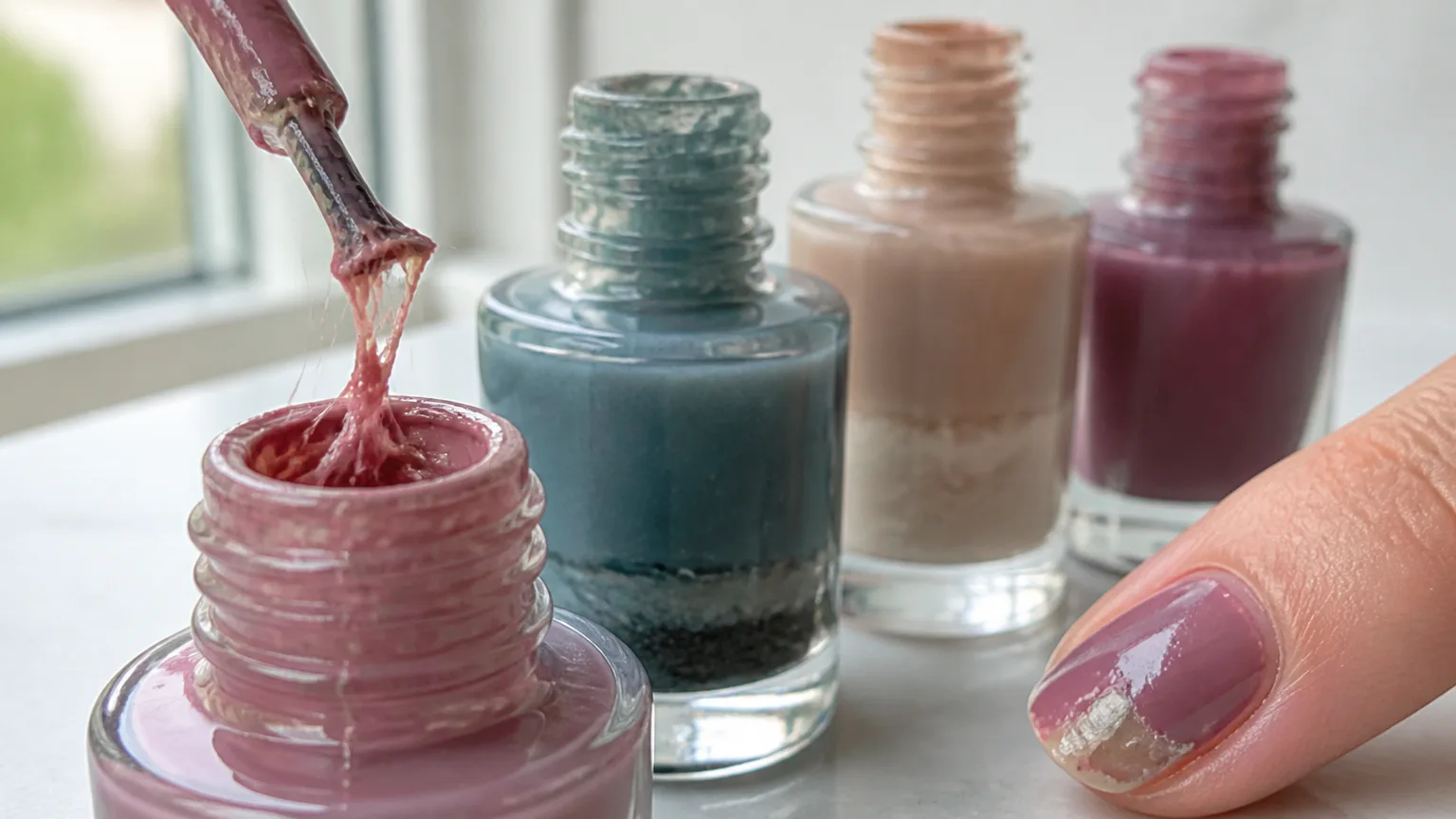
- Texture: The polish is thick, stringy, gummy, lumpy, granular or difficult to spread.
- Color: The shade has noticeably faded or changed.
- Separation: The layers do not recombine after gentle rolling.
- Odor: The smell is harsh, sour, vinegary or unusually strong.
- Performance: The polish dries slowly, applies unevenly, peels or chips quickly.
These signs do not all mean the same thing. Mild settling is normal and may disappear when you roll the closed bottle, but hard particles, permanent separation or a rubbery mass suggests the formula has broken down. If the polish burns, itches or reddens the surrounding skin, remove it promptly rather than judging it only by how smoothly it applies. With gel polish, persistent tackiness after proper curing, wrinkling or early peeling is a more serious warning because it may indicate incomplete curing.
How long does nail polish last?
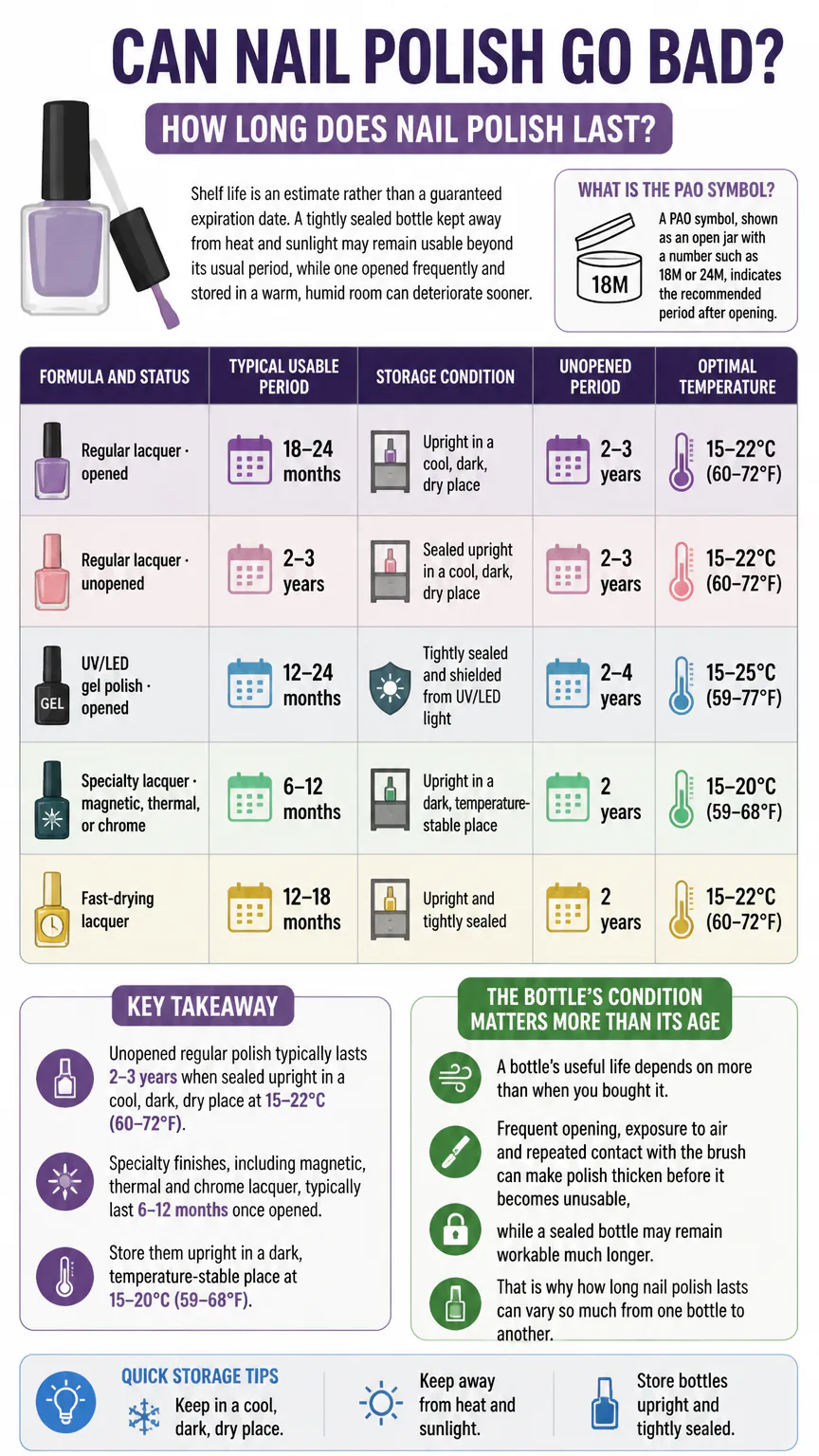
Shelf life is an estimate rather than a guaranteed expiration date. A tightly sealed bottle kept away from heat and sunlight may remain usable beyond its usual period, while one opened frequently and stored in a warm, humid room can deteriorate sooner. A PAO symbol, shown as an open jar with a number such as 18M or 24M, indicates the recommended period after opening.
| Formula and status | Typical usable period | Storage condition | Unopened period | Optimal temperature |
|---|---|---|---|---|
| Regular lacquer · opened | 18–24 months | Upright in a cool, dark, dry place | 2–3 years | 15–22°C (60–72°F) |
| Regular lacquer · unopened | 2–3 years | Sealed upright in a cool, dark, dry place | 2–3 years | 15–22°C (60–72°F) |
| UV/LED gel polish · opened | 12–24 months | Tightly sealed and shielded from UV/LED light | 2–4 years | 15–25°C (59–77°F) |
| Specialty lacquer · magnetic, thermal, or chrome | 6–12 months | Upright in a dark, temperature-stable place | 2 years | 15–20°C (59–68°F) |
| Fast-drying lacquer | 12–18 months | Upright and tightly sealed | 2 years | 15–22°C (60–72°F) |
Unopened regular polish typically lasts 2-3 years when sealed upright in a cool, dark, dry place at 15-22°C (60-72°F). Specialty finishes, including magnetic, thermal and chrome lacquer, typically last 6-12 months once opened. Store them upright in a dark, temperature-stable place at 15-20°C (59-68°F). The bottle’s condition matters more than its age alone.
A bottle’s useful life depends on more than when you bought it. Frequent opening, exposure to air and repeated contact with the brush can make polish thicken before it becomes unusable, while a sealed bottle may remain workable much longer. That is why how long nail polish lasts can vary so much from one bottle to another.
Why nail polish changes over time
Regular nail lacquer contains volatile solvents that keep it fluid. Every time the cap comes off, some solvent escapes. Repeated exposure gradually concentrates the resins and pigments, leaving the polish thicker and stringier. It may then drag across the nail and dry unevenly.
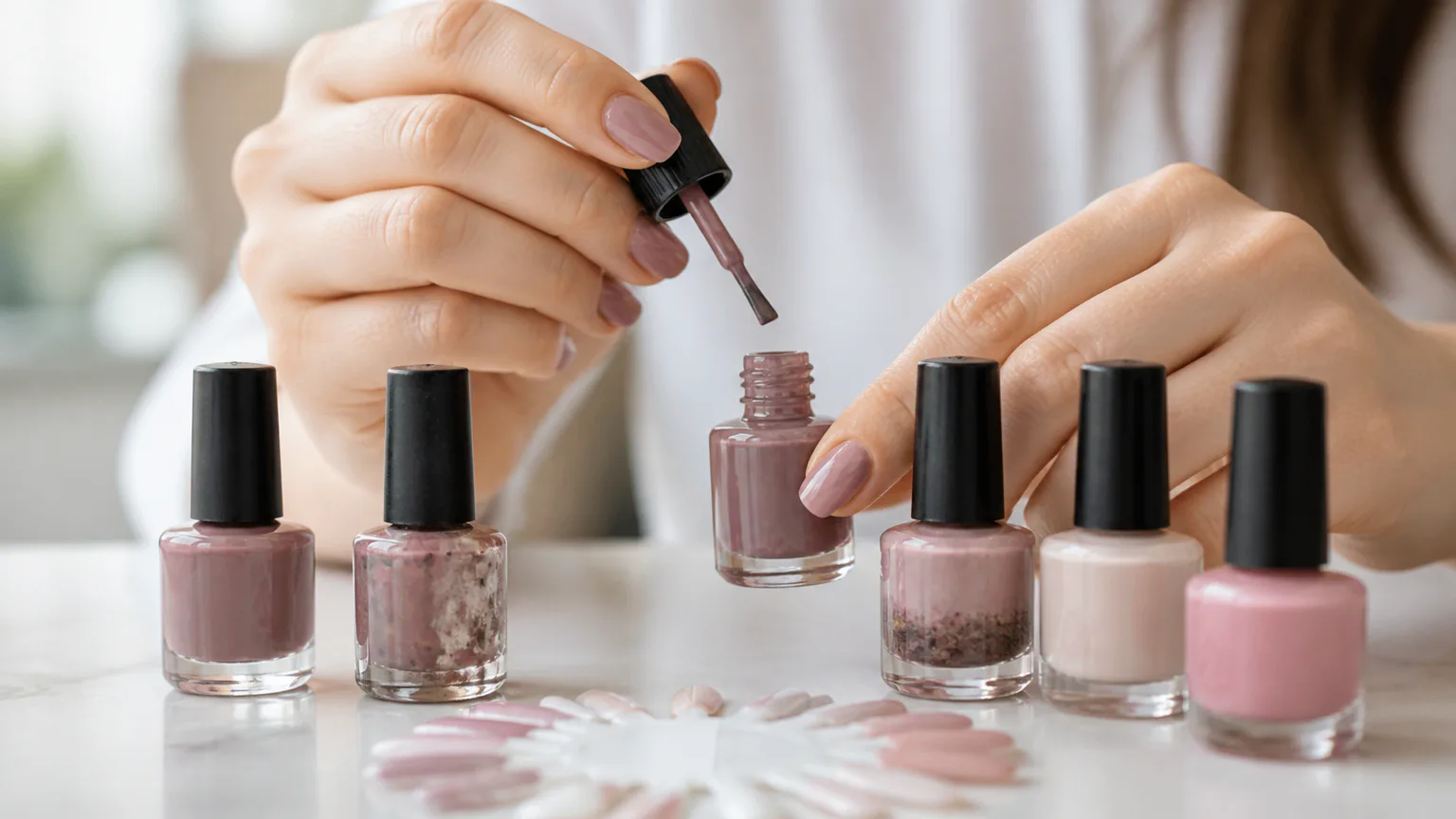
Pigments can settle during storage, but settling alone does not mean the polish is unusable. Roll the closed bottle gently to remix a sound formula. A hard layer at the bottom, permanent clumps or separation that remains after careful mixing indicates that the ingredients no longer form a stable blend.
Heat speeds solvent loss, sunlight can alter the color, and temperature changes put stress on the bottle seal. Dried polish around the neck or cap can also prevent a tight closure. That is why a bottle kept in a cool drawer may outlast one stored beside a hot sink.
Is expired nail polish safe to use?
Old regular lacquer is generally unlikely to become toxic or biologically contaminated simply because it has passed its usual service period. The more common result is a poor manicure: uneven coverage, slow drying, peeling or quick chipping. Do not use it if it causes burning, itching, redness or other irritation, and keep it off broken skin.
Regular nail lacquer
Regular nail lacquer dries through solvent evaporation. If it is only mildly thickened, you can sometimes restore it and test it on one nail. A foul odor, solid mass, rubbery clumps or persistent separation means replacement is the better choice because thinner cannot rebuild a permanently damaged formula.
UV gel polish
UV gel polish requires light curing, so age affects both application and safety. Do not use gel that has become stringy, honey-thick, granular, partly gelled, heavily separated, sour-smelling or sticky around the neck. Wrinkling, peeling within 24 hours or tackiness that remains after curing also indicates a problem.
Incomplete curing can leave reactive monomers on or near the nail. Uncured acrylates may contribute to skin sensitization and allergic reactions, especially when gel touches the surrounding skin. Use a UV/LED lamp compatible with the gel and matched to approximately 365 nm UV or 405 nm LED wavelengths. Dust, cured residue, weak lamps and aging LEDs can all contribute to under-curing.
How to test and thin old polish
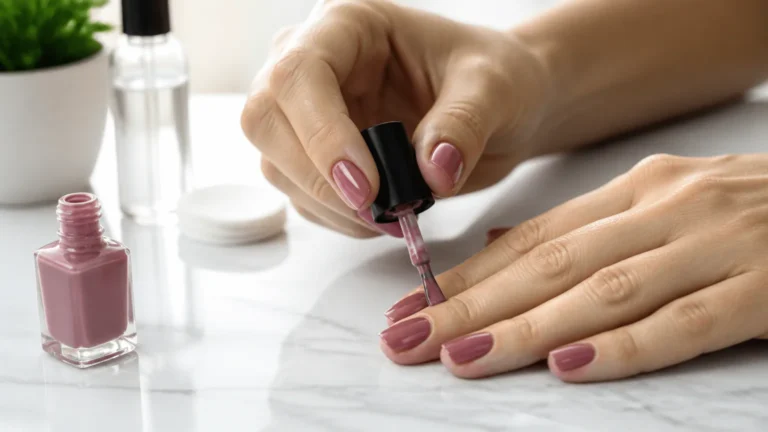
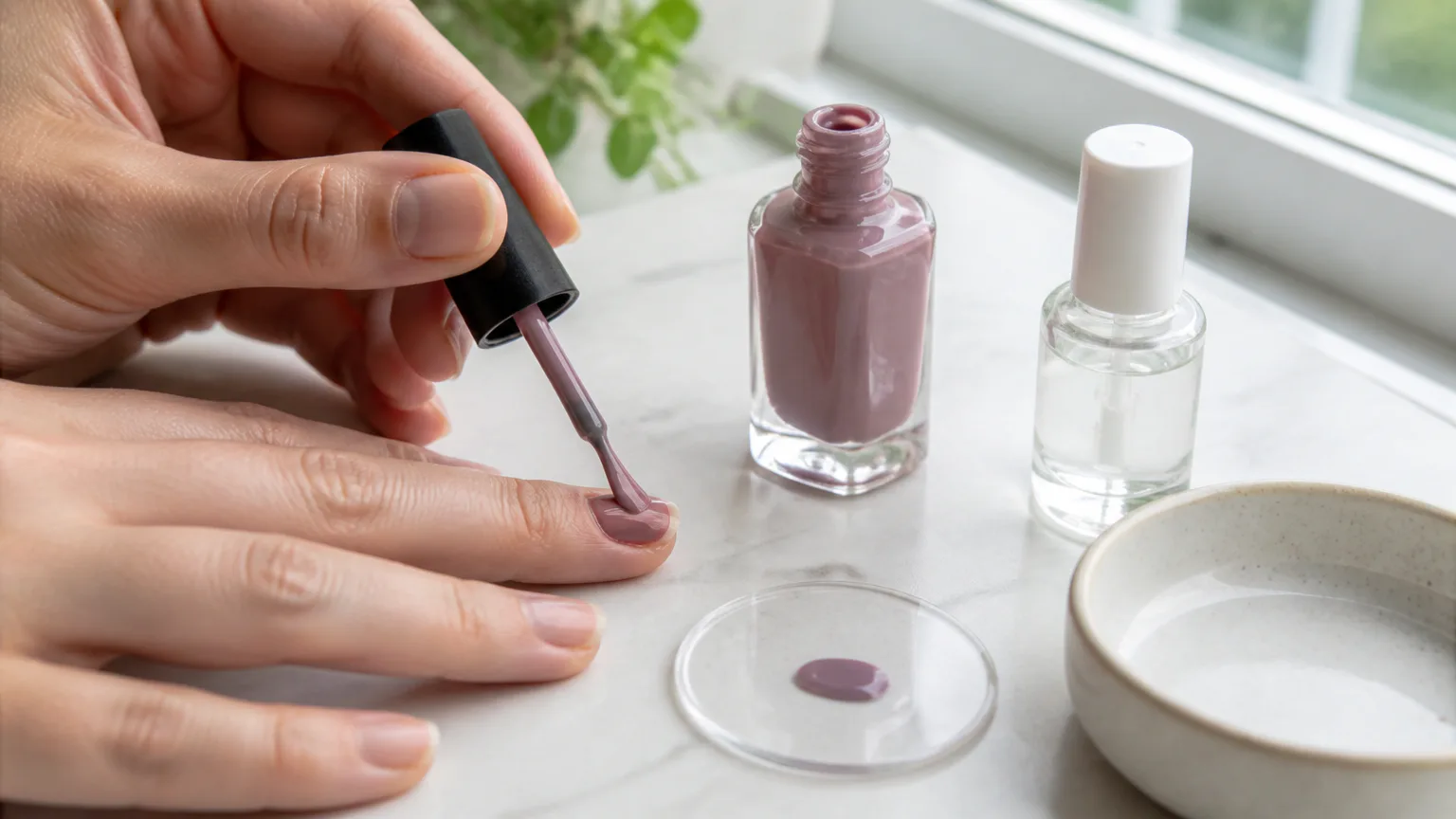
Test regular lacquer before using it for a full manicure. The brush should lift a smooth, heavy liquid that spreads without rubbery strings. A small test stroke should dry normally without persistent tackiness or severe streaking.
- Inspect the bottle, cap, brush, color and odor before applying the polish.
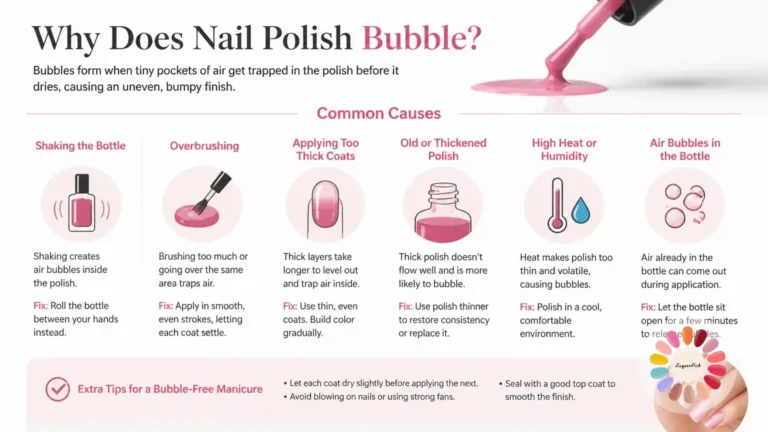
- Roll the closed bottle between your palms to recombine settled ingredients without creating excessive air bubbles.
- Apply a small amount to one nail or a test surface. Check how it spreads, how long it takes to dry and how it looks afterward.
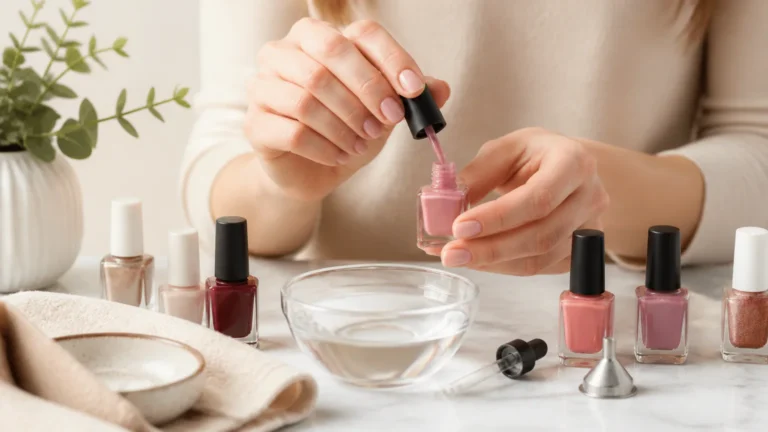
- Add two to three drops of dedicated nail polish thinner if regular lacquer is only mildly thickened.
- Close the bottle and roll it gently until the thinner is incorporated.
- Test the polish again. Stop using it if clumps, odor, separation or poor drying remain.
Use dedicated thinner only for regular lacquer. Nail polish remover, particularly remover containing acetone or ethyl acetate, can disrupt the formula and permanently ruin it. Thinner cannot rescue polish that is solid, foul-smelling, permanently clumped or heavily degraded. Do not use it to revive gel polish.
A slightly thickened bottle does not necessarily belong in the trash. The right polish thinner can restore its original consistency without changing the finish as much as nail polish remover would. Wipe the bottle neck clean, close the cap promptly and avoid shaking it repeatedly to slow further thickening. Together, these habits make nail polish last longer and make the polish easier to apply.
How to store nail polish longer
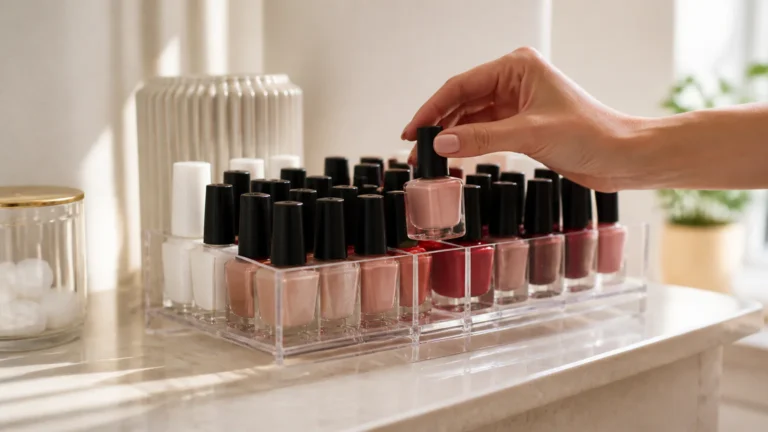
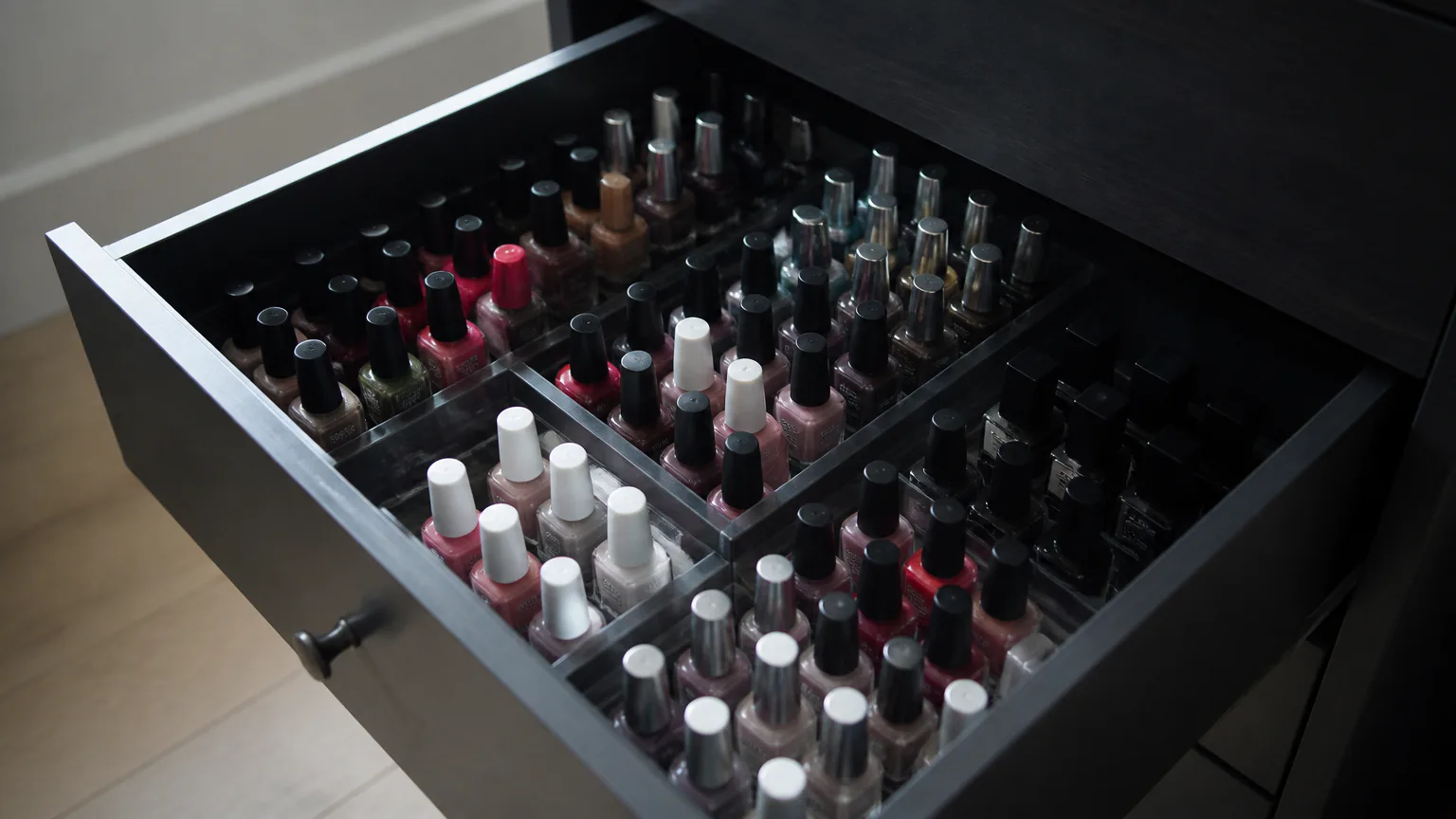
Good storage limits solvent loss and protects the bottle seal. A cool, dry, dark drawer, cabinet or closet is better than a bathroom, where humidity and temperature can fluctuate throughout the day.
- Keep each bottle upright so the formula does not collect around the cap.
- Close the cap tightly immediately after use.
- Clean dried polish from the bottle neck and cap so the seal remains even.
- Keep bottles away from direct sunlight, radiators, hot cars and other heat sources.
- Roll the bottle between your palms before use instead of shaking it vigorously.
- Keep gel polish away from curing lamps, windows and other sources of UV or LED light.
Do not leave the cap open while painting several nails. Work efficiently, wipe the neck clean and seal the bottle before moving to another color. These steps reduce the air exposure that makes regular polish thicken.
Temperature changes and direct sunlight can alter a polish’s pigments, solvents and texture, even when the bottle is tightly closed. Store bottles upright in a cool, dry, dark place to reduce leaks and limit air exposure. A consistent routine to store nail polish properly can help extend the polish’s usable life.
When to replace the bottle
Replace regular polish that remains gummy after thinning, has a permanently separated pigment layer, smells unusually sour or harsh, or has become a solid or rubbery mass. A bottle that repeatedly produces streaks, peeling or rapid chipping is no longer worth using even if it can still be spread.
Replace gel polish when its texture, color, odor or curing behavior changes. Do not try to compensate for questionable gel by extending the lamp time, applying thicker layers or using an incompatible lamp. These adjustments do not reliably correct a degraded formula or an under-curing problem.
Liquid nail polish may require household hazardous waste handling under local rules. Where permitted, take unwanted liquid polish and bulk acetone to a local household hazardous waste facility. Do not pour bulk polish or acetone down a drain, and do not place wet liquid in ordinary garbage. Small cotton balls with trace acetone residue can generally evaporate in a well-ventilated area before disposal, away from flames and heat.
FAQs
Can I use 10-year-old nail polish?
A 10-year-old bottle may still be usable if its texture, odor, color and application remain normal, but that age is well beyond the usual period for opened polish. If it is thick, permanently separated, strongly odorous or slow to dry, replace it rather than trying to save it.
Can I use 20-year-old nail polish?
Twenty-year-old polish is not a practical choice for a manicure. Long-term solvent loss and formula breakdown make poor application likely, and old gel carries additional curing and sensitization concerns.
Can old nail polish damage your nails?
Old regular polish usually causes cosmetic problems rather than direct nail damage, but it can irritate the skin. Remove it if you notice burning, redness, itching, peeling or tenderness, and avoid applying polish over damaged nails.
Does nail polish expire if it is unopened?
Unopened regular polish typically lasts 2-3 years when sealed upright in a cool, dark, dry place at 15-22°C (60-72°F). Unopened UV/LED gel polish typically lasts 2-4 years when tightly sealed and shielded from UV/LED light at 15-25°C (59-77°F). Inspect any bottle before use because it can still develop separation, thickening, color change or an unusual odor.
How long does nail polish last with a top coat?
A top coat can extend the life of a manicure by adding a protective layer, but it does not extend the shelf life of the polish inside the bottle. Reapply the top coat as directed by its formula and replace the color if it begins to apply or dry abnormally.
Can nail polish remover expire?
Nail polish remover can lose effectiveness or change if its container is left open, poorly sealed or exposed to heat. Keep it tightly closed, and do not add it to thick nail polish because its solvents can permanently disrupt the lacquer formula.
Conclusion
Regular nail polish that is only mildly thick may be worth testing with dedicated thinner. Foul-smelling, solid, permanently separated or poorly performing polish should be discarded. Treat old gel more cautiously because complete curing helps limit skin exposure to reactive ingredients.