How to Store Nail Polish for Longer-Lasting Color and Smooth Application
Nail polish lasts longest in a cool, dark, stable location with every bottle tightly sealed and stored upright. Heat, humidity, sunlight, UV exposure, air and repeated temperature changes can cause thickening, separation, fading, leaks and stuck caps. The right setup depends on the size of your collection, whether you use regular lacquer or gel polish, and how often you move the bottles.
Nail Polish Storage Steps
- Sort the bottles by formula, separating regular lacquer, gel polish, base coats, top coats, treatments and specialty products.
- Check each bottle for leaks, dried polish around the cap, severe separation or a permanently gloopy texture.
- Clean each bottle neck with acetone or nail polish remover on a cotton pad before closing the cap.
- Close each bottle firmly without forcing the cap or damaging the threads.
- Store every bottle completely upright so liquid does not collect around the cap or leak through the closure.
- Place the collection in a dark, dry, temperature-stable location between 60°F and 75°F (15°C and 24°C).
- Label each bottle with its opening date and add a small shade swatch to the cap for quick identification.
- Roll the closed bottle gently between your palms before use. If regular lacquer has thickened, add nail polish thinner when appropriate.
Keep Bottles Upright and Sealed
Upright storage keeps the formula at the base of the bottle and limits contact between the polish and the cap. Bottles stored on their sides can leak around the closure, dry out the threads and become difficult to open. Keep them vertical in a drawer, bin or travel case.
Air exposure is a major cause of thickening. After painting, wipe the bottle neck before replacing the cap. Dried polish on the threads can prevent a tight seal. If a cap is already stuck, use gentle pressure to open it, then clean the neck before closing the bottle again. Do not leave it partly closed.
Base coats and top coats need the same care as colored lacquer. Keep them upright in a cool, dark drawer near your work surface, and do not leave an open bottle unattended while applying several coats.
Protect Polish From Heat and Light
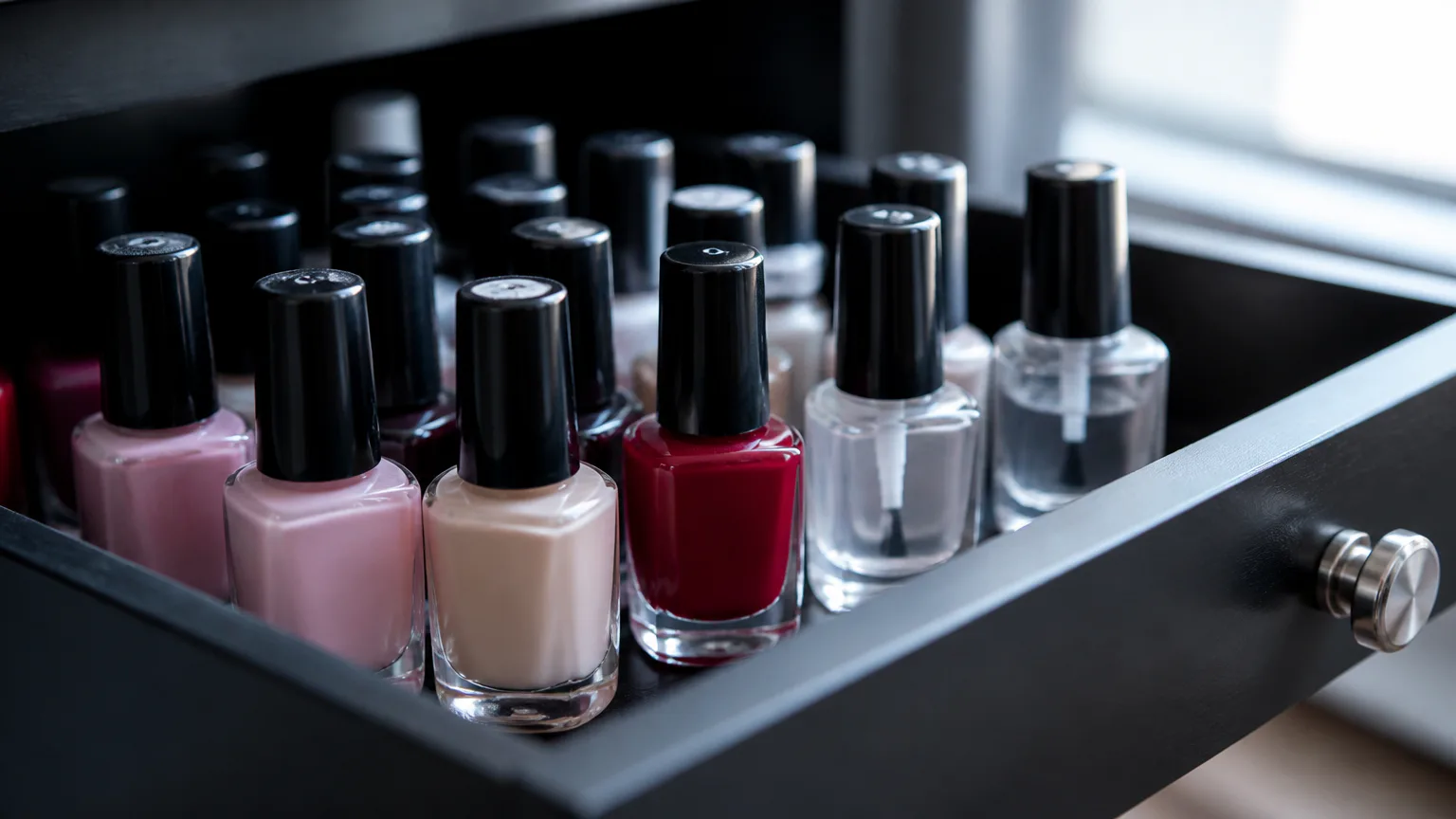
Choose a location that stays close to room temperature throughout the day. A bedroom drawer, closet shelf or interior cabinet is generally better than a windowsill or a room with large temperature swings.
- Keep bottles between 60°F and 75°F (15°C and 24°C).
- Block direct sunlight and strong artificial light.
- Keep gel polish away from sunlight, UV light and stray light from LED curing lamps.
- Avoid bathrooms because shower steam creates humidity and temperature fluctuations.
- Keep bottles away from radiators, heating vents, hot appliances and warm vehicles.
- Limit repeated movement between hot and cold locations.
Light can fade pigments and affect light-sensitive formulas, especially gel polish. A dark drawer is safer than an exposed counter, while an opaque bin provides extra protection for a larger collection.
Choose Storage for Your Collection
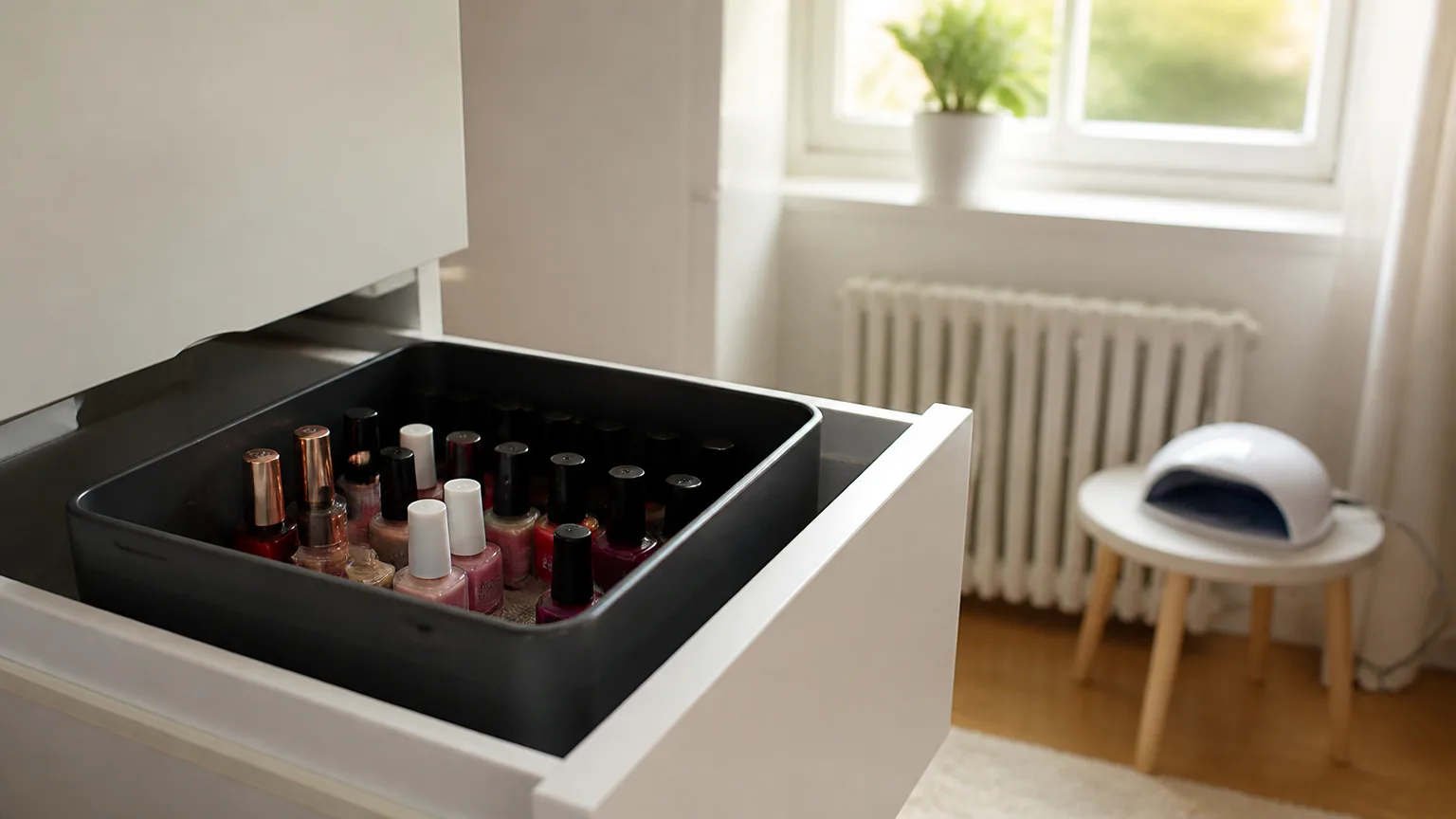
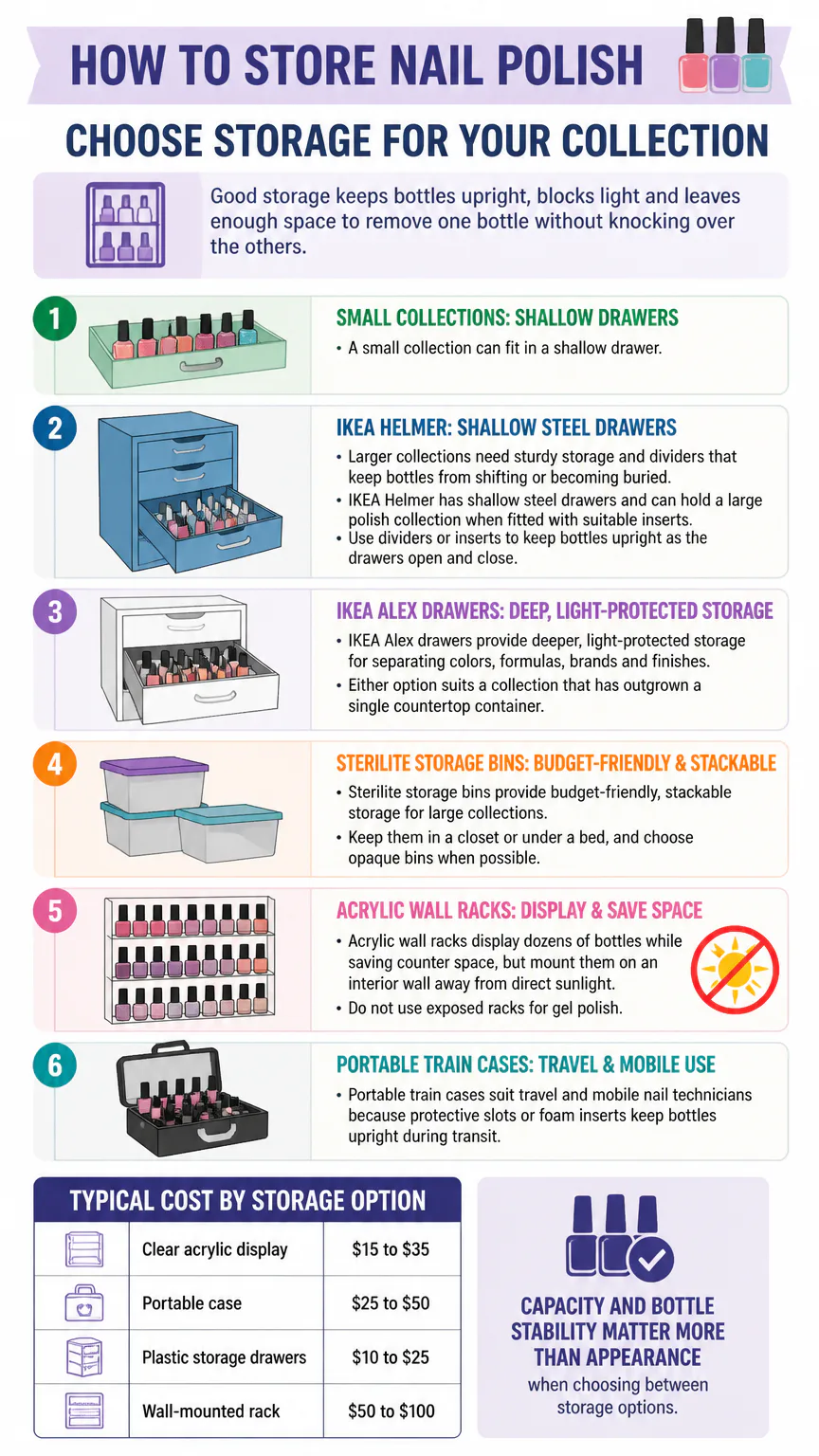
Good storage keeps bottles upright, blocks light and leaves enough space to remove one bottle without knocking over the others. A small collection can fit in a shallow drawer. Larger collections need sturdy storage and dividers that keep bottles from shifting or becoming buried.
IKEA Helmer has shallow steel drawers and can hold a large polish collection when fitted with suitable inserts. Use dividers or inserts to keep bottles upright as the drawers open and close.
IKEA Alex drawers provide deeper, light-protected storage for separating colors, formulas, brands and finishes. Either option suits a collection that has outgrown a single countertop container.
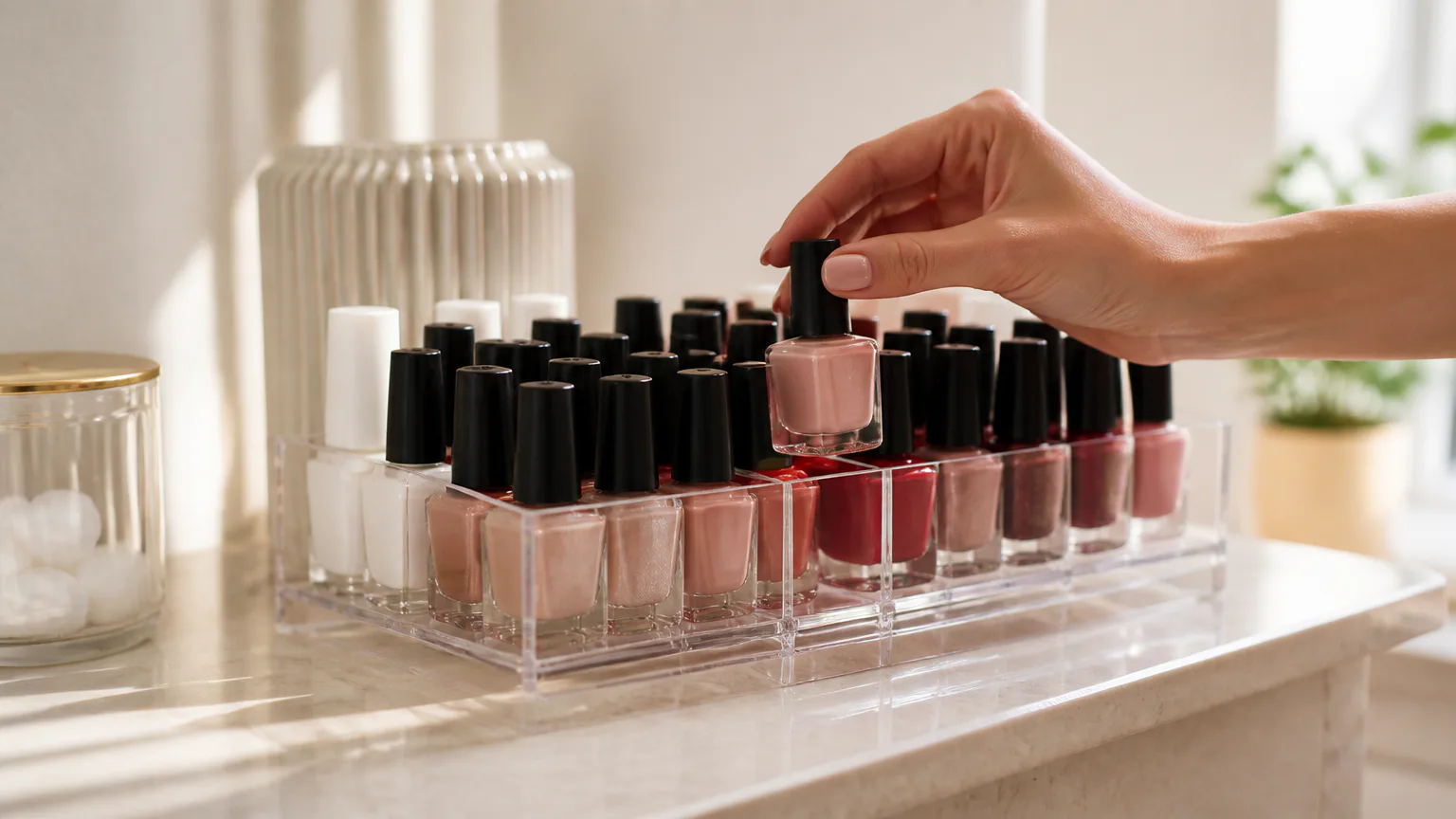
Sterilite storage bins provide budget-friendly, stackable storage for large collections. Keep them in a closet or under a bed, and choose opaque bins when possible. Acrylic wall racks display dozens of bottles while saving counter space, but mount them on an interior wall away from direct sunlight. Do not use exposed racks for gel polish.
Portable train cases suit travel and mobile nail technicians because protective slots or foam inserts keep bottles upright during transit. Capacity and bottle stability matter more than appearance when choosing between storage options.
| Storage option | Typical cost |
|---|---|
| Clear acrylic display | $15 to $35 |
| Portable case | $25 to $50 |
| Plastic storage drawers | $10 to $25 |
| Wall-mounted rack | $50 to $100 |
Organize Bottles by Color or Formula
Start with functional categories, then sort by shade. Keep products used together near one another and divide colors by brand, finish, season or color family. A consistent system reduces searching and makes duplicate or unused shades easier to spot.
- Separate base coats, top coats, treatments, colors and specialty formulas.
- Group colored lacquer by brand, finish or color family.
- Keep seasonal shades together if you use them only during certain months.
- Mark each bottle with its opening date.
- Paint a small swatch on the cap or add a visible shade label.
- Use dividers or shallow trays so bottles stay upright when a drawer is partly empty.
Sorting by color gives a small collection the quickest visual access. With a larger collection, formula and brand categories are more useful because they keep gel, treatment and lacquer bottles separate.
Should You Refrigerate Nail Polish?
Refrigeration is optional and usually unnecessary. For everyday use, room-temperature storage in a dark, stable location is simpler. A refrigerator may help with unopened backup bottles kept for several months or in homes that are extremely hot and humid without air conditioning.
A dedicated skincare mini-fridge can provide a separate cold-storage environment for unopened backups for six to 12 months. Do not store polish in a food refrigerator, where bottles may be knocked over or exposed to frequent door movement. Cold polish can become thicker during application, and moving it from a cold environment can create condensation on the bottle.
- Use cold storage only for sealed backup bottles that will not be used immediately.
- Keep bottles upright and protected from impacts.
- Let refrigerated polish return fully to room temperature before opening or applying it.
- Do not warm cold polish with a hair dryer, radiator, hot water or another direct heat source.
If the refrigerator cannot maintain a stable temperature, use a dark interior drawer instead.
Fix or Discard Old Polish
Thick regular lacquer can sometimes be restored, but the condition of the formula determines whether it is worth saving. Separation alone does not always mean that a bottle should be discarded; many formulas settle during storage and can be recombined by rolling the bottle gently.
- Roll the closed bottle slowly between your palms instead of shaking it aggressively.
- Add a few drops of nail polish thinner to thickened regular lacquer.
- Close the bottle and roll it again after adding the thinner.
- Add more thinner gradually if the formula remains too thick.
- Discard polish that stays gloopy, completely separated, clumped or unusable after restoration.
Never use acetone to thin nail polish. Acetone can clean dried polish from the bottle neck, but adding it to the bottle changes the lacquer formula and can ruin its application. Store acetone separately in a cool cabinet away from heat sources, electrical outlets and open flames because it is highly flammable. Keep nail polish thinner tightly sealed in a cool, well-ventilated area away from flames.
Even tightly sealed bottles can become thick, stringy or unusually separated over time, especially after heat exposure or frequent contact with air. Knowing when nail polish expires can help you decide whether careful thinning might restore it or whether it should be discarded.
Maintain the Collection Over Time
Opened nail polish commonly remains usable for about one to two years, although the formula, exposure and storage conditions affect its actual condition. An opening-date label helps you use older bottles first and prevents forgotten products from taking up space indefinitely.
Review the collection when a bottle develops a persistent leak, damaged cap, unusual odor, gelatinous texture or a formula that no longer spreads evenly. Clean the storage surface if a bottle has leaked. Keep flammable liquids such as acetone and thinner in their own secure area rather than storing them with color bottles.
Do not leave gel polish beside a curing lamp or in a transparent container exposed to stray LED light. Even small amounts of unwanted UV exposure can begin changing the formula before the bottle is intentionally cured.
Long-term care continues after you put the bottles away. Wipe the necks clean, close each cap firmly, and avoid contaminating the brushes to slow formula changes. These simple habits make nail polish last longer while keeping the brush and application texture consistent between manicures.
Small-Space Nail Polish Storage
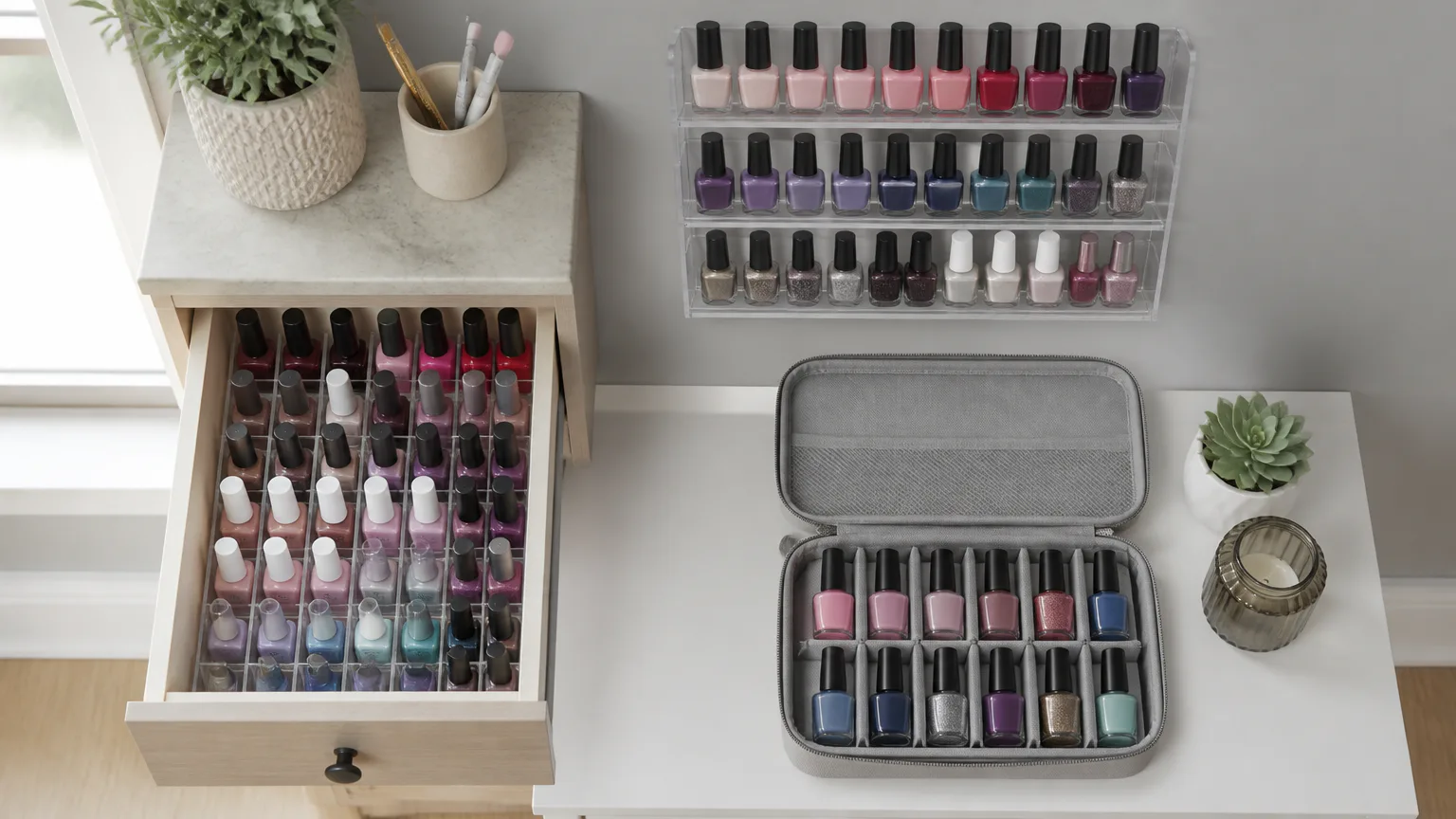
- Use a drawer when floor and counter space are limited. A compact drawer keeps bottles upright and protected from light without taking up visible worktop space.
- Choose a rack when wall space is available. An acrylic wall rack uses vertical space, but keep it away from sunlight and arrange the bottles so each one remains upright.
- Use a case for a small, movable collection. A compact organizer case keeps bottles together when the collection moves between rooms or needs to be stored away after use.
- Move growing collections into a bin. A clear plastic bin can hold a small group at first, but a collection of about 50 bottles can outgrow one container. Use a larger bin only when the bottles remain upright and the location stays cool and dark.
For the smallest footprint, start with one drawer or compact case and keep only the bottles you use. Add a rack only when the wall location is shaded and stable.
FAQs
How long can nail polish stay usable after opening?
Opened nail polish commonly lasts about one to two years when sealed well and stored away from heat and light. Discard a bottle that remains permanently gloopy, clumped or unusable after thinning.
Can nail polish be stored in a bathroom?
A bathroom is not ideal because shower humidity and repeated heat changes can shorten the formula’s useful life. Use a dry drawer or closet in another room whenever possible.
How should gel polish be stored?
Store gel polish upright in an opaque container or deep drawer away from sunlight, UV light and stray LED lamp light. Keep the cap clean and tightly closed to limit air exposure.
Should nail polish be shaken before use?
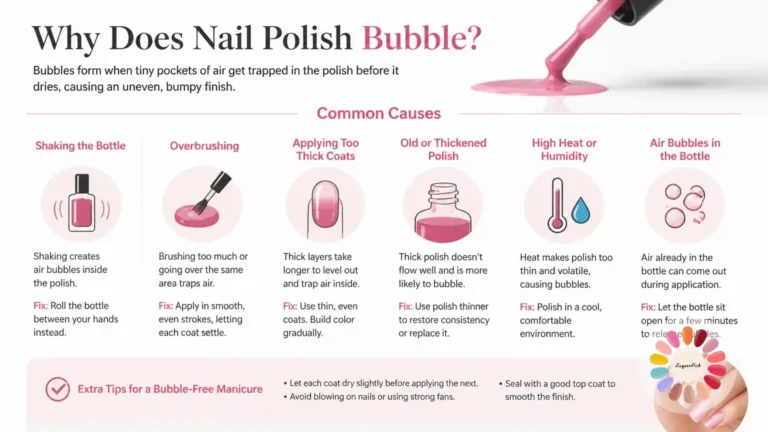
Roll the closed bottle gently between your palms to mix the formula. Vigorous shaking can introduce air bubbles that affect application.
Pigments and other ingredients can settle during storage, so roll the bottle gently between your palms instead of shaking it vigorously, which can create bubbles. Let it rest briefly once mixed, then apply nail polish in thin, controlled coats for a smoother finish.
What is the best storage choice for a small collection?
A shallow, dark drawer or compact upright container is usually sufficient. Add cap swatches and opening dates so the bottles remain easy to identify without keeping them on an exposed counter.
Can nail polish be stored upside down?
Upside-down storage is not recommended because it keeps polish against the cap, which can dry the threads and increase the risk of leaks.
Conclusion
Store nail polish upright, tightly sealed and away from heat, humidity and light. Use a stable room-temperature drawer for everyday bottles, refrigerate only sealed backup bottles when needed, and restore thickened regular lacquer with nail polish thinner.