How to Remove Nail Polish Safely at Home
How to remove nail polish without damaging your nails depends on the formula, the remover you have, and how much rubbing your nails and skin can tolerate. Regular polish usually lifts after a short solvent hold, while glitter, gel and dip require more contact time. Pair this with how to apply nail polish and how to make nail polish last longer so the next manicure starts on a healthier surface. Work in a well-ventilated area and moisturize afterward to reduce dryness and irritation.
Remove Nail Polish Step by Step
- Work in a well-ventilated area and protect the surface beneath your hands before opening the remover.
- Choose a remover that matches the polish: non-acetone or soy-based remover for regular polish, acetone for stubborn regular or glitter polish, and 100% acetone for gel or dip.
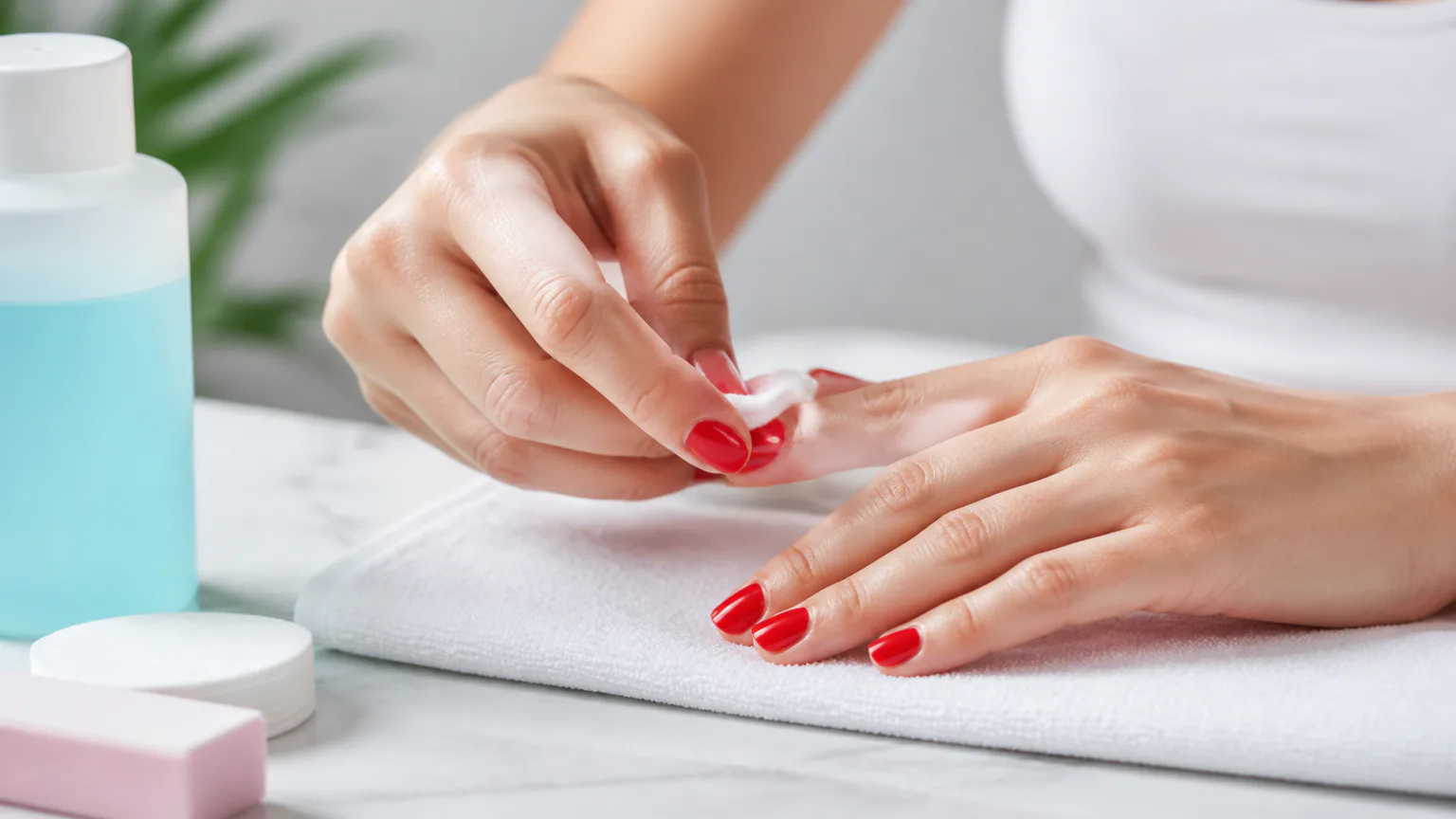
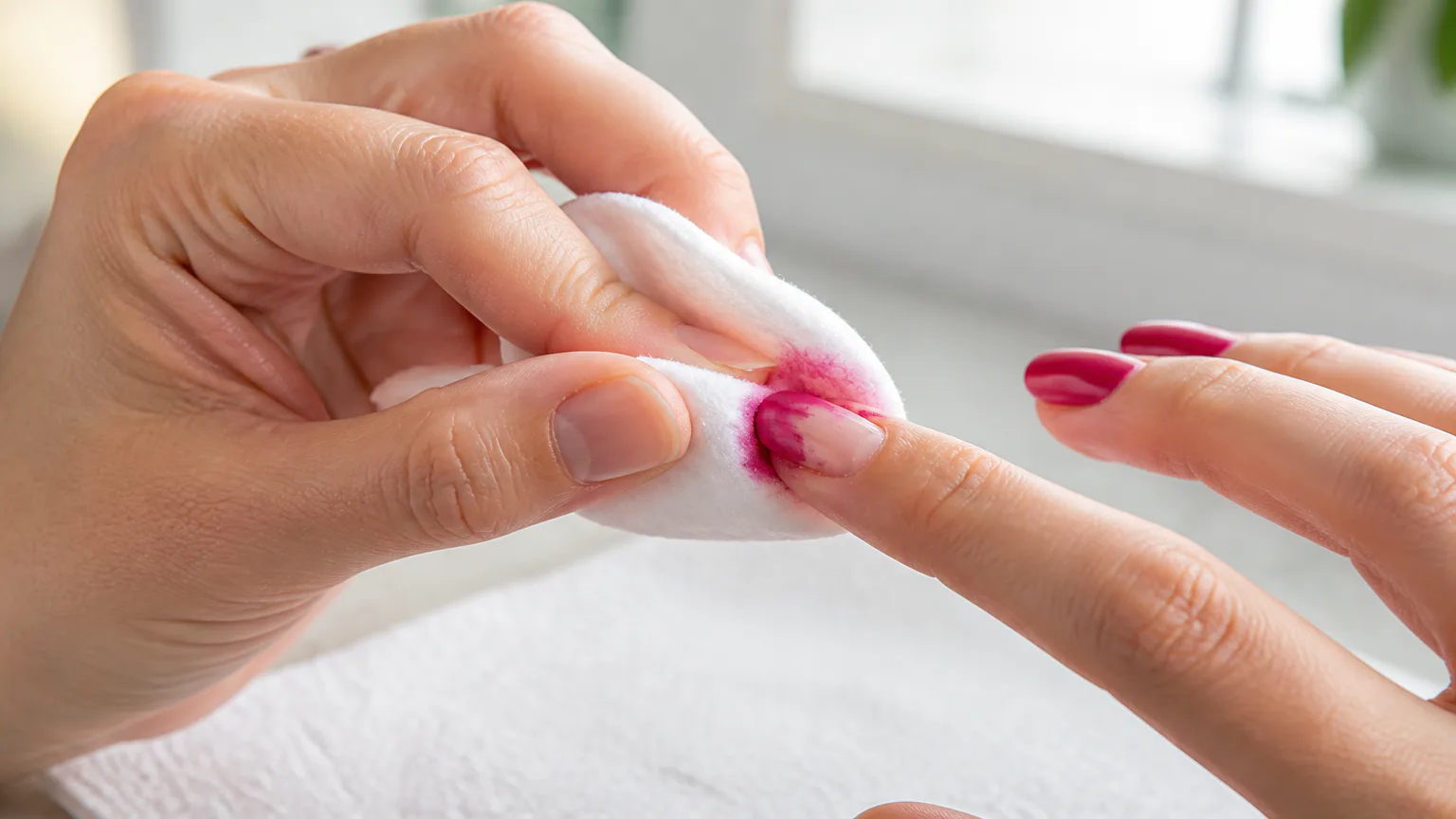
- Saturate a cotton pad with remover just before placing it over one nail.
- Hold the saturated pad against the nail for 10-30 seconds with acetone, 60-90 seconds with non-acetone remover, or 2-3 minutes with soy-based remover. Then wipe gently.
- Slide the pad from the base of the nail toward the free edge in one controlled motion.
- Repeat the hold-and-wipe motion only where residue remains, using a fresh saturated section for each nail.
- Wash your hands with soap and warm water once the polish is gone.
- Dry your hands gently. Apply hand moisturizer, then massage cuticle oil into each nail bed, cuticle and the surrounding skin.
Choose the Right Removal Method
The remover affects both the speed of removal and how much oil is stripped from the nail and surrounding skin. Acetone is the fastest general-purpose option, while non-acetone and soy-based formulas are better suited to regular polish when dryness or sensitivity is a concern.
| Removal option | Avg. removal time | Nail impact | Target polish type | Best use |
|---|---|---|---|---|
| Acetone | 10–30 seconds per nail | High stripping; drying | Glitter, gel, acrylic, dark lacquer | Fast removal of layered, pigmented or textured polish |
| Non-acetone remover | 60–90 seconds per nail | Moderate drying | Standard crème and metallic polish | Regular polish on natural nails |
| Soy-based remover | 2–3 minutes soaking | Conditioning; oil-retaining | Standard non-gel polish | Dry, brittle or chemically damaged nails |
| Household alternatives | 3–5 minutes active rubbing | Mild abrasive friction | Light standard polish layers | Emergency removal without commercial remover |
Non-acetone remover commonly contains ethyl acetate. It works well on traditional polish but may require more rubbing on dark or multilayered color. Soy-based remover takes longer and needs a longer dwell time, but it is a gentler option for fragile natural nails. A 6-ounce bottle of acetone commonly costs $1, $4.
Remove Glitter, Gel, and Dip Polish
Glitter particles and cured enhancements resist ordinary wiping because they create a thicker, more textured layer. Soaking softens the coating and reduces the need to scrape, pry or peel it from the nail plate.
- Use a fine nail file to remove the shiny top seal from gel polish. Stop once the surface loses its shine.
- Cut foil into pieces large enough to wrap each fingertip securely.
- Saturate a small cotton pad with 100% acetone and place it directly over the coated nail.
- Wrap the fingertip with foil to hold the acetone-soaked pad firmly against the nail.
- Hold the pad against the nail for 10-30 seconds, then gently wipe away the softened product.
- Slide away any remaining softened product with the saturated pad.
- Rewrap and soak any material that remains instead of scraping or picking at it.
100% acetone is concentrated and effective for gel, dip and heavy glitter, but it dries the nail and cuticle area quickly. Do not rip cured polish from the nail. Peeling can remove layers of the natural nail and leave rough, thin areas.
Remove Polish Without Remover
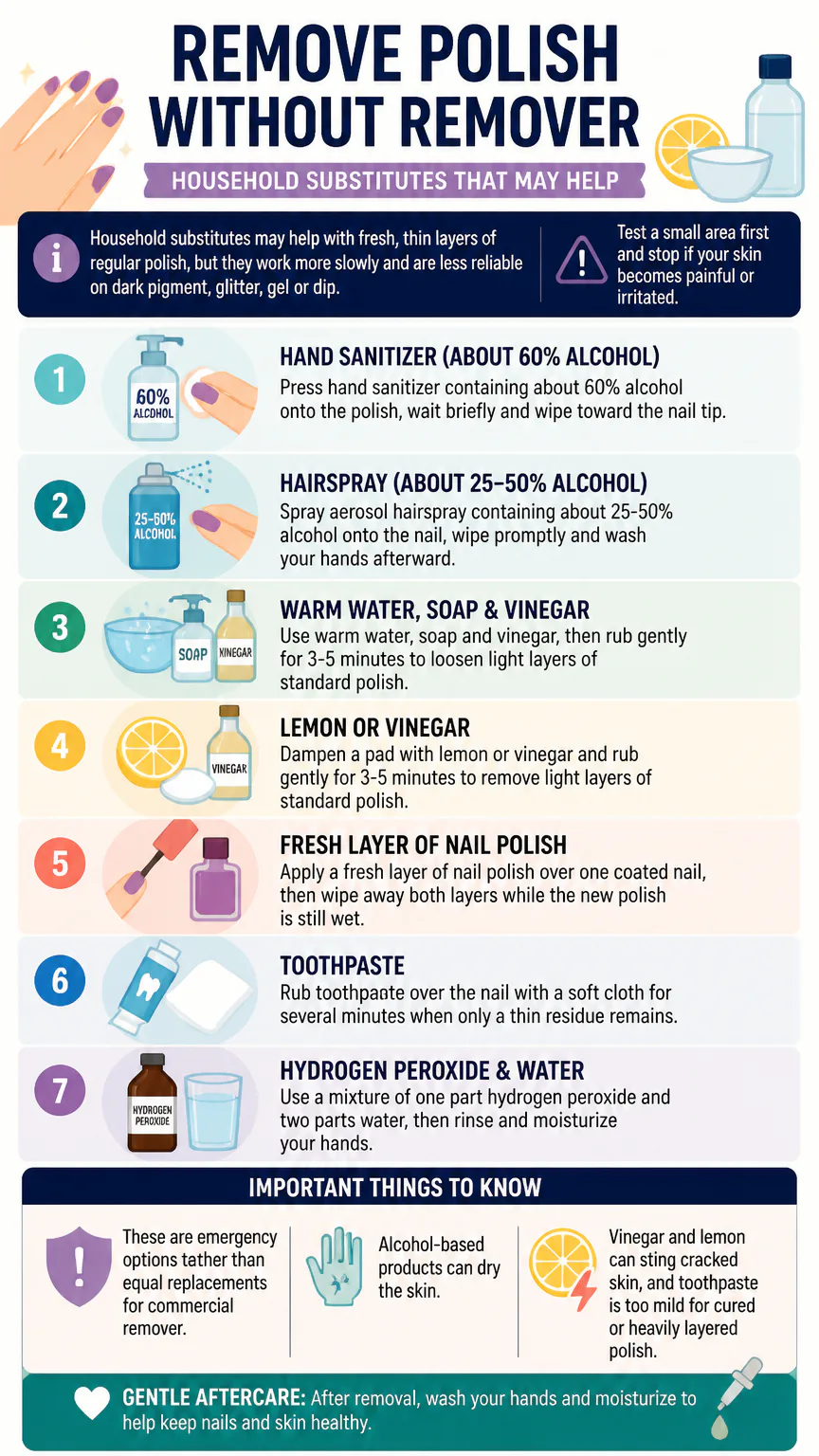
Household substitutes may help with fresh, thin layers of regular polish, but they work more slowly and are less reliable on dark pigment, glitter, gel or dip. Test a small area first and stop if your skin becomes painful or irritated.
- Press hand sanitizer containing about 60% alcohol onto the polish, wait briefly and wipe toward the nail tip.
- Spray aerosol hairspray containing about 25-50% alcohol onto the nail, wipe promptly and wash your hands afterward.
- Use warm water, soap and vinegar, then rub gently for 3-5 minutes to loosen light layers of standard polish.
- Dampen a pad with lemon or vinegar and rub gently for 3-5 minutes to remove light layers of standard polish.
- Apply a fresh layer of nail polish over one coated nail, then wipe away both layers while the new polish is still wet.
- Rub toothpaste over the nail with a soft cloth for several minutes when only a thin residue remains.
- Use a mixture of one part hydrogen peroxide and two parts water, then rinse and moisturize your hands.
These are emergency options rather than equal replacements for commercial remover. Alcohol-based products can dry the skin, vinegar and lemon can sting cracked skin, and toothpaste is too mild for cured or heavily layered polish.
Protect Your Nails and Cuticles
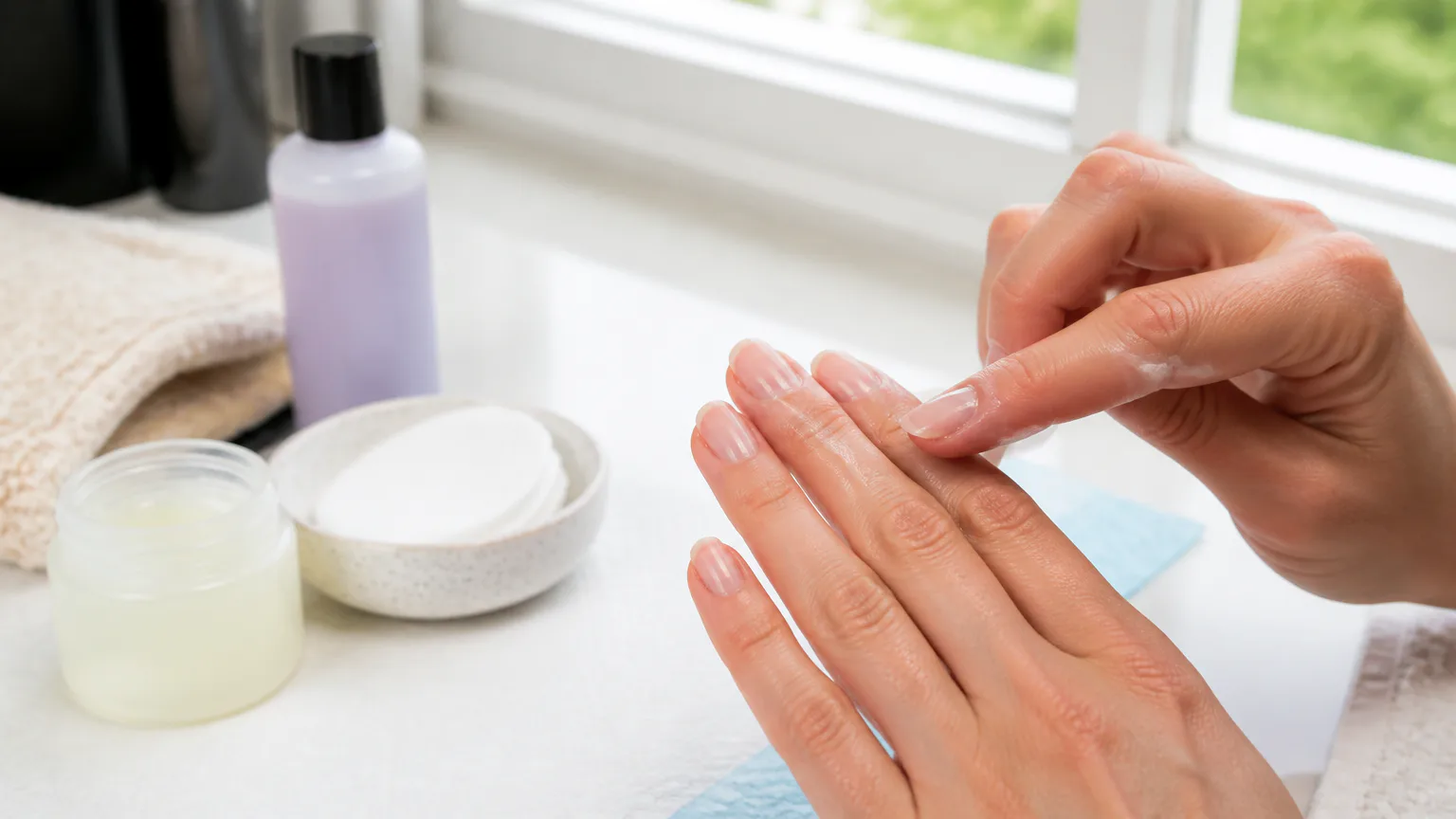
Good preparation limits solvent contact with the surrounding skin and reduces the amount of rubbing needed. Petroleum jelly protects the skin around the nail and cuticles, but keep it off the nail surface so the remover can work properly.
- Open a window or turn on an exhaust fan before opening acetone or another solvent.
- Keep acetone away from open flames, hair dryers, heated tools and electrical sparks because it is highly flammable.
- Apply a small amount of petroleum jelly around each nail and cuticle before using acetone.
- Use a saturated cotton pad so the solvent does the work instead of repeated dry rubbing.
- Keep remover away from broken skin and rinse immediately if it causes burning or unusual irritation.
- Wash and dry your hands gently after removal, then apply hand moisturizer.
- Massage cuticle oil into each nail bed, cuticle and the surrounding skin once your hands are clean and dry.
Heavy acetone exposure can cause dryness, cracked skin, dizziness, headache or throat irritation. Leave the area if the fumes cause symptoms, and seek medical advice for persistent irritation or an allergic reaction.
Fix Common Removal Problems
Stubborn glitter usually needs acetone and a longer hold rather than harder scrubbing. If pigment collects in the skin folds, carefully use a small solvent-dampened detail tool or the edge of a pad around the skin, then wash the area.
If polish leaves a tacky film, repeat one short solvent hold and wipe toward the free edge. If the nail feels thin, sore or unusually dry, stop removing polish, moisturize and let the surface recover. Fingernails take about six months to grow out completely; toenails take about 12-18 months.
Know When to Ask a Professional
Professional removal is safer when gel or dip remains firmly attached after repeated soaking, when the natural nail is lifting, or when the surrounding skin is cracked, bleeding or infected. A salon can reduce the enhancement gradually and inspect the nail without forcing the product off.
- Request professional help for thick overlays, multiple enhancement layers or products that do not soften after 10-15 minutes of acetone soaking.
- Stop home removal if the nail is painful, discolored, split or separating from the nail bed.
- Do not cover damaged nails with another enhancement until the cause of the damage is clear.
Avoid aggressive scraping, metal tools and peeling. These actions can remove natural nail layers along with the polish.
FAQs
How do you remove nail polish from skin?
Wipe the area promptly with a small amount of remover on a cotton swab or the edge of a cotton pad, keeping the solvent away from broken skin. Wash with soap and water afterward, then apply moisturizer or cuticle oil if the area feels dry.
How long should you wait before applying new polish?
Apply new polish once your hands are washed and the nail surface is fully dry. If your nails feel soft, sore or brittle, wait longer and use moisturizer and cuticle oil before applying another color.
Conclusion
Match the solvent to the polish and let contact time do the work. Use the gentlest remover that works for regular polish; for gel or dip, use controlled 100% acetone soaking and never peel the product from the nail. When you are ready to repaint, see how to prevent nail polish from chipping and our best long lasting nail polish picks.