How to Make Nail Polish Dry Faster: Practical At-home Tips
Regular nail polish dries as its solvents evaporate, so thin layers, gentle airflow and enough time between coats produce the fastest results. The surface may feel touch-dry in 5-10 minutes, become more resistant to smudging in 20-30 minutes and reach substantial hardness in 45-60 minutes. Maximum hardness can take 12-24 hours. The polish formula, humidity and number of coats also affect how quickly the manicure hardens.
Fastest Nail-Polish Drying Routine
- Clean the nails and remove any oil or lotion residue before polishing.
- Roll the polish bottle between your palms instead of shaking it to reduce air bubbles.
- Apply one thin, even coat and let it flash-dry for 1 to 2 minutes.
- Apply a second thin coat and wait 2 to 5 minutes, depending on the formula and its drying speed.
- Apply a quick-dry top coat over the final color layer and allow about 3 to 5 minutes for it to set.
- Use 1 to 2 drying drops per nail or apply a light drying spray over the finished manicure.
- Keep your hands still until the polish is smudge-resistant, usually 20-30 minutes. Stick to light tasks and avoid pressure or rubbing.
How Long Nail Polish Takes to Dry
| Drying stage | Time | What it means | Safe activity level |
|---|---|---|---|
| Touch-dry | 5–10 minutes | Surface no longer tacky | No hand use |
| Smudge-resistant | 20–30 minutes | Minor friction less likely to mark | Light tasks only |
| Fully hardened | 45–60 minutes | Most layers substantially firm | Normal gentle use |
| Deeply hardened | 12–24 hours | Maximum hardness develops | Heavy activity and scrubbing |
Touch-dry does not mean fully cured. Solvents such as ethyl acetate and butyl acetate continue to leave the polish after the surface feels dry, while film formers such as nitrocellulose create the solid coating. Three thin coats may look more even and last longer than one or two thick coats, but they still need time to harden all the way through.
Quick-dry products shorten the time needed for the surface to set, but they do not always make the entire manicure dent-proof immediately. Intricate nail art can add 10 to 15 minutes or more because every design layer adds material that must release solvent.
Prepare Nails for Faster Drying
Polish adheres and dries more evenly on a clean, dry nail plate. Oil, hand cream and lotion can interfere with adhesion, leaving the surface soft or causing peeling even when the polish itself is designed to dry quickly.
- Wash your hands to remove everyday residue.
- Dry the nails and surrounding skin completely.
- Wipe each nail lightly with rubbing alcohol or nail-polish remover to remove remaining oil.
- Wait until the nail surface feels completely dry before applying base coat or color.
Wait until the manicure has hardened before applying cuticle oil or hand cream. Excess moisture and warm, humid air also slow solvent evaporation, so a cool, dry room is better than a steamy bathroom when you want the polish to dry quickly.
Apply Thin Layers Correctly
Thick polish traps solvent beneath the surface. The top may feel dry while the lower layers remain soft, increasing the risk of wrinkles, dents and sheet marks. The brush should leave a thin film that covers the nail without pooling around the cuticle or along the sidewalls.
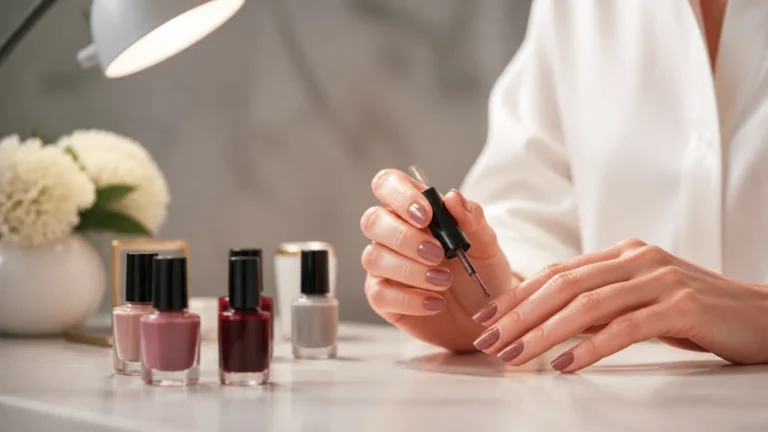
- Wipe one side of the brush against the bottle neck to control the amount of polish.
- Place the brush slightly away from the cuticle and guide it toward the base.
- Use one center stroke followed by one stroke on each side.
- Leave a narrow, even gap around the cuticle instead of flooding the skin.
- Wait 1 to 2 minutes for quick flash-drying, or 2 to 5 minutes for a thicker or slower formula.
- Apply another thin coat only after the first layer has settled.
Rolling the bottle between your palms mixes the formula without adding as much air as vigorous shaking. Bubbles can leave the surface rough and make the coat look uneven while it dries.
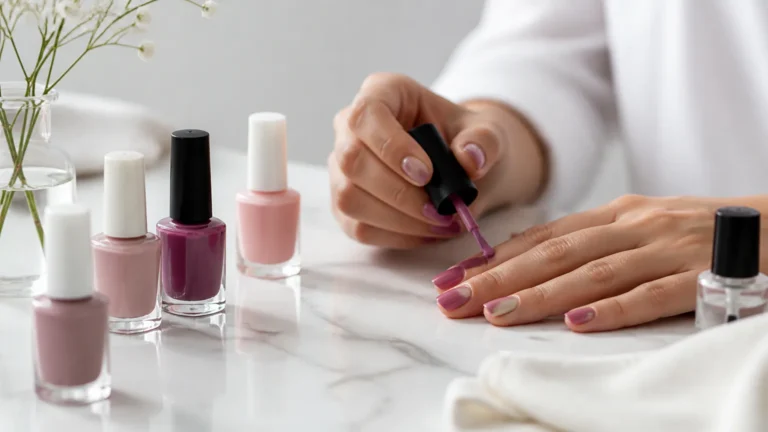
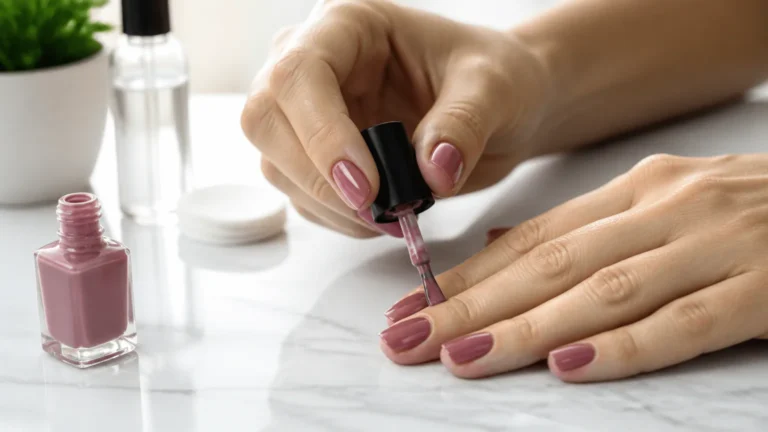
Thin coats dry faster because there is less solvent to evaporate, but your brush technique matters too. Wipe excess polish from the brush, apply it in a few controlled strokes, and leave a small gap around the cuticle to prevent thick edges from staying tacky. These steps help you properly apply nail polish without adding drying time.
Use Cool Air or Ice Water
Cool air moves solvent vapor away from the polish surface without softening the finish. Set a hairdryer to cool, hold it about 6 to 8 inches from the nails and move the airflow across your hands for about 60 seconds to a few minutes.
Warm air can create bubbles, wrinkles and a softer finish, so avoid using the hot setting. Keep the airflow gentle and indirect rather than aiming it at one nail from close range, which can disturb wet polish and leave an uneven texture.
Ice water can make the surface feel firmer after the polish has started to set. Wait about 1 to 2 minutes after painting, then dip the nails for approximately 30 to 120 seconds. Pat your hands dry instead of rubbing them. The dip does not mean that the deeper layers have fully hardened.
Avoid These Drying Mistakes
- Applying thick coats: Heavy layers trap solvent and remain soft underneath.
- Using warm air: Heat encourages bubbles, wrinkles and a soft finish.
- Skipping the wait between coats: The next layer can partially re-wet the one below it.
- Painting over oily nails: Lotion and natural oils reduce adhesion and encourage peeling.
- Dipping too soon: Water can mark or move polish that has not begun setting.
- Touching objects immediately: Pressure marks can appear even when the surface seems dry.
- Using a fan or dryer too close: Strong airflow can ripple wet polish and leave an uneven texture.
- Shaking the bottle vigorously: Extra air can produce bubbles in the coat.
Keep your hands still until the polish is smudge-resistant, usually 20-30 minutes, and limit yourself to light tasks. Avoid bed linens, tight pockets, showers and activities that press or scrub the nails until the manicure has hardened, which usually takes about 45-60 minutes. Maximum hardness can take 12-24 hours.
A manicure may feel dry on top while the layers underneath are still vulnerable to pressure, heat and water. Avoid tight shoes, hot showers and heavy handling until the polish has fully hardened. Wear gloves for chores and protect the free edge during daily activities. These small aftercare changes help make nail polish last longer and keep your careful drying routine from going to waste.
When Quick-Dry Products Help
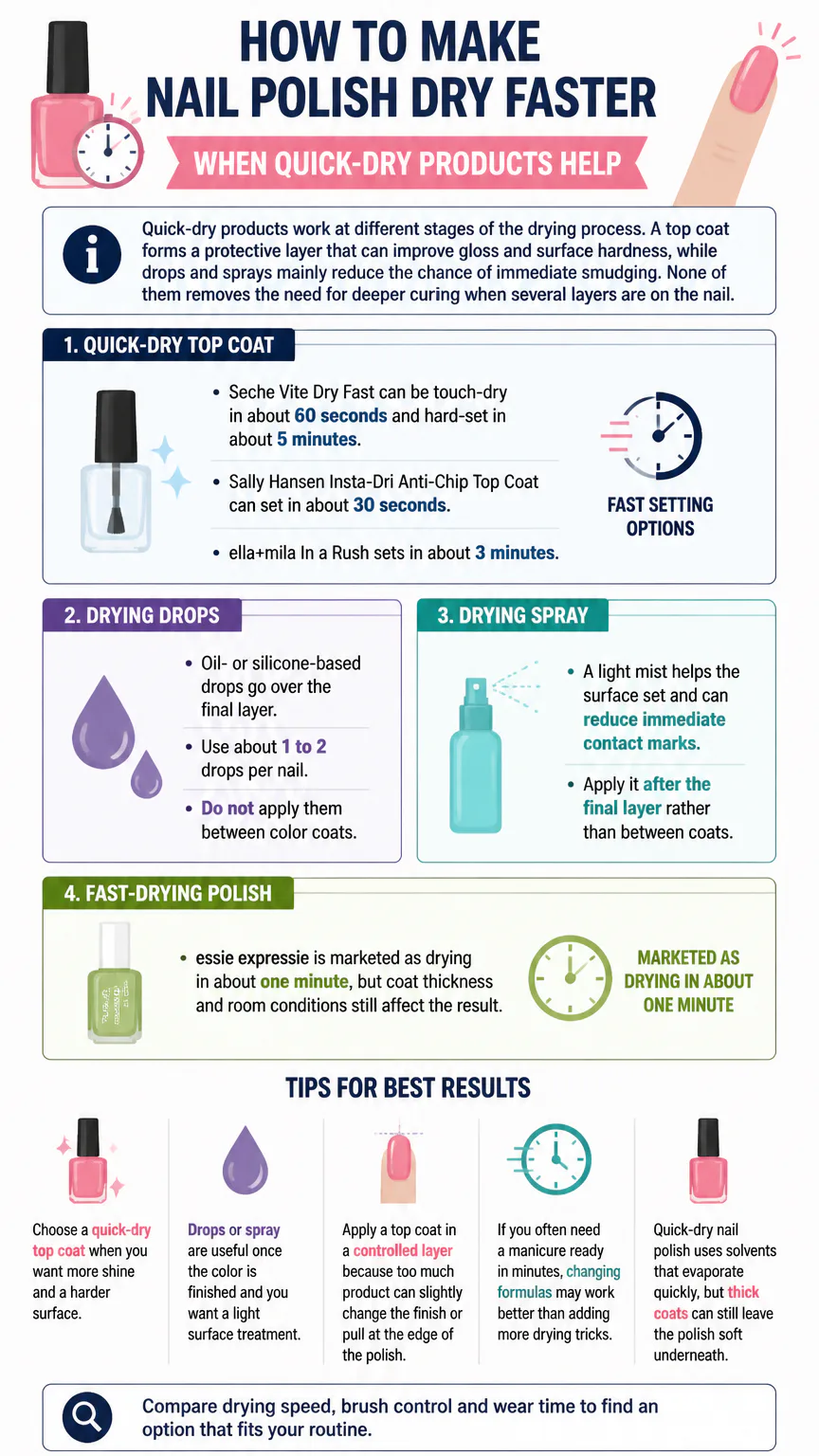
Quick-dry products work at different stages of the drying process. A top coat forms a protective layer that can improve gloss and surface hardness, while drops and sprays mainly reduce the chance of immediate smudging. None of them removes the need for deeper curing when several layers are on the nail.
- Quick-dry top coat: Seche Vite Dry Fast can be touch-dry in about 60 seconds and hard-set in about 5 minutes. Sally Hansen Insta-Dri Anti-Chip Top Coat can set in about 30 seconds, while ella+mila In a Rush sets in about 3 minutes.
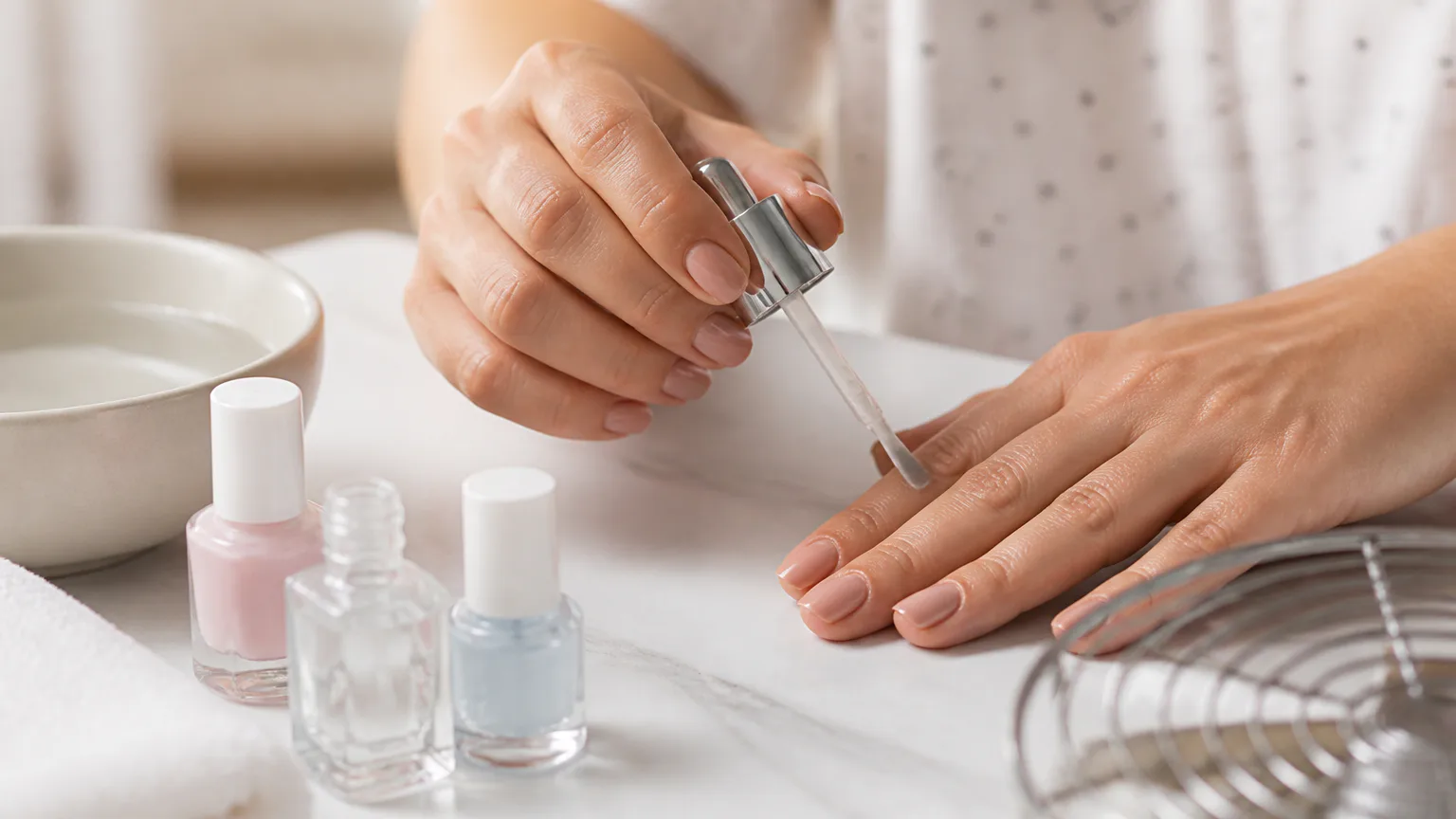
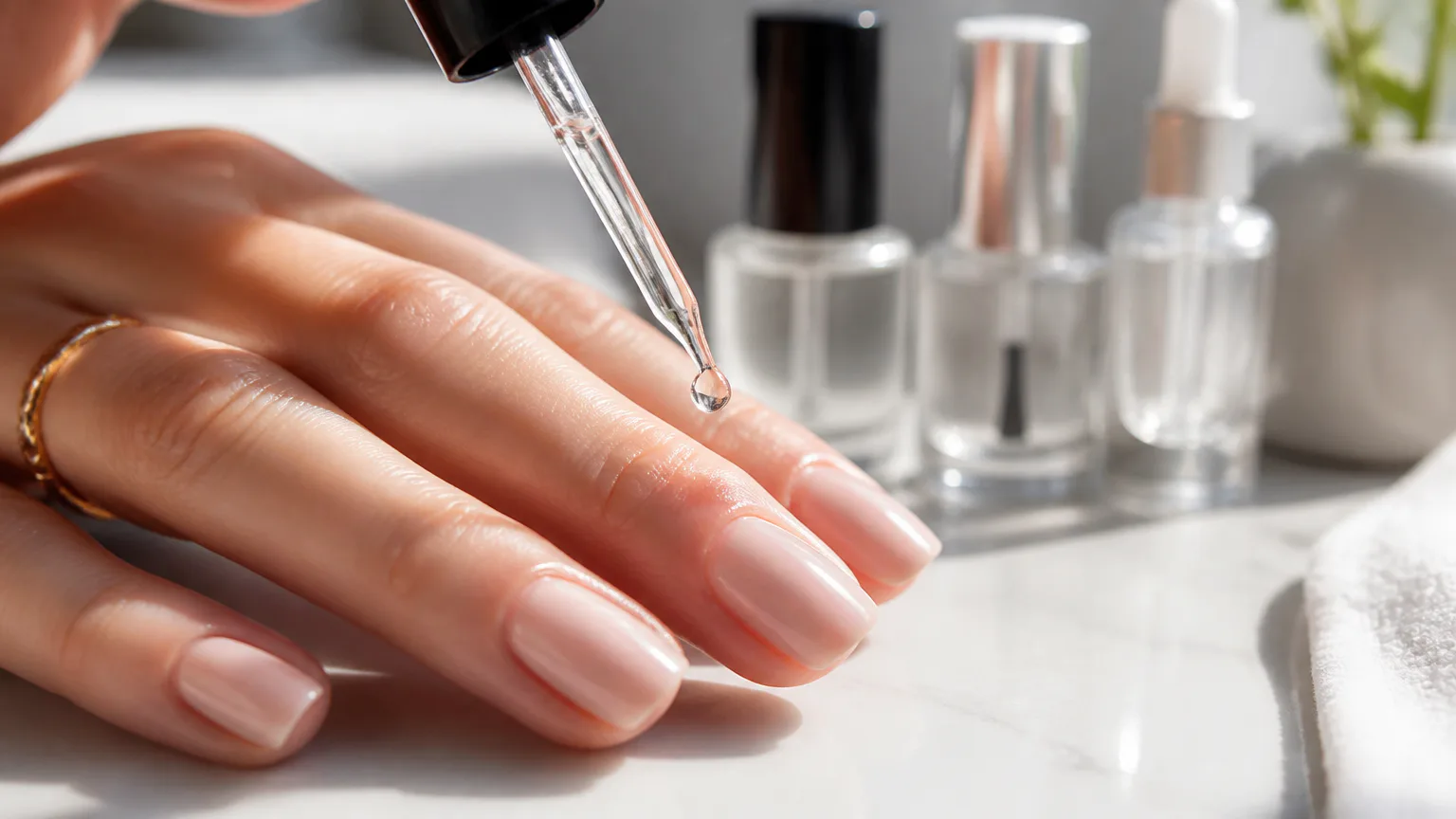
- Drying drops: Oil- or silicone-based drops go over the final layer. Use about 1 to 2 drops per nail, and do not apply them between color coats.
- Drying spray: A light mist helps the surface set and can reduce immediate contact marks. Apply it after the final layer rather than between coats.
- Fast-drying polish: essie expressie is marketed as drying in about one minute, but coat thickness and room conditions still affect the result.
Choose a quick-dry top coat when you want more shine and a harder surface. Drops or spray are useful once the color is finished and you want a light surface treatment. Apply a top coat in a controlled layer because too much product can slightly change the finish or pull at the edge of the polish.
If you often need a manicure ready in minutes, changing formulas may work better than adding more drying tricks. Quick-dry nail polish uses solvents that evaporate quickly, but thick coats can still leave the polish soft underneath. Compare drying speed, brush control and wear time to find an option that fits your routine.
Why Regular Polish Does Not Need a UV Lamp
Regular nail polish dries mainly as solvents evaporate from the coating. Gel polish uses a light-activated chemical process, so it requires a UV/LED lamp. A lamp does not meaningfully cure standard nail polish.
Using a lamp on regular polish may warm the coating without fixing the problem of trapped solvent. Thin layers, suitable waiting time and cool airflow work better for conventional formulas. If a product is labeled gel, follow its curing instructions and use the specified UV or LED equipment.
FAQs
Why is my nail polish still tacky after hours?
Thick layers, high humidity, an old or thickened formula and too little time between coats can all cause tackiness. The surface may feel dry while solvent remains trapped underneath, especially after multiple coats or detailed nail art.
Can I dry nail polish quickly before bed?
Apply thin coats early enough to allow at least 20 to 30 minutes of stillness before going to bed. A quick-dry top coat can shorten surface-setting time, but sheets can still mark polish that has not hardened deeply.
Can hairspray dry nail polish faster?
Hairspray is not a dependable nail-polish drying treatment. It can leave residue, dull the finish or make cleanup harder. Use drying drops, drying spray or a quick-dry top coat instead.
How can I make thickened nail polish usable again?
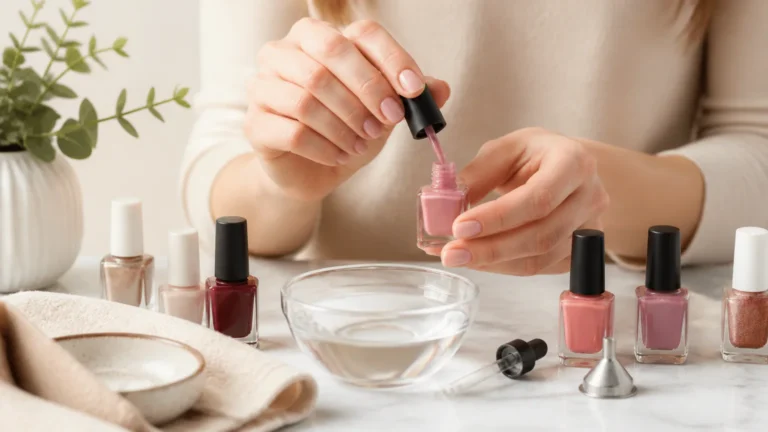
Add a few drops of nail-polish thinner and roll the bottle gently between your palms. Do not use acetone as a routine thinner because it can change the formula and make the finish brittle or uneven.
Conclusion
For the quickest reliable manicure, start with oil-free nails, apply thin coats, wait between layers and finish with a quick-dry top coat. Cool air or a properly timed cold-water dip can help the surface set, but protect the manicure from pressure and rubbing for at least 20 to 30 minutes.