How to Choose Nail Polish Color for Your Best Look
Choosing a nail polish color gets easier when you separate skin tone from undertone, then consider the finish, occasion, season and condition of your nails. A shade that looks perfect in the bottle can appear different against your hands in indoor lighting or flash. The most reliable approach is to check the undertone, test a real swatch and decide how much contrast you want. Cross-check with finishes explained, best nude nail polish, and best pink nail polish.
Nail Color Recommendations by Skin Tone
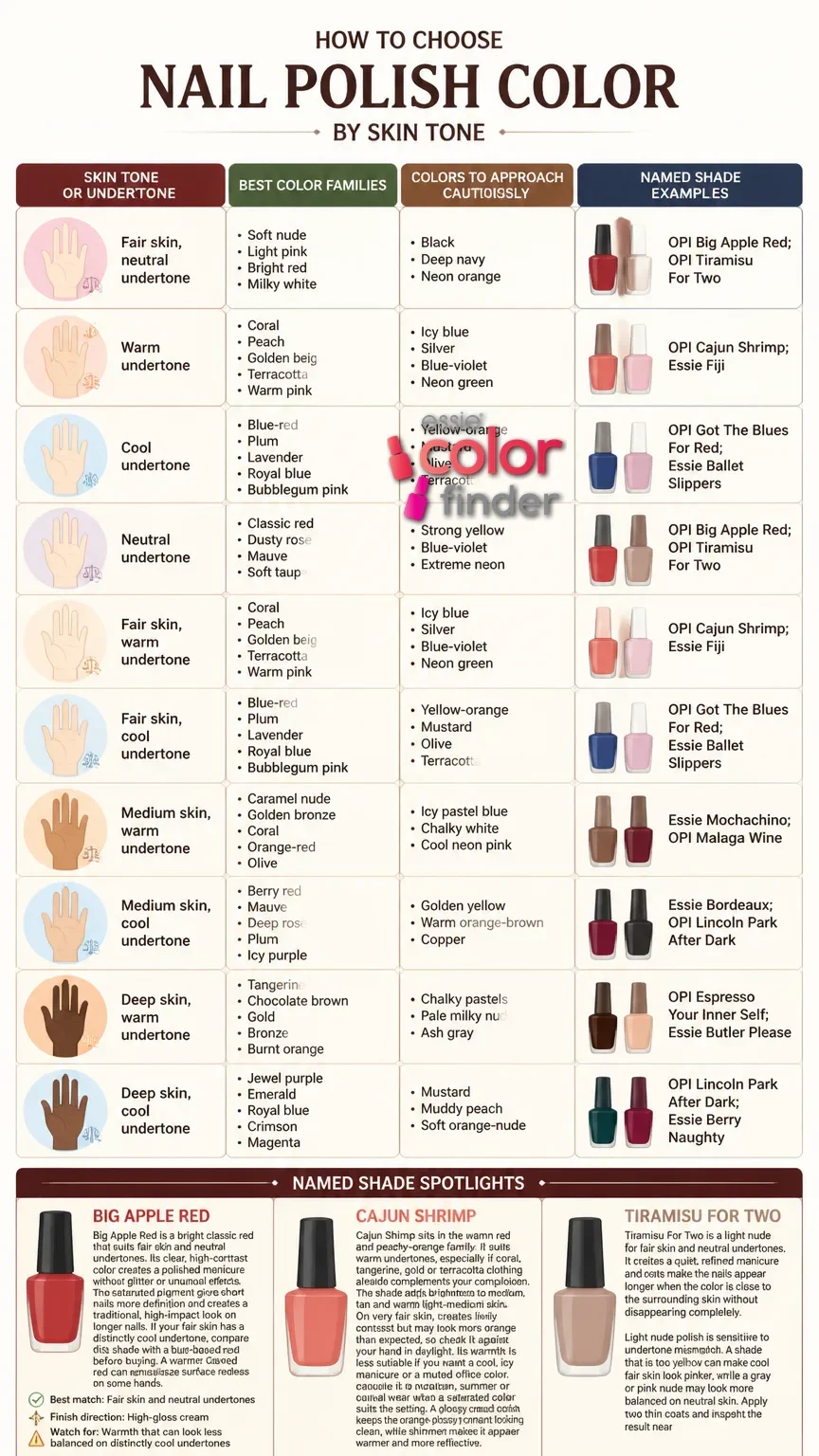
| Skin tone or undertone | Best color families | Colors to approach cautiously | Named shade examples |
|---|---|---|---|
| Fair skin, neutral undertone | Soft nude, light pink, bright red, milky white | Black, deep navy, neon orange | OPI Big Apple Red; OPI Tiramisu For Two |
| Warm undertone | Coral, peach, golden beige, terracotta, warm pink | Icy blue, silver, blue-violet, neon green | OPI Cajun Shrimp; Essie Fiji |
| Cool undertone | Blue-red, plum, lavender, royal blue, bubblegum pink | Yellow-orange, mustard, olive, terracotta | OPI Got The Blues For Red; Essie Ballet Slippers |
| Neutral undertone | Classic red, dusty rose, mauve, soft taupe | Strong yellow, blue-violet, extreme neon | OPI Big Apple Red; OPI Tiramisu For Two |
| Fair skin, warm undertone | Coral, peach, golden beige, terracotta, warm pink | Icy blue, silver, blue-violet, neon green | OPI Cajun Shrimp; Essie Fiji |
| Fair skin, cool undertone | Blue-red, plum, lavender, royal blue, bubblegum pink | Yellow-orange, mustard, olive, terracotta | OPI Got The Blues For Red; Essie Ballet Slippers |
| Medium skin, warm undertone | Caramel nude, golden bronze, coral, orange-red, olive | Icy pastel blue, chalky white, cool neon pink | Essie Mochachino; OPI Malaga Wine |
| Medium skin, cool undertone | Berry red, mauve, deep rose, plum, icy purple | Golden yellow, warm orange-brown, copper | Essie Bordeaux; OPI Lincoln Park After Dark |
| Deep skin, warm undertone | Tangerine, chocolate brown, gold, bronze, burnt orange | Chalky pastels, pale milky nude, ash gray | OPI Espresso Your Inner Self; Essie Butler Please |
| Deep skin, cool undertone | Jewel purple, emerald, royal blue, crimson, magenta | Mustard, muddy peach, soft orange-nude | OPI Lincoln Park After Dark; Essie Berry Naughty |
Big Apple Red
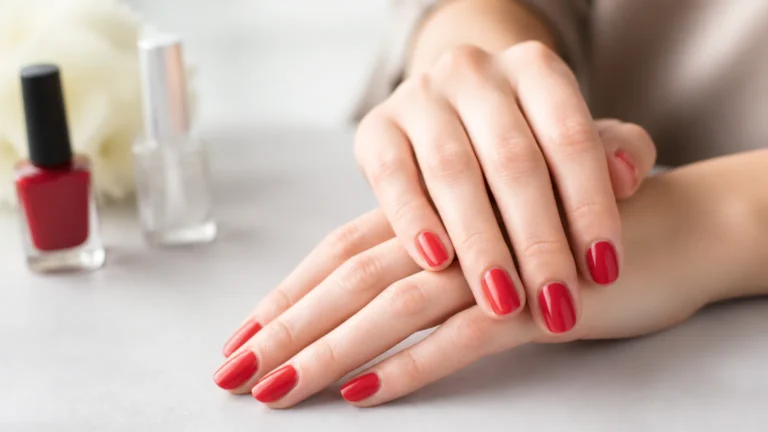
Big Apple Red is a bright classic red that suits fair skin and neutral undertones. Its clear, high-contrast color creates a polished manicure without glitter or unusual effects.
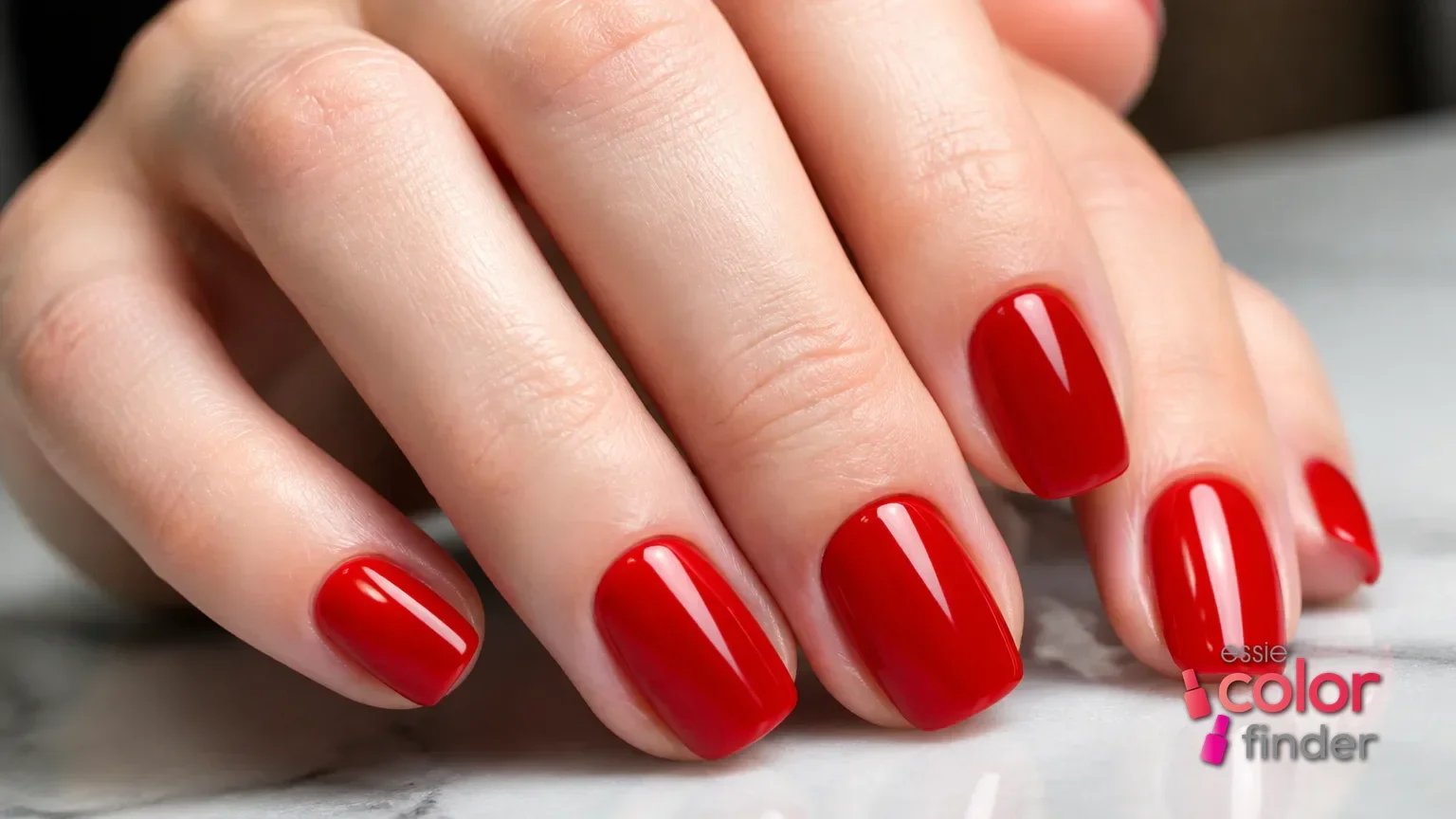
The saturated pigment gives short nails more definition and creates a traditional, high-impact look on longer nails. If your fair skin has a distinctly cool undertone, compare this shade with a blue-based red before buying. A warmer classic red can emphasize surface redness on some hands.
- Best match: Fair skin and neutral undertones
- Finish direction: High-gloss cream
- Watch for: Warmth that can look less balanced on distinctly cool undertones
Cajun Shrimp
Cajun Shrimp sits in the warm red and peachy-orange family. It suits warm undertones, especially if coral, tangerine, gold or terracotta clothing already complements your complexion.
The shade adds brightness to medium, tan and warm light-medium skin. On very fair skin, it creates lively contrast but may look more orange than expected, so check it against your hand in daylight. Its warmth is less suitable if you want a cool, icy manicure or a muted office color.
Choose it for vacation, summer or casual wear when a saturated color suits the setting. A glossy cream finish keeps the orange-red pigment looking clean, while shimmer makes it appear warmer and more reflective.
Tiramisu For Two
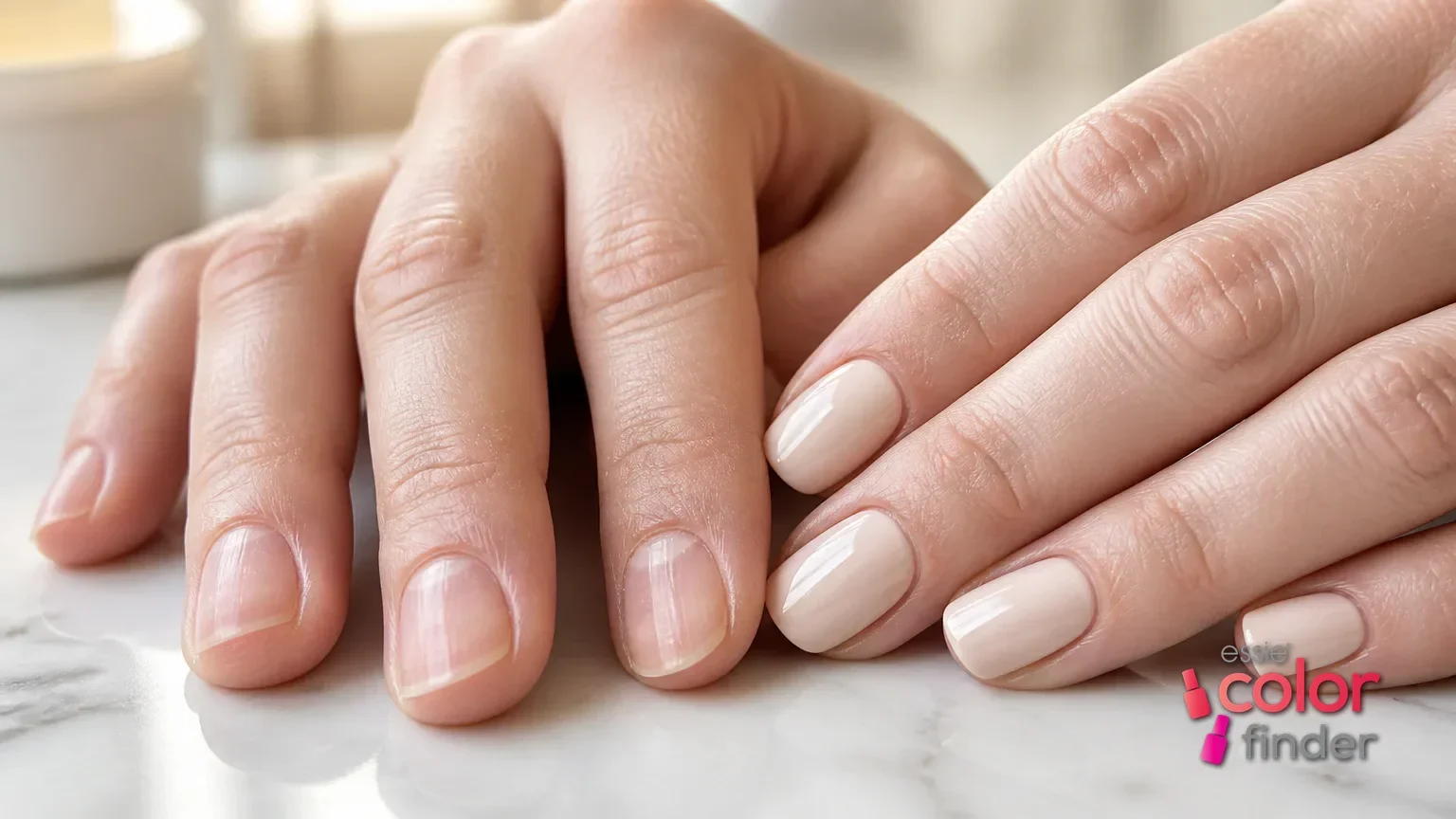
Tiramisu For Two is a light nude for fair skin and neutral undertones. It creates a quiet, refined manicure and can make the nails appear longer when the color is close to the surrounding skin without disappearing completely.
Light nude polish is sensitive to undertone mismatch. A shade that is too yellow can make cool fair skin look pinker, while a gray or pink nude may look more balanced on neutral skin. Apply two thin coats and inspect the result near a window, since sheer formulas often look different under warm bathroom lighting.
This shade suits professional settings, understated outfits and formal events where the manicure should remain neat. It is less effective when you want strong contrast or when visible nail ridges could show through a thin, sheer formula.
Got The Blues For Red
Got The Blues For Red is a blue-based red for cool undertones. Its cooler base pairs naturally with blue or purple vein tones and gives the manicure a crisp, defined appearance.
Blue-based red works across fair, medium, tan and deep skin, although the contrast changes with skin depth. On deep skin, a saturated blue-red creates a particularly bold result. On fair skin, it can look dramatic, so use one coat for a translucent effect or two coats for full opacity.
This color suits formal and evening occasions, although it may feel too intense for a conservative workplace. Use a base coat to reduce staining, especially with highly pigmented red polish.
Identify your undertone first
Skin tone describes the surface depth of the skin, such as fair, light, medium, tan or deep. Undertone describes the subtle color beneath the surface. Two people with the same skin depth can suit very different polishes because one may have a warm undertone while the other has a cool or neutral undertone.
- Look at the veins on the inside of your wrist in natural daylight.
- Blue or purple-looking veins usually indicate a cool undertone.
- Green-looking veins usually indicate a warm undertone.
- Veins that look somewhere between blue and green may indicate a neutral undertone.
- If the vein test is unclear, compare one warm and one cool polish against your hand.
Warm undertones usually suit coral, peach, golden beige, terracotta and warm pink. Cool undertones tend to suit blue-red, plum, lavender, royal blue and bubblegum pink. Neutral undertones can move between both families, with classic red, dusty rose, mauve and soft taupe providing reliable starting points.
Use color theory to narrow choices
Color theory can help you decide whether to match your coloring or create deliberate contrast. Colors opposite each other on the color wheel create contrast: orange pairs with blue, green with red, and purple with yellow. The polish does not need to be a perfect opposite; a muted or softened version is often easier to wear.
- For harmony: Choose a polish with a warm, cool or neutral base that matches your undertone.
- For contrast: Choose a saturated jewel tone or a color opposite your outfit’s dominant hue.
- For a softer look: Select a tint, such as pastel lilac or baby pink.
- For a richer look: Select a shade, such as deep berry, burgundy or forest green.
- For a muted look: Choose a color softened with gray or brown, such as mauve, taupe or dusty rose.
Skin depth also affects contrast. Fair skin with a warm undertone suits coral, peach, golden beige, terracotta and warm pink, while fair skin with a cool undertone suits blue-red, plum, lavender, royal blue and bubblegum pink. Medium warm skin suits caramel nude, golden bronze, coral, orange-red and olive. Medium cool skin suits berry red, mauve, deep rose, plum and icy purple. Deep warm skin suits tangerine, chocolate brown, gold, bronze and burnt orange, while deep cool skin suits jewel purple, emerald, royal blue, crimson and magenta.
Fair-skin shades for toes
Fair skin on toenails pairs well with light pink, soft nude, lavender, baby blue, peach and soft white. These colors create a gentle look, while deep navy and black create strong contrast when that is the intended effect.
Toenails have less surface area than fingernails, so lighting can make a color look stronger on the feet. Compare the polish against your foot in daylight before applying it to all of your toenails.
Match polish to the occasion
The same color can look appropriate or out of place depending on its finish and saturation. For work or a conservative event, choose sheer pink, creamy nude, soft beige or a French manicure. These shades keep attention on the overall appearance of the hands and coordinate with most clothing.
- Formal events: Choose deep bordeaux, champagne shimmer or a high-gloss opaque nude.
- Vacation and parties: Choose neon, electric brights, metallics or saturated jewel tones.
- Spring: Choose pastel lilac, soft mint green, baby pink or butter yellow.
- Summer: Choose vibrant coral, neon brights, tropical turquoise or tangerine.
- Autumn: Choose burgundy, burnt orange, mustard yellow or chocolate brown.
- Winter: Choose deep berry, midnight blue, forest green, silver or crimson red.
Match polish to clothing when an outfit has a strong color story. A neutral manicure balances a patterned dress, while a complementary polish can make a simple outfit more vivid. If the clothing, jewelry and makeup already contain several bold elements, a cream or sheer finish usually looks more controlled than additional glitter.
Check nail condition and finish
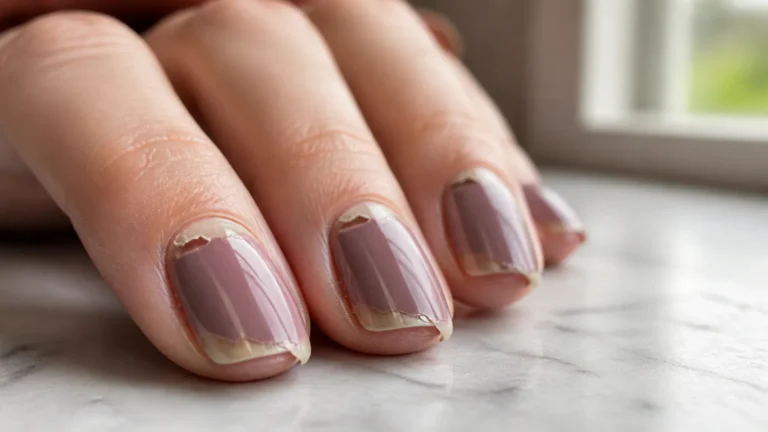
Nail condition should influence the formula and finish as much as skin tone does. Damaged or peeling nails may benefit from breathable formulas or strengthening treatments. Aggressive glitter or gel removal can worsen peeling, while healthy nails can support any finish when paired with a nourishing base coat.
- Ridges or dryness: Use a ridge-filling base coat and favor cream finishes.
- Peeling or weakness: Use a strengthening treatment or breathable formula and remove polish gently.
- Healthy nails: Consider cream, shimmer, metallic, matte or glitter finishes.
- Visible texture: Avoid heavily frosted or reflective finishes that highlight unevenness.
Finish changes how a color reads. Glossy cream polish looks more saturated, shimmer adds light, metallic polish increases contrast and matte polish softens the same pigment. A gel-like or gel-effect polish gives a plumper glossy appearance, while true gel requires curing and careful removal. A sheer nude may need several coats for even coverage, while highly pigmented red usually needs a base coat to reduce staining.
Test the shade before buying
Digital color can narrow your choices, but a screen cannot reproduce every undertone or finish accurately. Look for real-hand photos and reviews taken in natural sunlight, indoor light and flash. Compare several images instead of relying on the bottle photo, particularly for nudes, reds and colors with a strong orange or blue base.
- Choose two or three shades from the same color family.
- Compare their undertones rather than judging brightness alone.
- Inspect the colors in daylight and warm indoor light.
- Check whether the finish is sheer, cream, shimmer, metallic or matte.
- Choose the shade that remains balanced in more than one lighting condition.
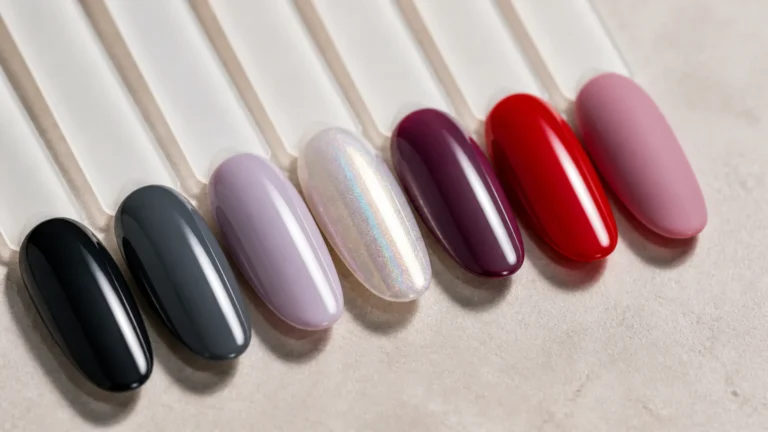
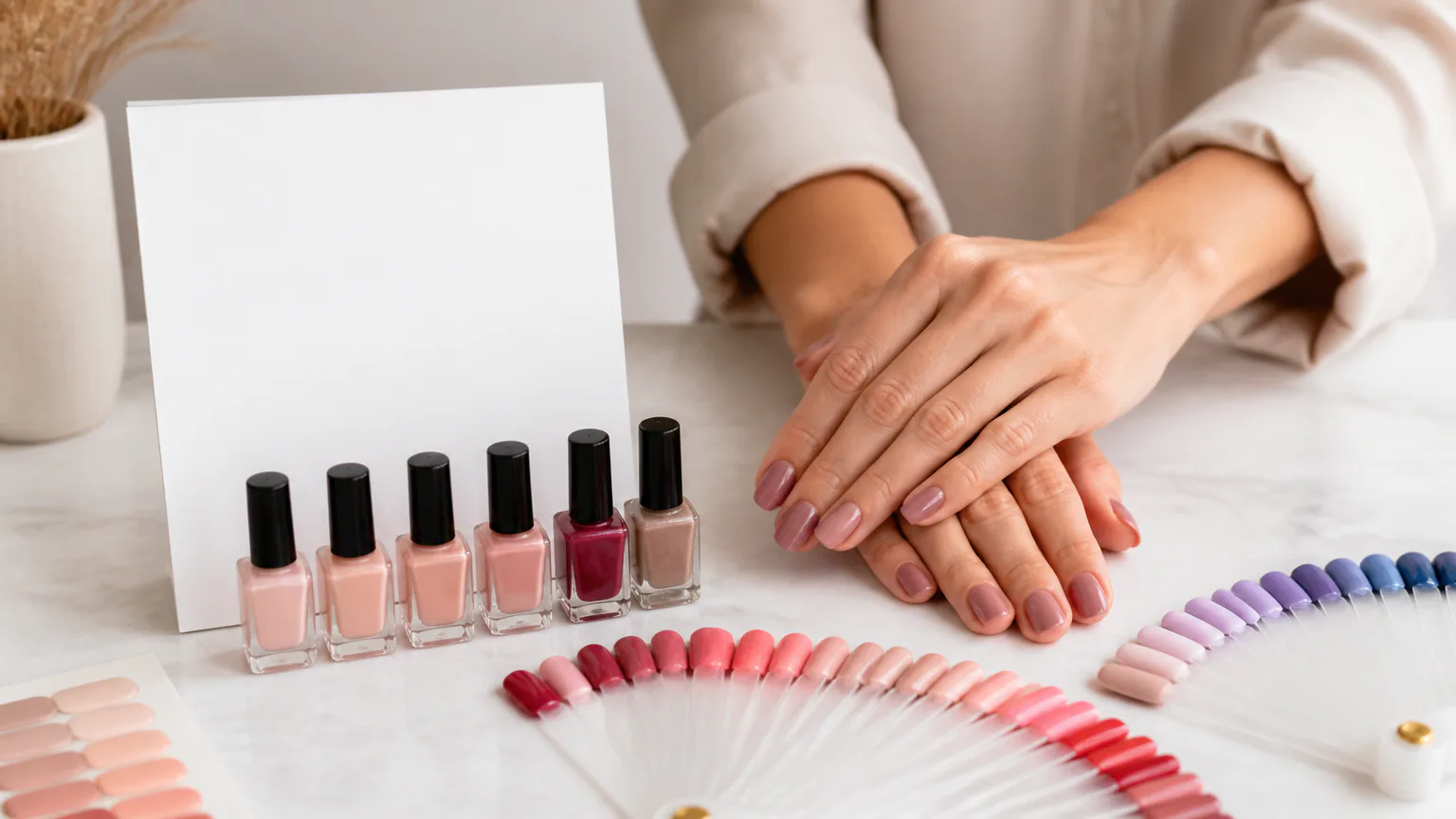
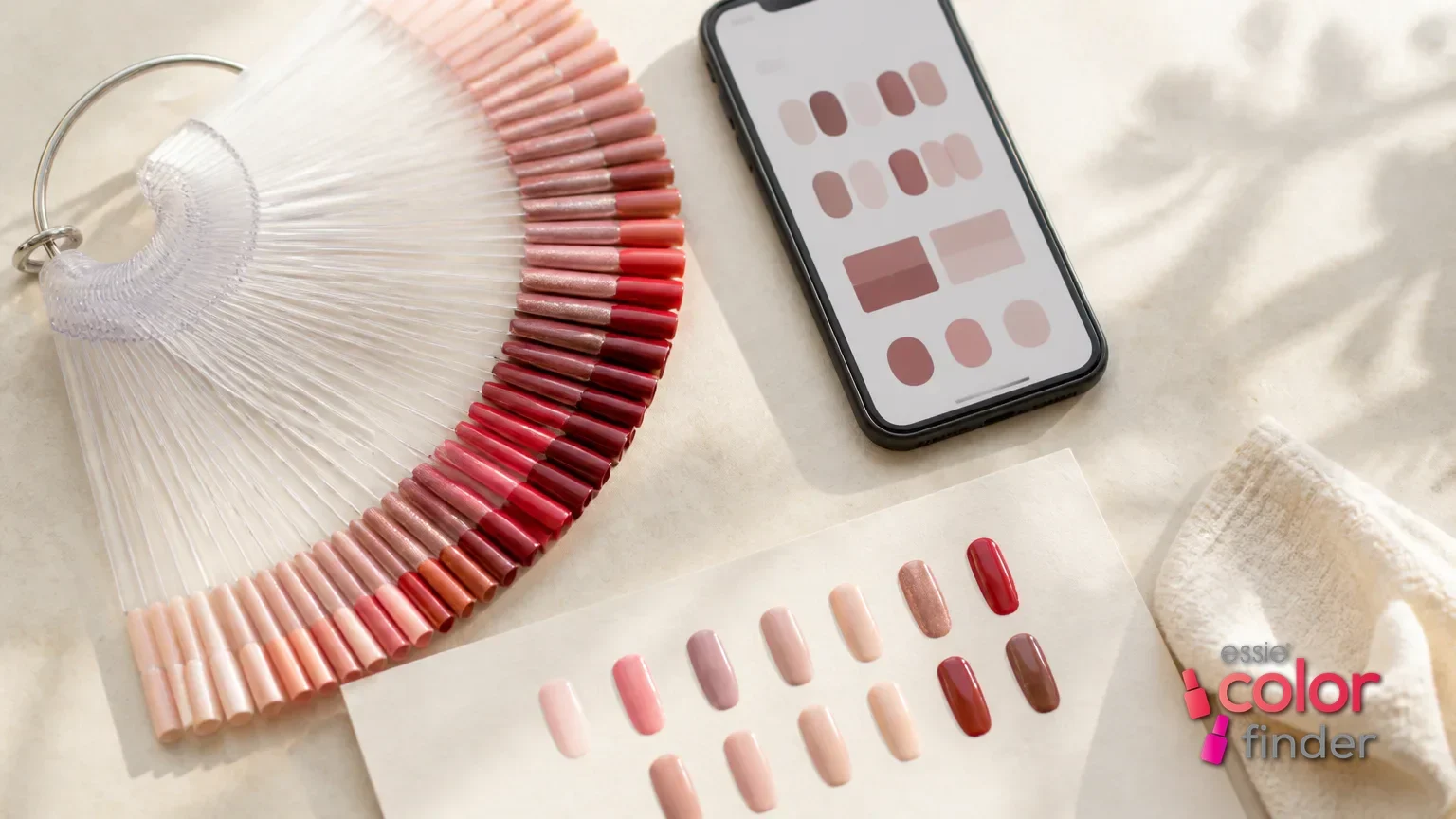
The Essie Nail Color Finder can narrow a range of more than 1,000 colors. In a store, paint or view the color on nail swatch sticks and hold the swatch directly against your hand. Storefront lighting gives you an initial comparison, but daylight shows the shade most clearly against the hand.
Use nail art to experiment
Nail art lets you test color relationships without putting one shade on every nail. Paint one or two accent nails in a brighter, deeper or unexpected color while keeping the remaining nails in a neutral or coordinating polish.
- Accent nails: Pair a bold jewel tone or neon with a nude, mauve or soft pink base.
- French tips: Keep the base sheer and try a red, coral, blue or metallic-gold tip.
- Layered finishes: Add shimmer over an opaque cream shade, or place a sheer tint over a deeper color to change its appearance.
- Unexpected combinations: Combine lavender and coral, olive and pink, or navy and orange when one color feels limiting.
Test the combination on a swatch stick or one accent nail first. The experiment stays easy to remove while showing how the colors and finishes interact in your lighting.
Where to buy nail polish
Ulta Beauty lets you compare multiple nail polish brands, finishes and price points in one shopping trip. It suits shoppers who want to inspect physical swatches or buy polish alongside other beauty products.
Sephora suits shoppers focused on curated beauty brands and higher-end nail color selections. Compare the listed finish and shade photos with the undertone guidance above, since sheer and opaque formulas can look similar in product images.
Common bottle prices range from approximately $7, $10 for Sally Hansen, $9, $10 for Essie, $9, $10 for Olive & June, $11, $14 for OPI, $12 for Zoya, and $32, $35 for Chanel Le Vernis. The final cost depends on the specific collection and finish.
FAQs
How do you know which nail polish color suits you?
Start with your undertone, then choose a color family that harmonizes with it or creates intentional contrast. Test the polish against your hand in daylight and indoor light before committing, especially with nude, orange and red shades.
What is the most flattering nail polish color?
No single shade flatters everyone. Fair skin with a neutral undertone suits soft nude, light pink, bright red and milky white. Warm undertones suit coral, peach, golden beige, terracotta and warm pink; cool undertones suit blue-red, plum, lavender, royal blue and bubblegum pink; neutral undertones suit classic red, dusty rose, mauve and soft taupe.
What is the most popular nail color right now?
Classic red remains a dependable choice because it suits many occasions and nail lengths. Trends change by season, with coral and tangerine often appearing in summer, burgundy and chocolate brown in autumn, and deep berry or forest green in winter.
Can a nail color quiz choose the right shade?
A quiz can narrow your options based on undertone, preferred finish and style. Use the result as a shortlist, then compare the shade in real-hand photos or on a physical swatch because lighting and formula opacity affect the final appearance.
Conclusion
Begin with your undertone, then consider the occasion, finish and condition of your nails. Test the actual polish against your hand in more than one type of light. If you are undecided, start with classic red, dusty rose, mauve, soft taupe or blue-red, depending on your undertone, before trying brighter seasonal shades.