16 Essential Winter Nail Care Tips for Dry, Healthy Nails
Cold weather, indoor heating, frequent handwashing, and layers of winter clothing can all leave nails and cuticles feeling dry or prone to snagging. A little consistent care can help keep them more comfortable and easier to manage through the season.
These winter nail care tips focus on simple habits you can fit into your day, from moisturizing after washing to making gentle choices when filing or removing polish. You don’t need to follow every tip at once; start with the steps that address what your hands need most.
This guide is for anyone dealing with dry cuticles, peeling edges, or nails that catch on sweaters and gloves. If a nail becomes painful, discolored, or persistently damaged, consider checking with a healthcare professional rather than relying on home care alone.
1. Massage Cuticle Oil Into Nails Twice Daily

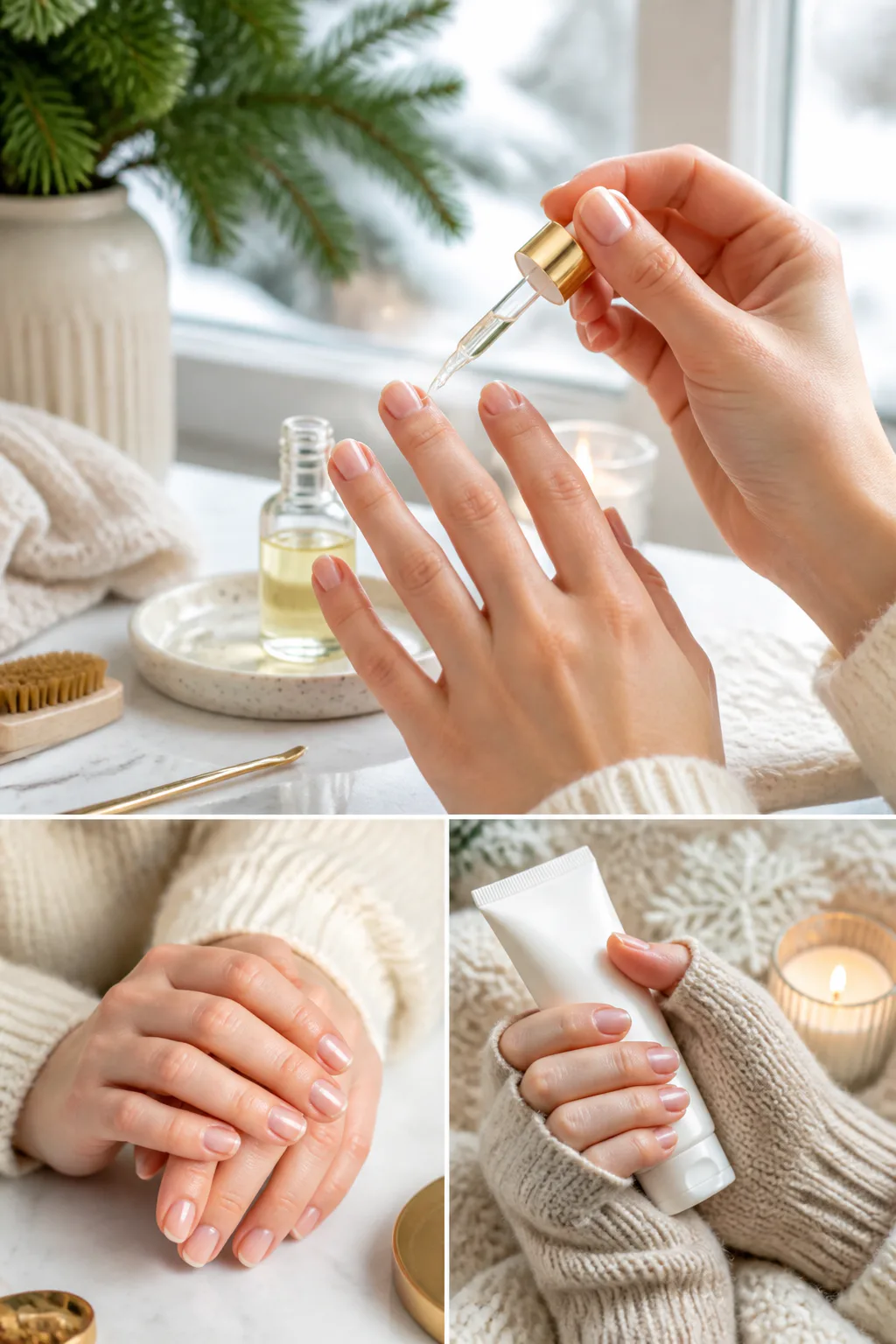
Cold air and indoor heat can leave the skin around your nails feeling tight and rough. A few drops of cuticle oil or a nourishing balm can add moisture to the cuticles and the skin around each nail, making this small step an easy part of a winter routine.
Apply it in the morning and again before bed, massaging gently over the cuticles and nail beds. Keeping a small bottle near your sink or bedside table can make the habit easier to remember, especially when your hands feel dry after washing.
Make it an easy daily habit
Use a modest amount and give it a moment to absorb before handling paper, clothing, or your phone. Oils such as jojoba, argan, or sweet almond are common options, but a balm can work well if you prefer a thicker texture.
- Massage a drop into each nail area morning and evening.
- Reapply after removing polish if your cuticles feel dry.
- Keep the product somewhere visible so you remember to use it.
2. Apply Hand Cream After Every Hand Wash
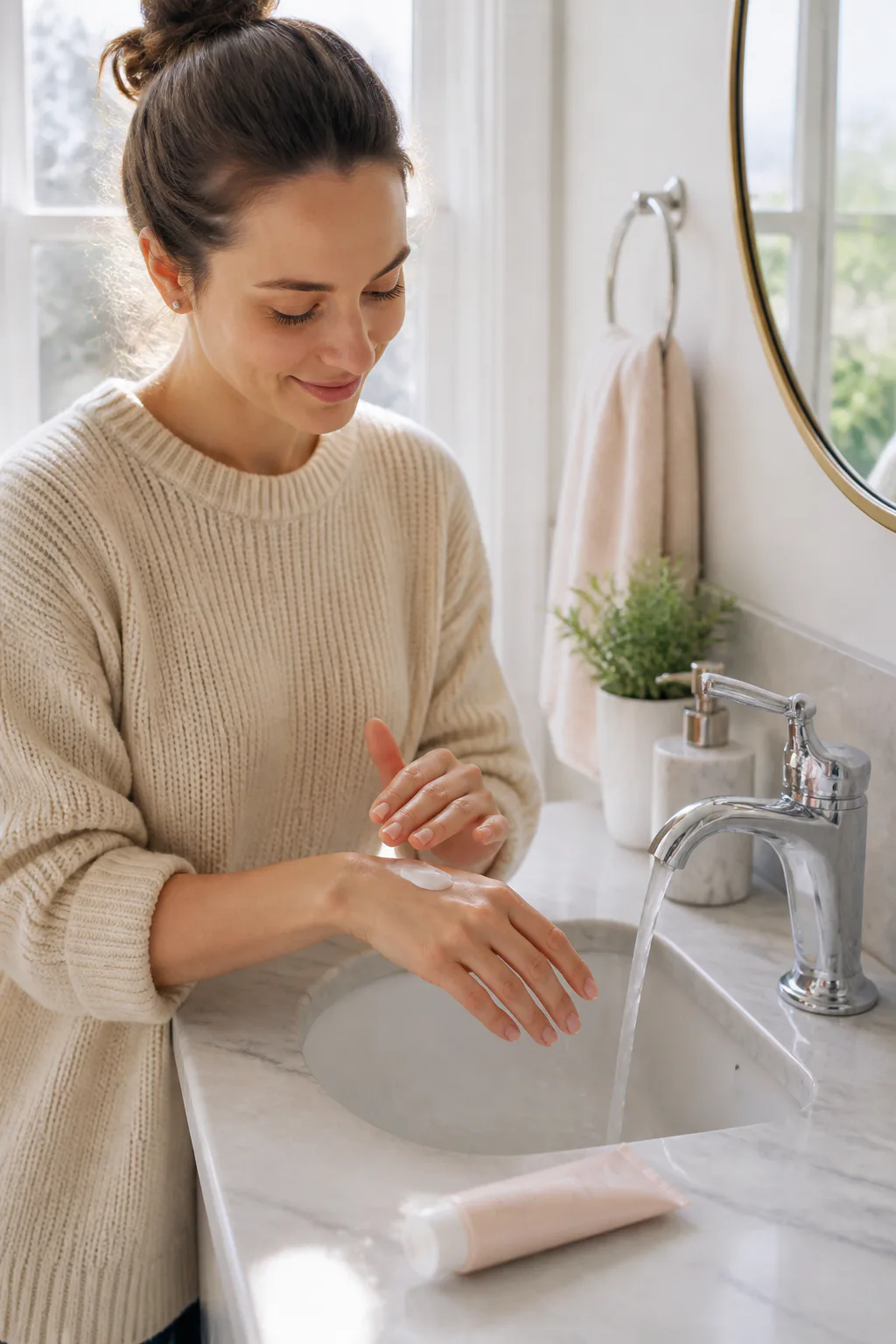
Handwashing is important, but repeated washing can leave the skin around your nails feeling dry, especially during winter. Applying hand cream afterward helps replenish moisture and keeps cuticles from becoming rough or uncomfortable.
Choose a richer cream for colder months, with ingredients such as shea butter, glycerin, or ceramides. A cream that feels comfortable enough to use regularly is often more practical than one that stays greasy and ends up forgotten in a drawer.
Build the habit around the sink
Pat your hands dry rather than rubbing them vigorously, then smooth cream over your palms, backs of hands, fingertips, and cuticles. Keep a tube by the bathroom or kitchen sink so it is easy to apply right after washing.
- Use a small amount after each hand wash.
- Work cream around the sides of nails and over knuckles.
- Keep a travel-size tube in your bag for days away from home.
3. Wear Warm Gloves Outdoors

Cold, windy air can make hands feel dry and uncomfortable, and exposed fingers may be more vulnerable to winter wear. Gloves or mittens create a useful barrier when you walk the dog, commute, shovel, or spend time outside.
Choose a pair that feels warm and comfortable enough to wear consistently. Mittens can provide room for fingers to share warmth, while gloves make it easier to use keys or handle small items; either can help cover your hands when the weather is harsh.
Keep protection within reach
Make gloves part of your leaving-home routine, just like a coat or scarf. If one pair gets damp, let it dry fully before wearing it again, and keep a spare pair near the door or in a bag for longer outings.
- Cover your hands before going out in cold or windy weather.
- Choose a fit that allows comfortable movement without exposing wrists.
- Dry damp gloves thoroughly before using them again.
4. Protect Your Hands During Household Chores

Dishwater, cleaning products, and long periods of wet work can leave hands and nails feeling stripped or softened. Wearing lined rubber gloves helps limit direct contact with hot water and detergents, while also protecting your manicure during everyday chores.
This is especially helpful when washing dishes, wiping down surfaces, or scrubbing the bathroom. Gloves can feel awkward at first, so choose a comfortable fit that lets you grip dishes and cleaning tools without tugging at your fingers.
Make gloves part of the chore setup
Keep a pair where you usually do dishes or store cleaning supplies, and check that the inside is dry before putting them on. After use, rinse the outside if needed and let the gloves air-dry so they are ready for the next task.
- Wear lined rubber gloves for dishes and cleaning.
- Replace gloves if they develop holes or become uncomfortable.
- Moisturize your hands after chores once they are clean and dry.
5. Choose Acetone-Free Polish Remover

Removing polish can leave nails and surrounding skin feeling dry, and winter conditions may make that discomfort more noticeable. An acetone-free remover is a gentler option to consider when you want to take off color without choosing a strongly drying formula.
Different removers work at different speeds, so you may need to hold a soaked cotton pad on the nail for a little longer. Avoid scraping or aggressively rubbing polish away, since rough handling can add stress to already fragile nail edges.
Remove color with a light touch
Work one nail at a time and use enough remover to loosen the polish instead of repeatedly scrubbing. Once the color is off, wash your hands if needed and apply hand cream or cuticle oil to restore comfort around the nails.
- Look for a remover labeled acetone-free.
- Press a moistened pad onto the nail before wiping gently.
- Follow removal with moisturizer or cuticle oil.
6. File Nails Gently in One Direction
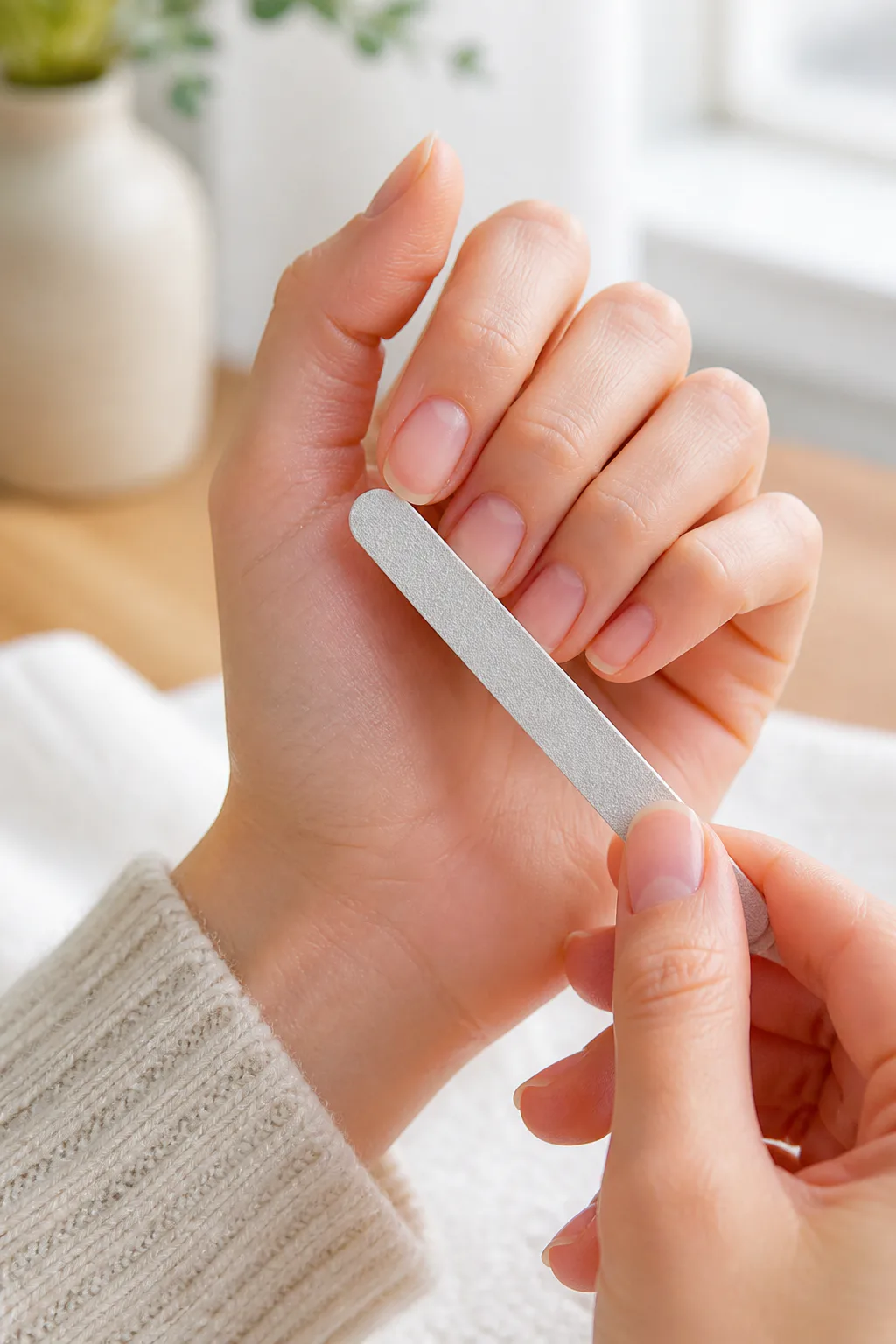
Filing can help smooth rough edges, but vigorous back-and-forth strokes may leave nails feeling more vulnerable to peeling or splitting. A slow, controlled motion is a gentler way to shape them, particularly when winter dryness has made the tips feel delicate.
Use a file with a comfortable texture and work with dry nails so you can see the shape clearly. Rather than trying to reshape the entire nail in one go, make small adjustments and check your progress as you go.
Shape without sawing
Move the file from one side toward the center, then repeat from the other side toward the center. Keep the pressure light and pause if the edge feels warm or rough; a smooth finish is more useful than removing length quickly.
- File in one direction instead of sawing back and forth.
- Use light pressure and short, steady strokes.
- Smooth any sharp corners that could catch on fabric.
7. Keep Winter Nails Short and Snag-Free

Long nail tips can catch on sweater knits, coat linings, and gloves, creating frustrating snags or small breaks. Keeping nails a little shorter in winter can make everyday tasks easier and reduce the amount of exposed edge that catches on clothing.
Short does not have to mean a uniform shape or a bare manicure. Trim to a length that suits your routine, then file the edges smooth so they are less likely to hook threads while you dress or pull on mittens.
Choose a practical length
Make small trims rather than cutting them much shorter than you prefer. If one nail breaks, gently even the surrounding nails if that feels comfortable, and keep a file handy for rough spots that appear between manicures.
- Trim nails to a length that is easy to manage with gloves.
- File sharp corners and uneven edges smooth.
- Keep a small file in your bag for unexpected snags.
8. Push Cuticles Back Instead of Cutting Them

Cuticles help protect the area where the nail grows, so cutting them can irritate the surrounding skin. During winter, when cuticles may already feel dry, it is often kinder to leave them intact and manage excess growth gently.
After a shower or a short hand soak, the skin is softer and easier to work with. Use a gentle touch rather than forcing the cuticle back, and stop if you feel discomfort or notice a hangnail that needs careful attention.
Keep cuticle care gentle
Apply a little oil or cream first, then use a soft tool to ease the cuticle back only as far as it moves comfortably. Avoid cutting living skin, and moisturize afterward to help the area feel less dry.
- Soften cuticles after a shower or hand soak.
- Push them back gently without scraping or forcing.
- Use cuticle oil or hand cream after grooming.
9. Use a Hydrating Base Coat

If you like wearing nail polish, a base coat can give color a smoother surface and help keep pigment from sitting directly on the nail. For winter nails that feel brittle, look for a flexible, moisturizing formula rather than automatically reaching for a hardener.
Some hardening products may make nails feel more rigid, which may not suit nails that are already prone to splitting. A hydrating base coat is a reasonable choice when your goal is comfortable wear and a little extra care beneath your favorite color.
Choose a formula that suits your nails
Read the product directions and apply a thin, even layer to clean, dry nails. Give it time to dry before adding polish, and take a break from color if your nails seem uncomfortable or increasingly fragile.
- Look for a base coat described as hydrating or flexible.
- Apply a thin layer according to the label directions.
- Pay attention to how your nails feel after repeated use.
10. Take a Seasonal Break From Gel Manicures
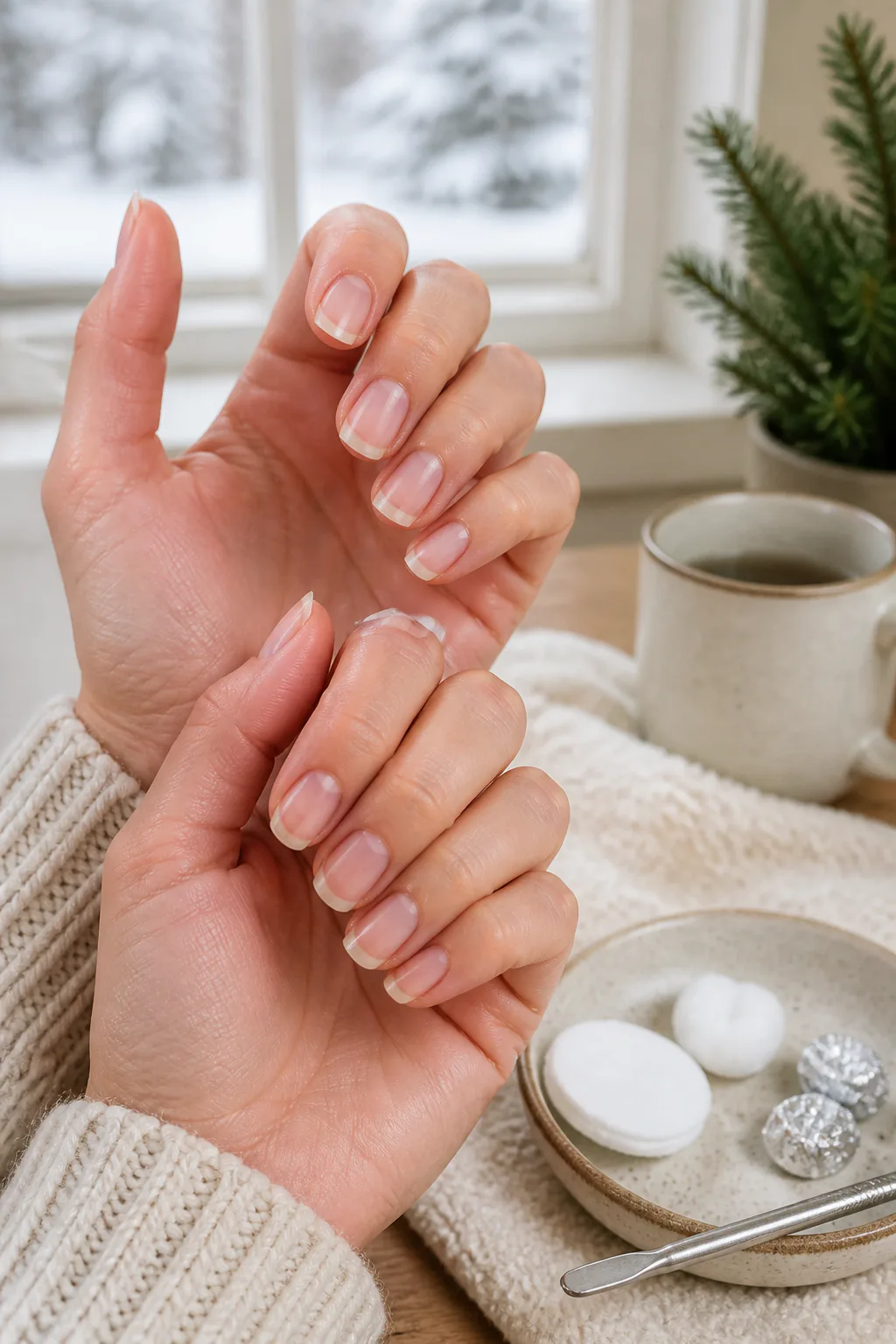
Gel or acrylic manicures can be part of a favorite routine, but repeated applications and removal may leave some nails feeling weakened. A seasonal pause gives you an opportunity to see how your natural nails feel without continuing the same treatment cycle.
A break does not need to be permanent or follow a strict schedule. You can keep nails short, use a gentle polish if you like, and focus on moisturizing while you decide whether your nails would benefit from time without extensions or gel color.
Make the transition gentle
Have enhancements removed carefully rather than picking, peeling, or forcefully scraping them off. During the break, protect nails during chores and use cuticle oil and hand cream regularly; if nails remain painful or damaged, seek professional advice.
- Pause gel or acrylic applications if nails feel weak.
- Avoid peeling or picking off product at home.
- Keep natural nails protected and moisturized during the break.
11. Wear Cotton Gloves Over an Overnight Nail Mask

A thick balm or ointment can be a comforting option when hands and cuticles feel especially dry. Applying it before bed gives the product time to sit on the skin while you sleep, rather than being washed away or rubbed off during daytime tasks.
Cotton gloves help keep the treatment in place and protect bedding from residue. This can be a useful occasional step during cold spells or whenever regular hand cream does not feel like enough for overnight comfort.
Set up a simple bedtime treatment
Spread a generous layer over hands, fingertips, and cuticles, then put on clean cotton gloves. Choose a product that feels comfortable on your skin, and wash the gloves regularly so they stay fresh and ready to use.
- Apply a thick hand balm or ointment before bed.
- Cover hands with clean cotton gloves overnight.
- Use the treatment when hands feel particularly dry.
12. Moisturize After Using Hand Sanitizer

Hand sanitizer can be useful when soap and water are not available, but frequent use may leave the skin around your nails feeling dry. Rather than avoiding sanitizer when it is needed, follow it with hand cream to restore comfort.
When practical, washing with mild soap and water is another way to clean your hands. Whatever method you use, avoid letting dryness build up by keeping a small moisturizer nearby at work, in your car, or in your everyday bag.
Pair cleansing with moisture
Let sanitizer dry fully, then apply cream over your hands and around your nails. If you are washing instead, pat your hands dry and moisturize afterward; this simple pairing makes nail care easier to maintain through frequent cleansing.
- Use sanitizer when it is the practical choice.
- Apply hand cream after sanitizer has dried.
- Choose mild soap and water when convenient.
13. Run a Humidifier in Heated Rooms

Indoor heating can make winter rooms feel comfortable while also contributing to dry air. A humidifier in a bedroom or workspace may help make the environment feel less drying for your skin and cuticles, especially when you spend long stretches indoors.
It is a supportive habit, not a replacement for hand cream or cuticle oil. Place the humidifier where it is useful for your routine, and follow its care instructions so it stays clean and works as intended.
Use it where you spend time
A bedroom can be a convenient place to run a humidifier overnight, while a workspace may suit people who are indoors during the day. Keep the device on a stable surface and clean it as directed rather than letting water sit for long periods.
- Consider using a humidifier in a bedroom or workspace.
- Follow the manufacturer’s instructions for cleaning and use.
- Continue moisturizing hands directly throughout the day.
14. Keep Up Your Fluid Intake in Cold Weather

It can be easy to drink less when the weather is cold and you are not feeling as thirsty as you might in summer. Keeping up with regular fluids is one part of general winter self-care, alongside moisturizing and protecting your hands from harsh conditions.
Water is a straightforward choice, but warm drinks such as herbal tea can also help make hydration feel more appealing. This habit is not a quick fix for nail changes, but it can support a balanced routine while your nails grow.
Make drinking fluids convenient
Keep a glass or bottle nearby and pair a drink with familiar moments, such as meals or work breaks. Follow your own health needs and any guidance from a healthcare professional about fluid intake.
- Drink water regularly throughout the day.
- Choose warm, non-caffeinated drinks if they help in cold weather.
- Keep a reusable bottle where you can see it.
15. Add Protein-Rich Foods to Your Winter Diet

Nails grow over time, and a balanced diet is part of supporting the body as they grow. Including protein-rich foods in winter meals can help round out your eating habits, especially if colder weather has nudged you toward a narrower set of comfort foods.
Eggs, nuts, leafy greens, and lean proteins are examples that can fit into meals and snacks in different ways. There is no need to rely on a single food or expect an immediate change in nail appearance; consistent, varied eating is a more practical approach.
Work nourishing choices into meals
Add foods you enjoy to familiar breakfasts, lunches, or dinners, and aim for variety across the week. If you have dietary restrictions or concerns about nutrition, a qualified health professional can help you find options that suit your needs.
- Add eggs to breakfast or a simple lunch.
- Include nuts as a snack if they fit your diet.
- Pair leafy greens with a source of lean protein at meals.
16. Warm Cold Hands Gradually

When fingers feel icy, it can be tempting to put them straight under very hot water. A gradual change is more comfortable, particularly when hands are numb or sensitive, and avoids exposing cold fingers to a sudden, extreme temperature shift.
Start by moving indoors, removing damp gloves, and allowing your hands to warm at a comfortable pace. Once they feel warmer, moisturize if the skin is dry; avoid rubbing vigorously or using very hot water to speed things up.
Choose a gentler warm-up
Use room-temperature surroundings, dry gloves, or comfortably warm water rather than scalding heat. If your fingers remain numb, painful, or unusually discolored after warming, seek medical advice instead of treating it as routine winter dryness.
- Move into a warm space and remove damp gloves.
- Let fingers warm gradually rather than using scalding water.
- Moisturize once hands are comfortably warm and dry.
Final Thoughts
Winter nail care works best as a collection of small, repeatable habits. Cuticle oil, hand cream, warm gloves, and gentle grooming can help protect your hands from the everyday combination of cold air, indoor heating, chores, and frequent washing.
Start with the tips that fit your routine, then add others as needed. Keeping nails comfortable does not require an elaborate routine—consistent moisture, practical protection, and a gentle touch can make winter hand care feel much easier.