OPI Samoan Sand: Color, Coverage and Formula Guide
OPI Samoan Sand is a warm sandy-beige nude with a smooth, glossy crème finish. The classic Nail Lacquer stays sheer in one or two coats and builds to a more opaque look with three. When choosing between formulas, consider how much coverage you want, how long you want the manicure to last and whether you have a curing lamp.
OPI Samoan Sand Product Details
| OPI Samoan Sand product detail | Nail Lacquer | GelColor |
|---|---|---|
| Color family | Warm sandy beige nude | Warm sandy beige nude |
| Formula | Traditional nail lacquer | Vegan; formulated without added HEMA |
| Shade code | NLP61 | P61 |
| Size | 0.5 fl oz (15 mL) | 0.5 fl oz (15 mL) |
| Finish | Smooth, glossy crème | High-gloss shine |
| Coverage | Sheer at 1–2 coats; buildable at 3 | High-pigment, self-leveling |
| Wear time | Up to 7 days with OPI 3-step system | Up to 3 weeks |
| Application | Air-dries; no lamp required | Cure each layer under UV/LED lamp |
| Cure time | Air-dries; no lamp required | 30 seconds per layer in OPI Star Light |
| Brush | Pro-Wide Brush | Intelli-Brush |
| Removal | Acetone or non-acetone polish remover | Soak-off removal |
What color is Samoan Sand?
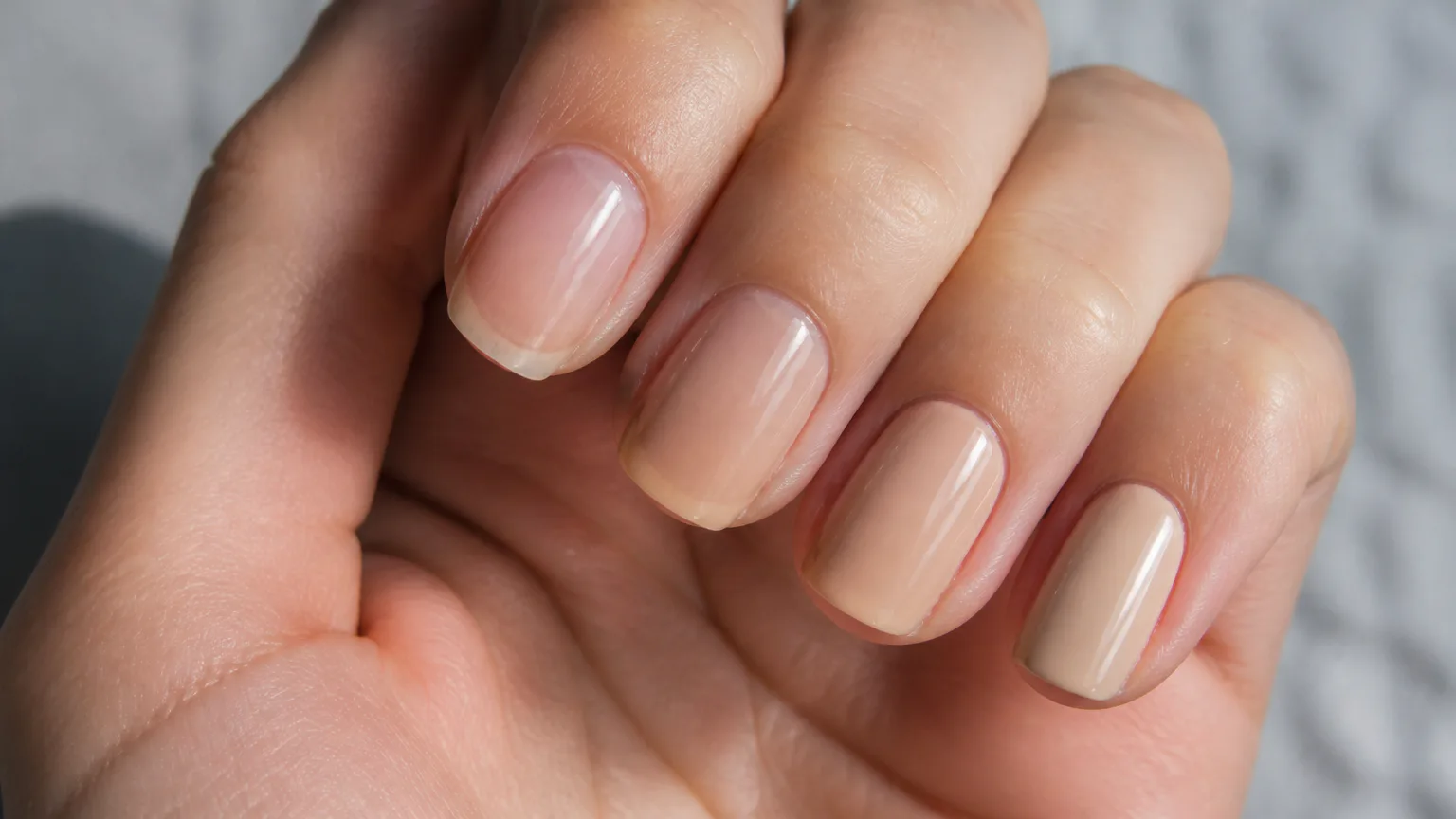
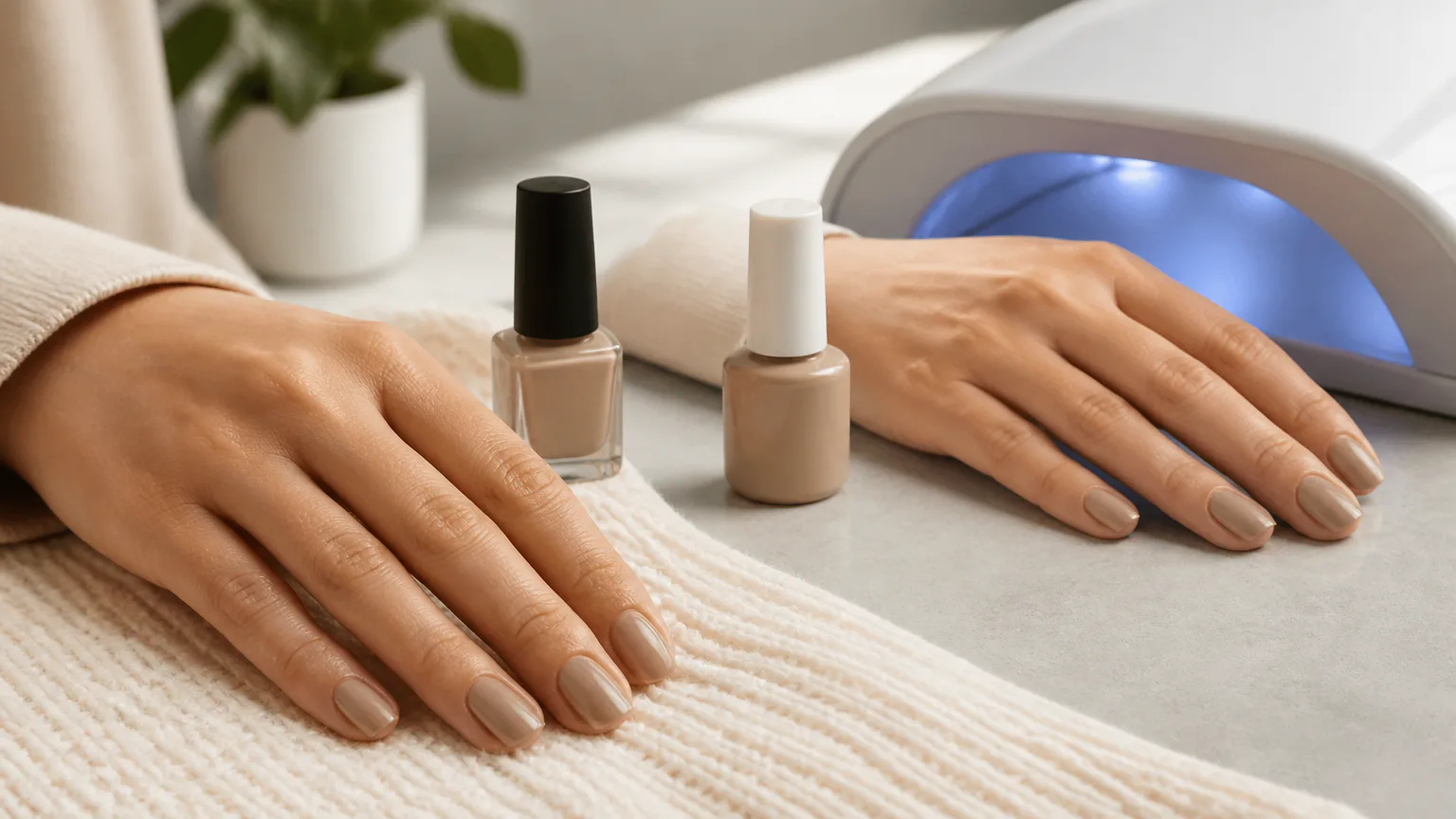
Samoan Sand is a warm beige nude with a sandy, tan-yellow cast. Its crème finish looks smooth, and the color’s translucency depends on how many coats you apply. It suits anyone after a beige manicure with more warmth than a distinctly pink-toned shade.
OPI Bubble Bath is a useful comparison, though the two shades look different on the nail. Bubble Bath is a sheer, translucent light peach-pink; Samoan Sand has a more tan-yellow tone. Bubble Bath flatters cool or pink undertones, while Samoan Sand is the warmer-looking choice.
Samoan Sand is a warm beige, but a flattering nude also depends on its undertone and depth. Compare it with other nude nail polish shades to see which tones are most likely to complement your skin.
How sheer is Samoan Sand?
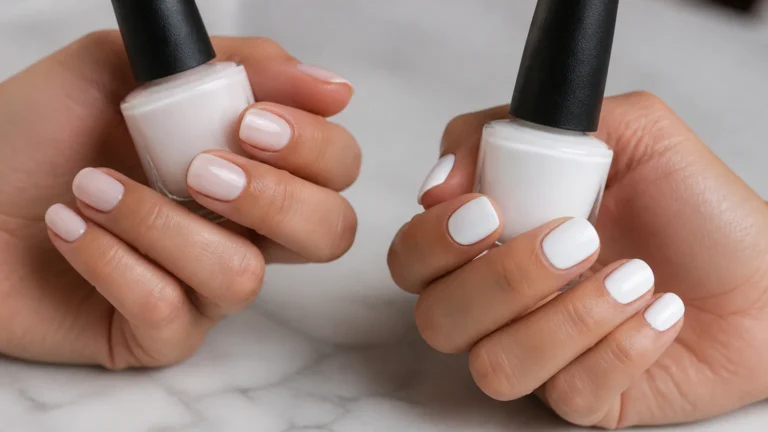
In the Nail Lacquer formula, one or two coats leave a sheer wash of color. That gives you a soft nude manicure, but it won’t fully conceal the natural nail. Apply three coats for a more solid beige finish.
Use thin, even layers and let each coat dry before applying the next. Thick coats take longer to dry and are more likely to smudge. GelColor has a different coverage profile: it is high-pigment and self-leveling, unlike the sheer-to-buildable classic lacquer.
Sheerness refers to how much of your natural nail shows through; finish describes the surface after the polish dries. A thin coat can look translucent while still having a distinct nail polish finish.
Choose the lacquer or GelColor
OPI Samoan Sand Nail Lacquer is the standard air-dry polish for a regular manicure. Choose it if you want to apply color at home without a curing lamp or prefer changing your manicure weekly. The claim of up to seven days’ wear applies when you use the lacquer with OPI’s three-step system.
OPI Samoan Sand GelColor is the longer-wearing gel option, with high-pigment, self-leveling coverage and up to three weeks of wear. Each layer needs UV/LED curing. OPI specifies 30 seconds per layer in the OPI Star Light, so you’ll need the compatible lamp and gel application process.
Both formulas share the warm sandy-beige shade, but their application and wear times differ. Choose the lacquer for an air-dried manicure, or GelColor if you want the gel format and have the required lamp.
How to apply Samoan Sand
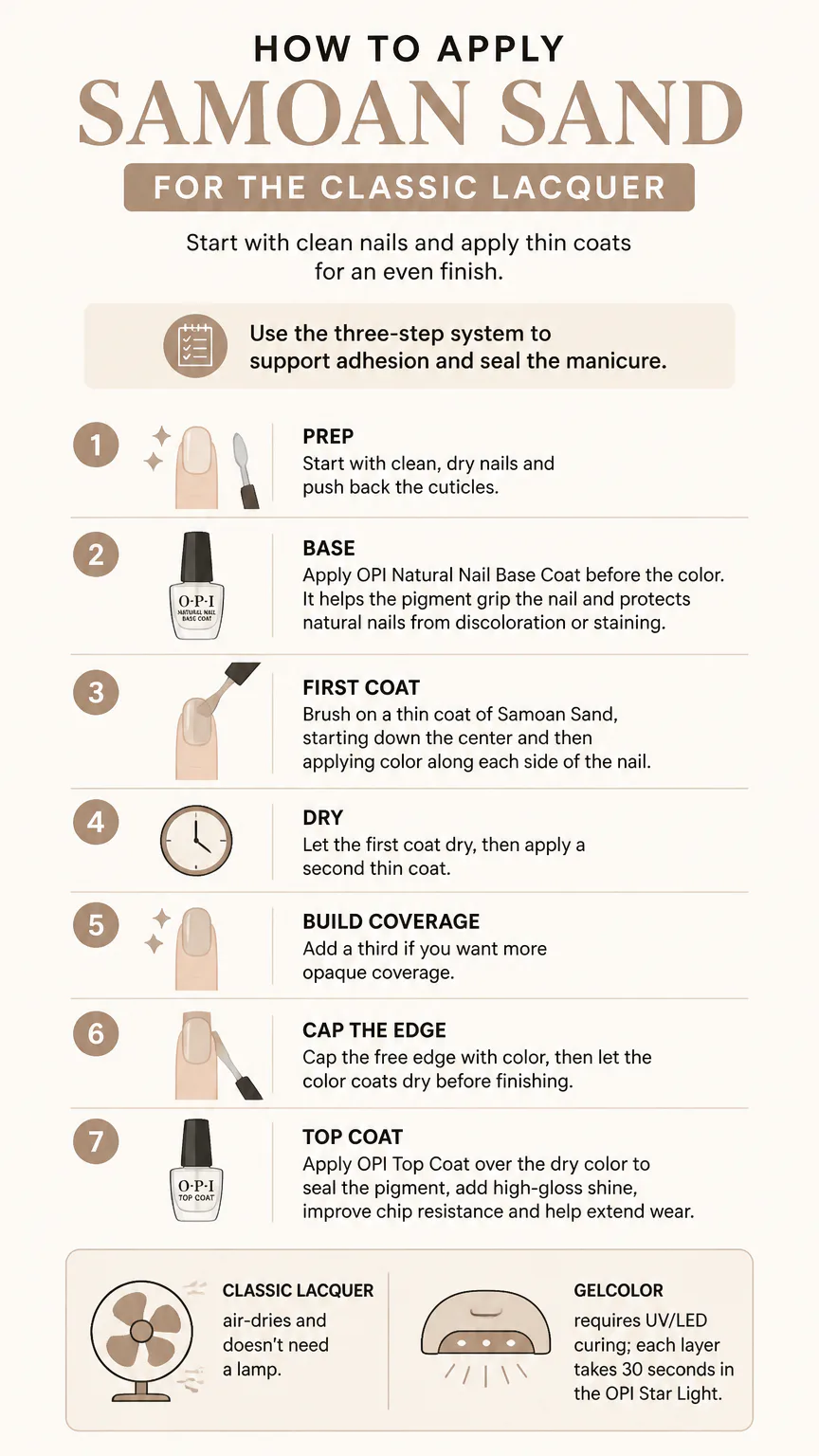
For the classic lacquer, start with clean nails and apply thin coats for an even finish. Use the three-step system to support adhesion and seal the manicure.
- Start with clean, dry nails and push back the cuticles.
- Apply OPI Natural Nail Base Coat before the color. It helps the pigment grip the nail and protects natural nails from discoloration or staining.
- Brush on a thin coat of Samoan Sand, starting down the center and then applying color along each side of the nail.
- Let the first coat dry, then apply a second thin coat. Add a third if you want more opaque coverage.
- Cap the free edge with color, then let the color coats dry before finishing.
- Apply OPI Top Coat over the dry color to seal the pigment, add high-gloss shine, improve chip resistance and help extend wear.
The classic lacquer air-dries and doesn’t need a lamp. GelColor requires UV/LED curing; each layer takes 30 seconds in the OPI Star Light.
Where to find Samoan Sand
OPI Samoan Sand Nail Lacquer comes in a 0.5 fl oz bottle. Sally Beauty carries the standard lacquer as shade #P61; the OPI shade code is NLP61. It costs around $11.99 at Sally Beauty.
Samoan Sand GelColor is a separate product from the air-dry Nail Lacquer. Sally Beauty’s #P61 listing is for the standard lacquer, not GelColor.
Is OPI Samoan Sand worth trying?
Try Samoan Sand if you want a warm beige nude with a glossy crème finish. One or two coats of the classic lacquer create a sheer, soft-focus manicure; a third coat gives you a more opaque result. If you prefer a pinker neutral, Bubble Bath has a peach-pink cast.
Choose the lacquer for an air-dry manicure with up to seven days of wear when used with the three-step system. GelColor lasts up to three weeks and suits you if you want a gel manicure and have the specified curing lamp.
The best nude depends on the undertone and coverage you like. Compare Samoan Sand with OPI Put It in Neutral to see which suits your everyday manicure.
FAQs
Is OPI Samoan Sand discontinued?
OPI Samoan Sand is currently available in Nail Lacquer and GelColor formulas. A temporary stockout at one retailer doesn’t mean the shade has been discontinued.
Which OPI color is most popular?
No single OPI shade is the most popular by every measure. Sales, search interest and retailer best-seller lists can point to different colors, and rankings depend on the measure and time period. Bubble Bath is a useful comparison for Samoan Sand’s warmer beige, but that doesn’t make it OPI’s most popular shade.
Conclusion
Choose Samoan Sand for a warm, sandy nude, keeping in mind that the classic lacquer stays sheer until you add more coats. Decide between the air-dry polish and the gel formula, which requires curing.